Unlike almost every other category of signage, a traffic sign isn't really a design choice - its shape, colour, size, and placement are precisely defined by national standards, because drivers need to recognise what a sign means in a fraction of a second, often at speed and in poor light. In India, traffic sign board design is governed by IRC:67-2012, the Code of Practice for Road Signs published by the Indian Roads Congress. This guide walks through what that standard actually specifies, so you understand what a compliant traffic sign needs to look like and why.
What Governs Traffic Sign Design in India?
IRC:67-2012 (now in its third revision) is India's authoritative code for road signage, covering sign classification, shapes, colours, standard dimensions, lettering, retroreflectivity, substrate materials, and placement. It draws on the Vienna Convention on Road Signs and Signals, which India is a signatory to, which is why Indian traffic signs follow broadly similar shape-and-colour logic to much of Europe and Asia. Road signs also carry the backing of law through the Motor Vehicles Act, 1988, meaning regulatory signs aren't just advisory - ignoring them can carry legal consequences for a driver.
The Three Main Categories of Traffic Signs


Nearly every traffic sign on an Indian road falls into one of three categories, each with its own distinct shape and colour logic designed to be recognisable at a glance, even across language barriers.
Mandatory (Regulatory) Signs
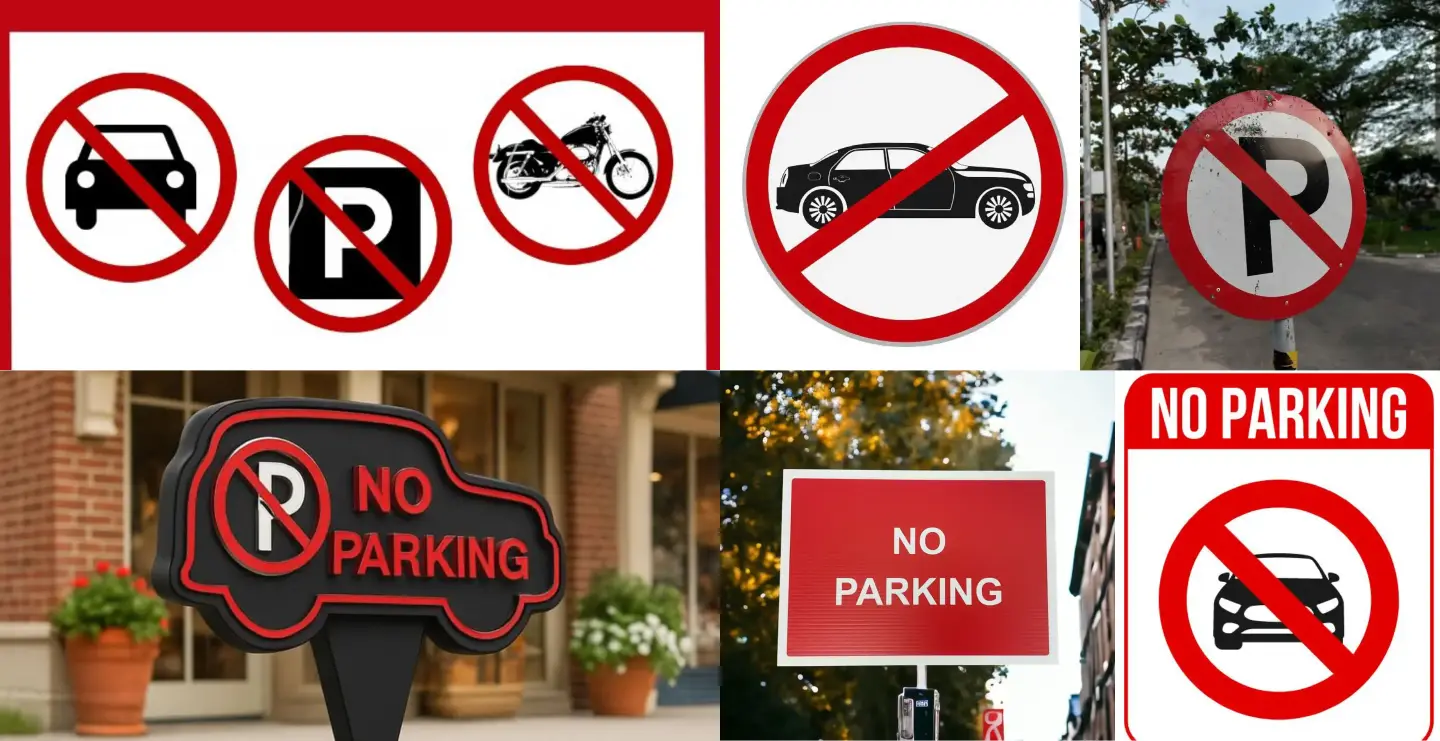
These signs state rules that must be obeyed. Most are circular: a plain red circle or red border indicates a rule, while a red circle with a diagonal slash through it specifically indicates something prohibited. A solid blue circle generally indicates a compulsory instruction (such as a mandatory direction of travel). Two well-known exceptions break from the circular convention for extra distinctiveness: the Stop sign, which is an octagon, and the Give Way sign, which is an inverted triangle. Common examples include No Entry, No Parking, speed limit signs, one-way signs, and compulsory turn signs.
Cautionary (Warning) Signs
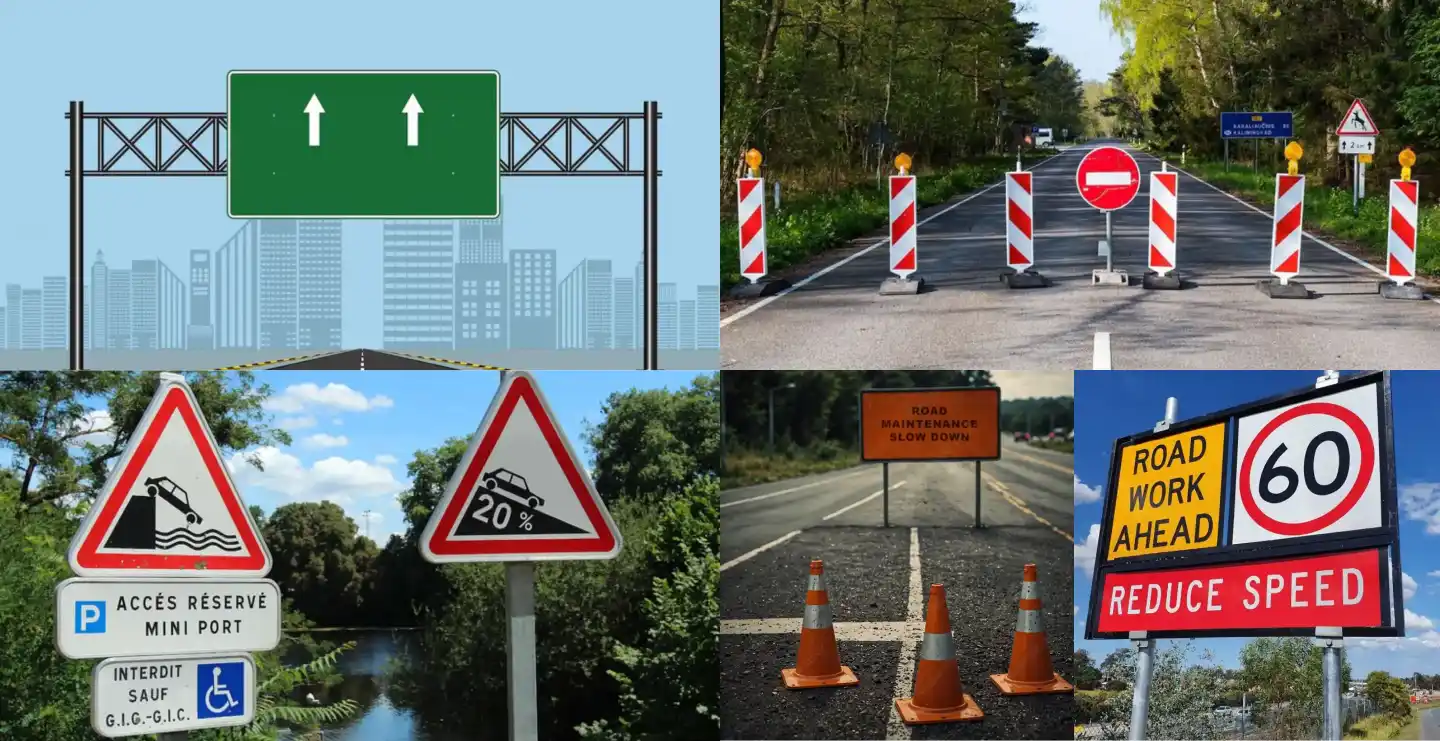
Warning signs alert drivers to a hazard or change in road conditions ahead, such as a sharp bend, narrow bridge, or school zone. These are consistently equilateral triangles with the apex pointing upward, a red border, a white or yellow background, and a black symbol or pictogram. The code also specifies how far in advance of the actual hazard these signs should be placed, with greater advance distances required on higher-speed roads so drivers have enough time to react.
Informatory Signs
These provide helpful information rather than rules or warnings - directions, distances, place names, and facility locations. They're rectangular, typically with a blue background and white lettering (informatory signs on certain high-speed corridors sometimes use green), and the code sets a minimum letter height, generally around 75mm, to keep text legible from a moving vehicle. This category includes direction signs, place identification signs, and facility information signs like hospital or fuel station indicators.
Standard Sizes
Sign size isn't left to individual judgement - it scales with road type and speed, since a sign on a fast national highway needs to be readable from much further away than one on a slow urban street. As a general guide, regulatory circular signs and cautionary triangular signs are typically sized around 900mm across on national and state highways, scaling down to around 600mm on urban roads, while informatory rectangular signs vary much more widely, from smaller single-destination boards up to large gantry-mounted signs spanning several metres on major junctions.
Retroreflective Sheeting: Why It Matters
Because a large share of serious accidents happen in low light, the material covering a traffic sign matters as much as its shape and colour. IRC guidelines specify different grades of retroreflective sheeting suited to different road types - lower-intensity grades for slower urban roads, and higher-intensity prismatic or diamond-grade sheeting for highways and expressways, where signs need to remain clearly visible to fast-moving traffic at night. Because exact grade specifications are often set by the individual road authority's tender or contract, it's worth confirming the required grade directly with that authority rather than assuming a default.
Materials and Fabrication
- Aluminium sheets – The most common substrate for durable, long-term outdoor signs.
- Mild steel (MS) – Used in some installations, generally with a protective coating against rust.
- Fibre-reinforced plastic (FRP) – A lighter alternative sometimes used where weight is a concern.
- Retroreflective sheeting overlay – Applied over the substrate to achieve the required night-time visibility grade.
Who Can Install an Official Traffic Sign?
This is worth being clear about: a genuinely legal traffic control sign on a public road is erected by an authorised body - typically the traffic police, the municipal corporation, the state PWD, or NHAI for national highways - not installed independently by a private property owner or business. A signage company's role is usually to fabricate signs to that authority's specification under a tender or work order, not to design and install signs on public roads on its own initiative. Private properties - factory campuses, gated communities, large parking lots - can absolutely use the same recognisable shapes and colours for internal, advisory signage, but these function as guidance rather than legally enforceable traffic control devices.
How Signage Vendors Typically Work with Government Contracts
Most traffic signage for public roads is procured through a formal tender process run by the relevant road authority, or increasingly through the Government e-Marketplace (GeM) for standard sign categories. Vendors are expected to fabricate strictly to the specified shape, colour, size, and reflective grade set out in the tender documents, since even small deviations can affect both legal validity and genuine road safety.
Ask Instant Pricing from Expert Signage Manufacturers
Contact Now →Frequently Asked Questions
What are the three main categories of traffic signs in India?
Mandatory (regulatory) signs, cautionary (warning) signs, and informatory signs, each with a distinct shape and colour convention under IRC:67-2012.
Why are some signs circular and others triangular?
Shape itself carries meaning under the standard - circular generally means a rule or prohibition, triangular means a warning, and rectangular means general information, allowing drivers to recognise a sign's category even before reading it.
Can a private business install its own traffic-style signs?
On private property, yes, using similar shapes and colours for familiarity, but these function as advisory signage rather than legally enforceable traffic control devices, which are reserved for authorised road authorities on public roads.
What does retroreflective sheeting do?
It reflects vehicle headlights back toward the driver, keeping the sign clearly visible at night; different grades are specified for different road types based on typical traffic speed.
Why are Stop and Give Way signs shaped differently from other regulatory signs?
Their unique shapes - octagon and inverted triangle - make them recognisable even when partially obscured or viewed from an angle, which is why they break from the standard circular convention.
How is traffic sign size determined?
Size scales with road type and typical traffic speed, with larger signs used on faster highways where drivers need more distance to read and react.
Who decides where traffic signs are placed?
Placement, including advance distance before a hazard, is specified by IRC guidelines and implemented by the relevant road authority, not left to individual discretion.
Conclusion
Good traffic sign board design isn't really about creativity - it's about precise, consistent compliance with a system that millions of drivers rely on to make split-second decisions safely. Understanding the shape-and-colour logic behind mandatory, cautionary, and informatory signs, and fabricating strictly to the relevant authority's specification, is what makes traffic signage actually do its job.