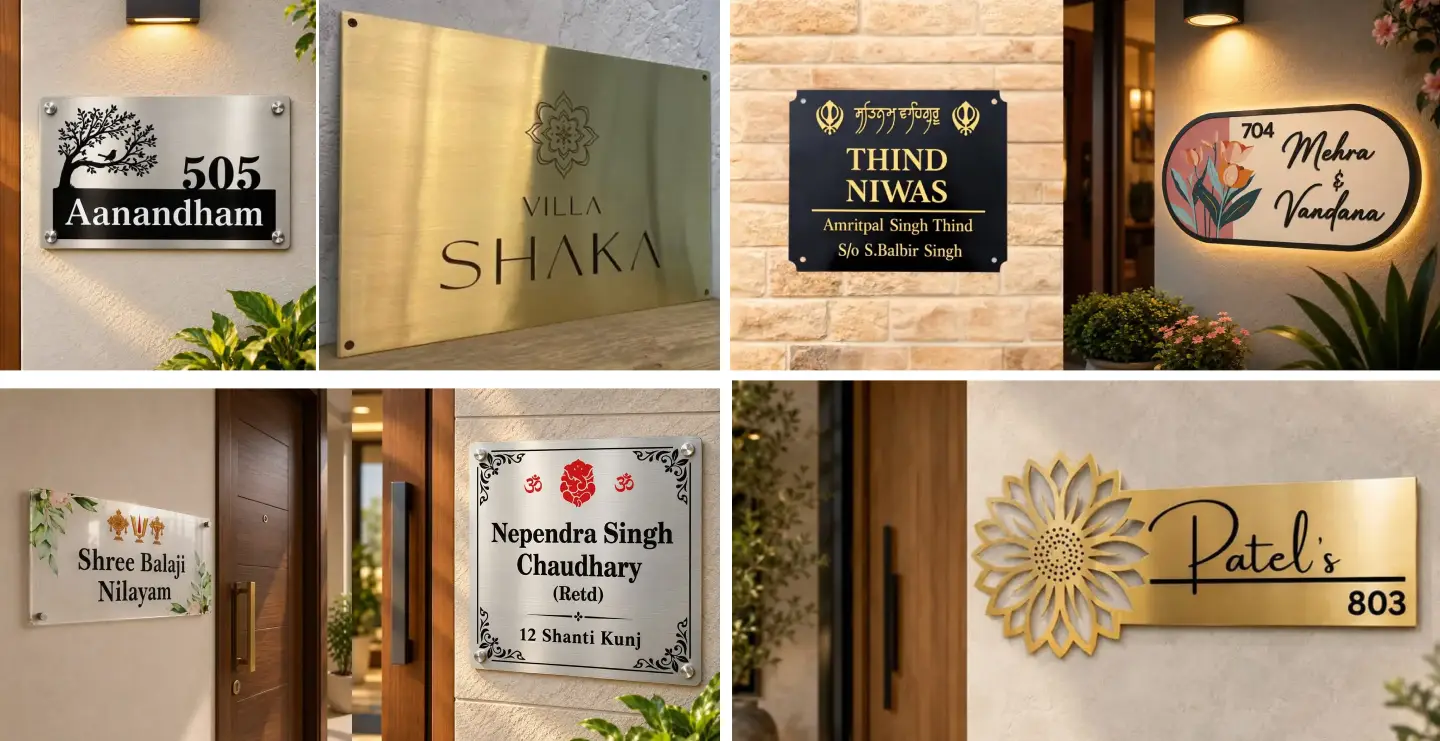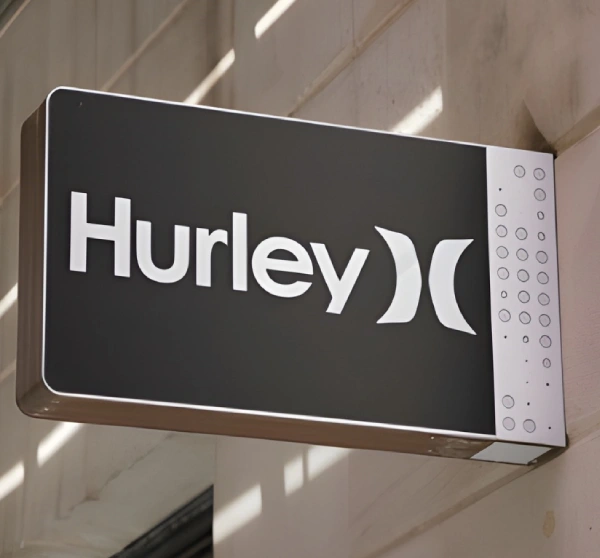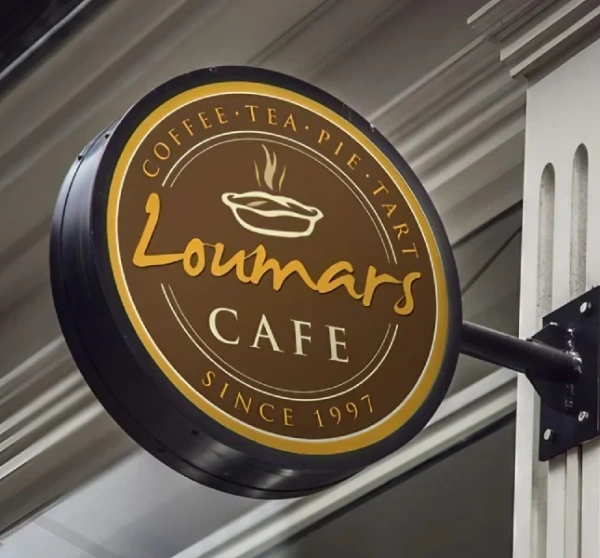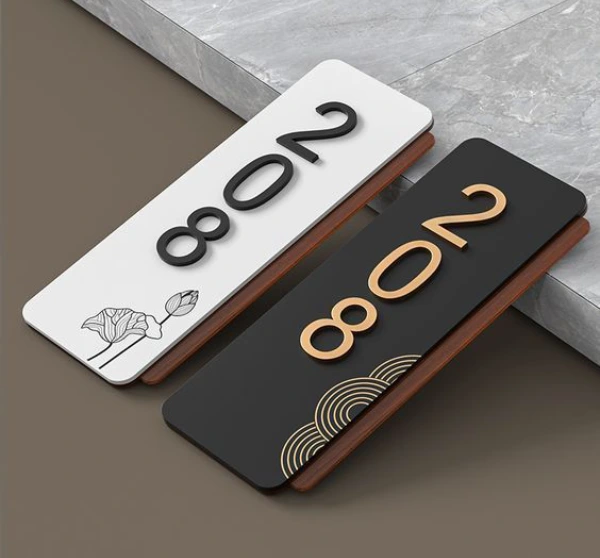
Choosing the right toilet sign board is one of the most important wayfinding decisions a commercial or institutional facility can make. Among the many materials and design approaches available today, professionally designed toilet sign boards have become the standard for offices, malls, hospitals, restaurants, hotels, and public facilities across India. If you are planning to establish a new facility or upgrade existing restroom signage, understanding toilet sign board design and compliance standards can help you make a smarter, longer-lasting choice that ensures clear customer communication and meets regulatory requirements.
In this guide, we will walk through what toilet sign boards are, why they are essential for facility management, the design elements that make them effective, and the factors you should consider before placing an order with a professional manufacturer.
What Is a Toilet sign board ?
A toilet sign board is a functional wayfinding display structure mounted near restrooms or along facility corridors to clearly identify toilet facilities, differentiate between male and female restrooms, and communicate accessibility information. Toilet sign boards consist of durable structural bases (typically ACP, acrylic, or metal) combined with clear, recognizable symbols, text, and graphics created from acrylic, PVC, metal, or illuminated materials. This construction gives the toilet sign board a functional, professional structure that communicates essential facility information while offering excellent weather resistance and durability in high-traffic environments.
Because toilet sign boards must be immediately recognizable and universally understood, they emphasize clarity, standardized symbols, and accessibility compliance over decorative design. Symbols, text, and directional information are typically mounted onto the structural base, creating a clean, unambiguous appearance that communicates facility information to diverse user populations including international visitors, people with visual impairments, and individuals unfamiliar with the facility layout.
Why Toilet sign boards Are Essential for Facility Management
Facility managers and building owners across sectors recognize toilet sign boards as essential wayfinding and compliance investments for multiple practical reasons:
- Clearly communicates restroom location to customers and visitors reducing confusion and complaints
- Meets accessibility compliance standards including Indian Standards and ADA requirements
- Differentiates between male, female, and accessible restrooms preventing user confusion
- Reduces staff time spent directing customers to facility restrooms
- Enhances customer experience and facility professionalism through clear signage
- Available in durable materials offering excellent resistance to moisture, humidity, and frequent cleaning
- Does not deteriorate from soap residue, water splashing, or harsh cleaning chemicals
- Easy to maintain in high-humidity environments without fading or material degradation
- Provides directional information helping customers navigate larger facilities efficiently
These qualities make professionally designed toilet sign boards essential investments for commercial facilities, offices, healthcare institutions, hospitality properties, and public spaces seeking to provide excellent customer experience and maintain compliance with accessibility regulations.
Ask Instant Pricing from Expert Sign Board Designer
Contact Now →Key Elements of a Good Toilet sign board Design
A well-designed toilet sign board prioritizes clarity, accessibility compliance, and universal recognition. Several functional design elements work together to create signage that effectively communicates facility information to diverse user populations.
1. Clear Symbol and Icon Design
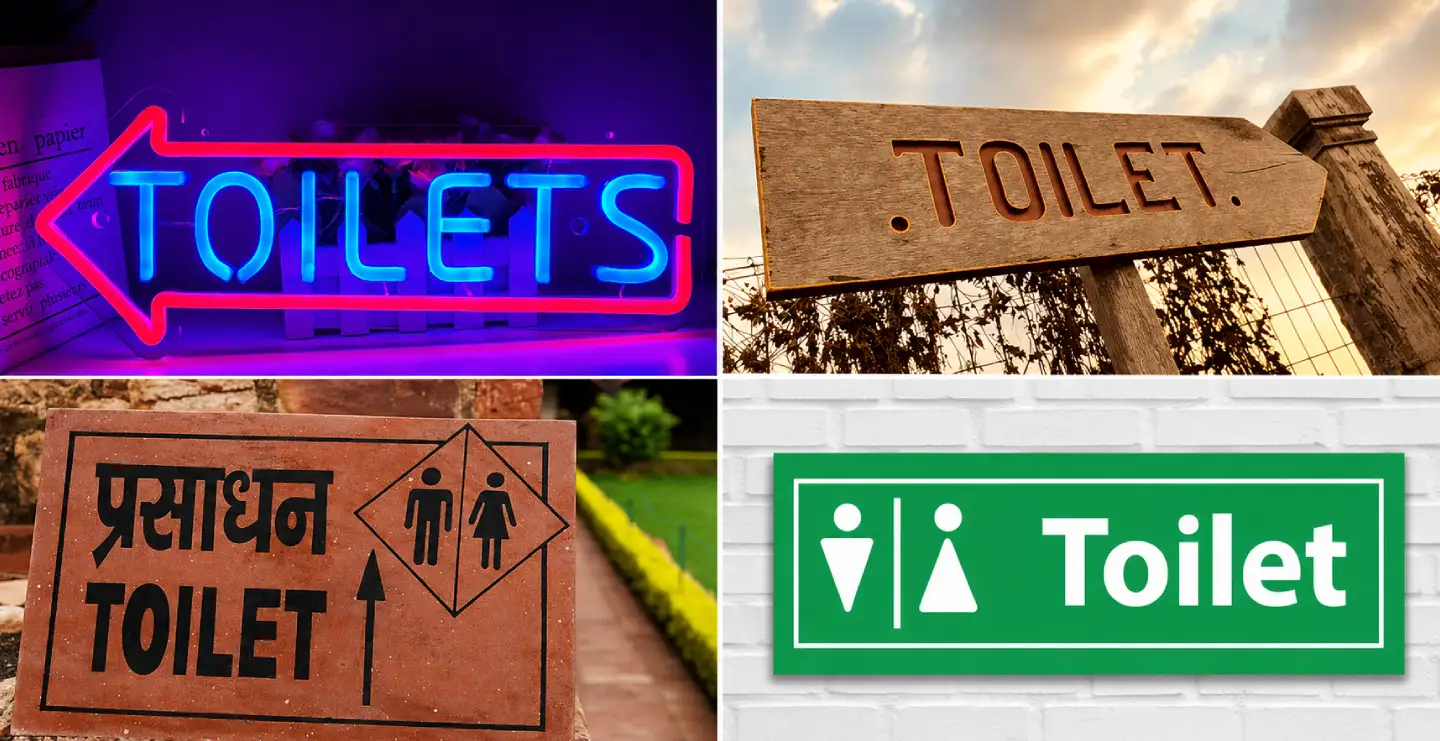
Toilet sign boards must feature immediately recognizable symbols that communicate their purpose without requiring text translation or detailed explanation. The male and female restroom symbols are internationally standardized and should be prominently displayed on all toilet sign boards. Accessible restroom symbols indicating wheelchair access must comply with Indian Standards and accessibility regulations. Symbols should be large, high-contrast, and easily visible from hallway viewing distances. Universal pictographic design ensures understanding regardless of language, literacy, or cultural background.
2. Text Information and Language Options
Toilet sign boards typically include text labels identifying the facility in relevant languages. Hindi and English text is standard in India, with some facilities adding regional language options. Text should be large and legible, typically minimum 5cm height for hallway viewing. Information should clearly state facility type-whether Men's Restroom, Women's Restroom, or Accessible Restroom. Directional information such as "First Floor" or "Towards Left" helps customers navigate facility layouts. Text should complement rather than replace symbols, as symbolography provides universal communication regardless of language skills.
3. Colour Coding and High Contrast
Many facilities employ colour coding to facilitate rapid restroom identification. Traditional colour schemes include blue for men's restrooms and red or pink for women's restrooms, though some facilities use green or other colours. High-contrast colour combinations ensure visibility and readability for individuals with colour blindness or low vision. Dark text on light backgrounds or vice versa improves legibility. The chosen colour scheme should be consistent throughout the facility to help repeat customers quickly locate restrooms.
4. Material Durability and Moisture Resistance
Toilet sign boards are exposed to humid restroom environments, moisture splashing, and frequent cleaning with harsh chemical products. Materials must resist moisture absorption, soap residue, chlorine exposure, and repeated wet cleaning without fading, warping, or deteriorating. High-quality acrylic and ACP panels with protective coatings perform exceptionally well in humid environments. Metal sign board with corrosion-resistant finishes or stainless steel offer excellent durability in moisture-rich facilities. Materials should be selected specifically for bathroom environmental conditions rather than standard commercial sign board materials.
5. Mounting and Placement Considerations
Toilet sign boards should be mounted at standard heights ensuring visibility from both standing and seated positions. Wall mounting at door entries provides direct identification, while corridor mounting helps wayfinding. Signs should be positioned to be visible as customers approach from hallway directions. Mounting hardware must be corrosion-resistant and secure against vibration from door closure. Avoid mounting sign boards where they obstruct traffic flow or create hazards. Directional signs should be positioned before turns to provide adequate wayfinding information.
Popular Toilet sign board Design Styles


Depending on facility type and design aesthetic, toilet sign boards typically employ established design approaches:
- Traditional symbol-based sign boards - featuring standardized male and female icons on contrasting backgrounds, most common and universally recognizable
- Modern minimalist designs - simplified symbols with clean typography on neutral backgrounds, popular in contemporary facilities
- Illuminated sign boards - backlit or front-lit acrylic sign board improving visibility in corridors with varied lighting conditions
- Directional combination sign boards - combining toilet identification with directional arrows helping customers navigate facilities
- Accessible facility sign boards - prominently displaying wheelchair accessibility symbols and compliance information required by regulations
- Multi-language sign boards - featuring Hindi, English, and regional language text serving diverse facility users
Factors to Consider Before Finalising Your Design
Before you approve a final toilet sign board design, keep these important practical considerations in mind:
- Accessibility compliance - ensure design meets Indian Standards and accessibility regulations including Braille requirements where necessary
- Facility environment - consider humidity levels, cleaning chemical exposure, and water splashing affecting material selection
- Viewing distance and visibility - position sign boards and size text ensuring visibility from typical customer approach distances throughout facility
- User population diversity - consider international visitors, people with visual impairments, and multilingual requirements when designing signage
- Consistent wayfinding system - ensure toilet sign boards match overall facility wayfinding design creating coherent navigation system
- Maintenance requirements - select materials and mounting that simplify regular cleaning and maintenance in humid restroom environments
Toilet sign board Price in India (2026)
Pricing for toilet sign boards depends on material selection, size, complexity of symbols and text, durability requirements, and mounting specifications. Here is a general breakdown to help you budget before requesting detailed quotes from manufacturers.
Standard Toilet sign board Base Cost
Structural base materials for toilet sign boards typically cost between Rs. 70 and Rs. 200 per square foot depending on material type and moisture-resistant coating quality. ACP sheets with moisture-resistant finishes suitable for bathroom environments usually fall between Rs. 80 and Rs. 150 per square foot. Moisture-resistant acrylic panels cost Rs. 120 to Rs. 200 per square foot. Stainless steel or corrosion-resistant metal bases range Rs. 150 to Rs. 250 per square foot for bathroom-grade materials.
Fabricated Toilet sign board Cost
Once the moisture-resistant base combines with symbol cutting, text implementation, protective coatings, corrosion-resistant mounting hardware, and professional installation, the cost of a finished toilet sign board increases. Basic non-illuminated toilet sign boards with standard symbols and bilingual text generally range from Rs. 400 to Rs. 800 per square foot. Illuminated or premium toilet sign boards with enhanced visibility, complex multi-language text, accessibility features, and professional installation typically cost Rs. 800 to Rs. 1,500 per square foot depending on material choices and design complexity.
| sign board Type | Approximate Price per Sq. Ft. |
|---|---|
| Moisture-resistant ACP sheet base | Rs. 80 - 150 |
| Moisture-resistant acrylic panel | Rs. 120 - 200 |
| Bathroom-grade metal/stainless steel | Rs. 150 - 250 |
| Non-illuminated toilet sign board , fabricated | Rs. 400 - 800 |
| Illuminated or premium toilet sign board , fabricated | Rs. 800 - 1,500 |
What Affects the Final Toilet sign board Price
- Total sign board size and square footage
- Material type and moisture-resistance coating quality
- Symbol complexity and cutting precision requirements
- Number of languages and text complexity
- Accessibility features including Braille or tactile elements
- Illumination features or specialty coatings for enhanced durability
- Mounting hardware grade and corrosion resistance
- Installation location complexity and facility-specific requirements
These figures are indicative and vary by city, order quantity, facility requirements, and supplier specialisation. It is best to get detailed quotes based on your exact sign board specifications, facility environmental conditions, compliance requirements, and material preferences rather than relying on general ranges.
Choosing the Right Toilet sign board Manufacturer
The design only performs as well as the fabrication and material quality behind it. A skilled bathroom sign board manufacturer will guide you on moisture-resistant material selection, compliance requirements, symbol standardization, and durability features based on your facility's specific environmental conditions. They should prioritize materials and mounting systems suitable for humid bathroom environments rather than standard commercial signage approaches. Professional manufacturers understand that toilet sign boards must withstand moisture exposure, cleaning chemical contact, and heavy use while maintaining clarity and accessibility compliance.
Brand Signages works with commercial facilities, offices, hospitals, hotels, malls, and public spaces across India to design and manufacture toilet sign boards suited to their specific compliance requirements and environmental conditions. Every project receives design consultation emphasizing accessibility compliance, material guidance for moisture resistance, precise fabrication ensuring symbol clarity, and expert installation. The result is a toilet sign board system that effectively guides customers while meeting all regulatory requirements and maintaining durability in challenging bathroom environments.
Final Thoughts
A well-designed toilet sign board is an essential facility component that communicates clearly to diverse user populations, ensures compliance with accessibility regulations, and improves overall facility experience. By prioritizing symbol clarity, moisture-resistant materials, accessibility compliance, and appropriate placement, and by working with experienced facility sign board design specialists, you can create a sign board system that serves users reliably for many years while meeting all applicable regulatory requirements and maintaining professional facility standards.
Frequently Asked Questions
What materials are best for toilet sign boards?
Moisture-resistant acrylic and bathroom-grade ACP with protective coatings offer excellent durability in humid environments. Stainless steel provides premium bathroom-grade durability resistant to cleaning chemicals and corrosion.
Do toilet sign boards need to comply with accessibility standards?
Yes. Toilet sign boards must comply with Indian Standards and accessibility regulations including adequate contrast, symbol clarity, text size, and sometimes Braille or tactile elements for people with visual impairments.
Should toilet sign boards be illuminated?
Illumination improves visibility in corridors with varied lighting and helps customers locate restrooms quickly. Non-illuminated sign boards work well in naturally lit areas or facilities with consistent lighting conditions.
How long does a toilet sign board last in humid bathroom environments?
With proper moisture-resistant materials and regular cleaning, quality toilet sign boards last 7-10 years in bathroom environments without material degradation or symbol fading, depending on material selection and maintenance.