Choosing the right street sign board is one of the most important decisions for urban planners, municipalities, and businesses located along busy roads. A well-designed street sign board does more than display information; it guides traffic, enhances public safety, and reinforces civic identity. If you are planning new street signage or upgrading existing ones, understanding the fundamentals of street sign board design can help you make smarter, longer-lasting choices.
In this guide, we will walk through what street sign boards are, why proper design matters, the key elements that make them effective, and the factors you should consider before installation.
What Is a Street Sign Board?
A street sign board is a visual display installed along public or private roads to convey information, warnings, directions, or identification. These signs are typically made from durable materials such as aluminium, reflective sheeting, acrylic, or aluminium composite panels (ACP). Depending on their purpose, street signs can range from simple nameplates and directional markers to complex regulatory and warning boards.
Because street signs must remain visible under varying light and weather conditions, they are often manufactured with retroreflective surfaces, UV-resistant coatings, and weatherproof substrates. Letters, symbols, and graphics are usually applied using vinyl cutting, screen printing, or digital printing techniques to ensure long-term clarity.
Why Good Street Sign Board Design Matters
City administrators and road safety authorities prioritise proper street sign board design for several practical reasons:
- Improves road safety by providing clear, timely information to drivers and pedestrians
- Reduces confusion at intersections, roundabouts, and commercial zones
- Enhances nighttime visibility when paired with reflective or illuminated materials
- Withstands harsh outdoor conditions including rain, dust, heat, and pollution
- Supports traffic regulation and legal compliance with municipal standards
- Strengthens neighbourhood identity and helps visitors navigate unfamiliar areas
These qualities make well-designed street sign boards essential for everything from quiet residential lanes to high-traffic arterial roads.
Key Elements of an Effective Street Sign Board Design
A professionally designed street sign board is not just about picking a colour and printing text. Several design elements work together to create signage that is readable, durable, and legally compliant.
1. Colour Selection
The background colour of a street sign must follow established conventions so that road users can instantly recognise its purpose. Blue backgrounds typically indicate informational or service signs, green is used for directional and highway guidance, yellow or orange signals caution or construction, and red denotes prohibitions or stop commands. It is critical to test the chosen colour under both daylight and streetlight conditions, since colour perception changes significantly between day and night.
2. Typography and Letter Sizing
Street sign lettering must be legible from a moving vehicle. Fonts should be sans-serif, evenly weighted, and free from decorative flourishes. Letter height is determined by the intended viewing distance; as a general rule, every inch of letter height provides roughly 40 to 50 feet of readable distance. A sign meant to be read from 200 feet away therefore needs letters at least 4 to 5 inches tall. Spacing between letters and lines (leading) must also be generous to prevent visual crowding.
3. Reflectivity and Illumination
Most modern street signs use retroreflective sheeting that bounces vehicle headlight beams back toward the driver, making the sign visible at night without external power. Engineering-grade reflective films suit residential and low-speed roads, while high-intensity prismatic or diamond-grade films are recommended for highways and expressways. In areas with poor ambient lighting, LED backlighting or solar-powered illumination can be added to ensure round-the-clock visibility.
4. Material Thickness and Substrate
Street sign boards are commonly fabricated on aluminium sheets ranging from 1.5mm to 3mm in thickness. Thicker substrates resist wind loads and physical impact better, making them suitable for overhead gantries and large directional boards. Aluminium composite panels (ACP) are also popular for decorative street name signs and entrance arches due to their rigidity and smooth finish. The substrate should be paired with a protective overlay film to prevent fading and graffiti damage.
5. Layout and White Space
A cluttered sign board design is difficult to read at a glance. Effective street sign design keeps text, symbols, and borders balanced with ample white space around each element. As a general rule, the content should occupy no more than 60 to 70 percent of the panel area, with clear margins on all sides. This breathing room allows drivers to process the message quickly, which is especially important at high speeds.
Popular Street Sign Board Design Styles
Depending on the road type and surrounding environment, authorities and property developers typically choose from several common design approaches:
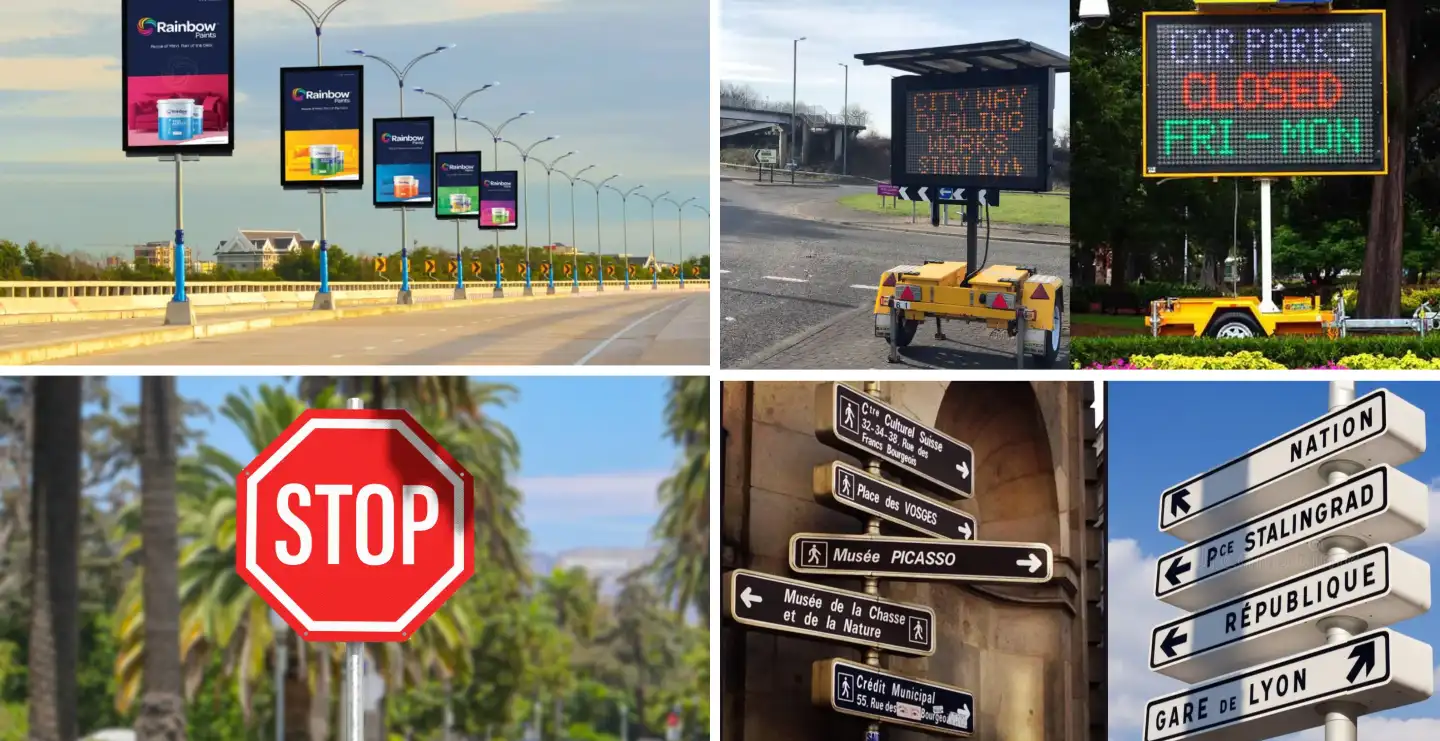
- Standard regulatory signs - circular or rectangular boards with bold symbols and minimal text, used for speed limits, no-parking zones, and one-way indicators
- Directional and wayfinding signs - green or blue panels with arrows, distances, and destination names, common on highways and in city centres
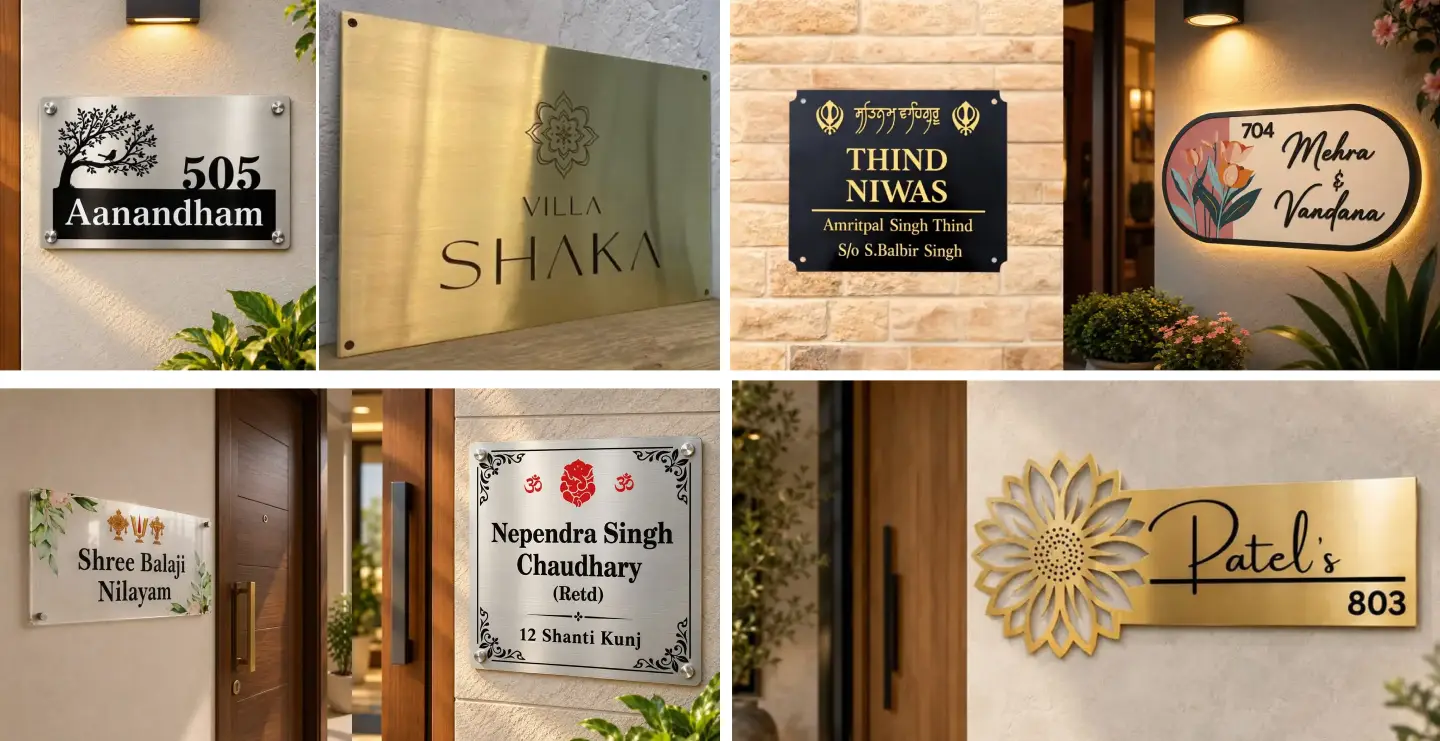
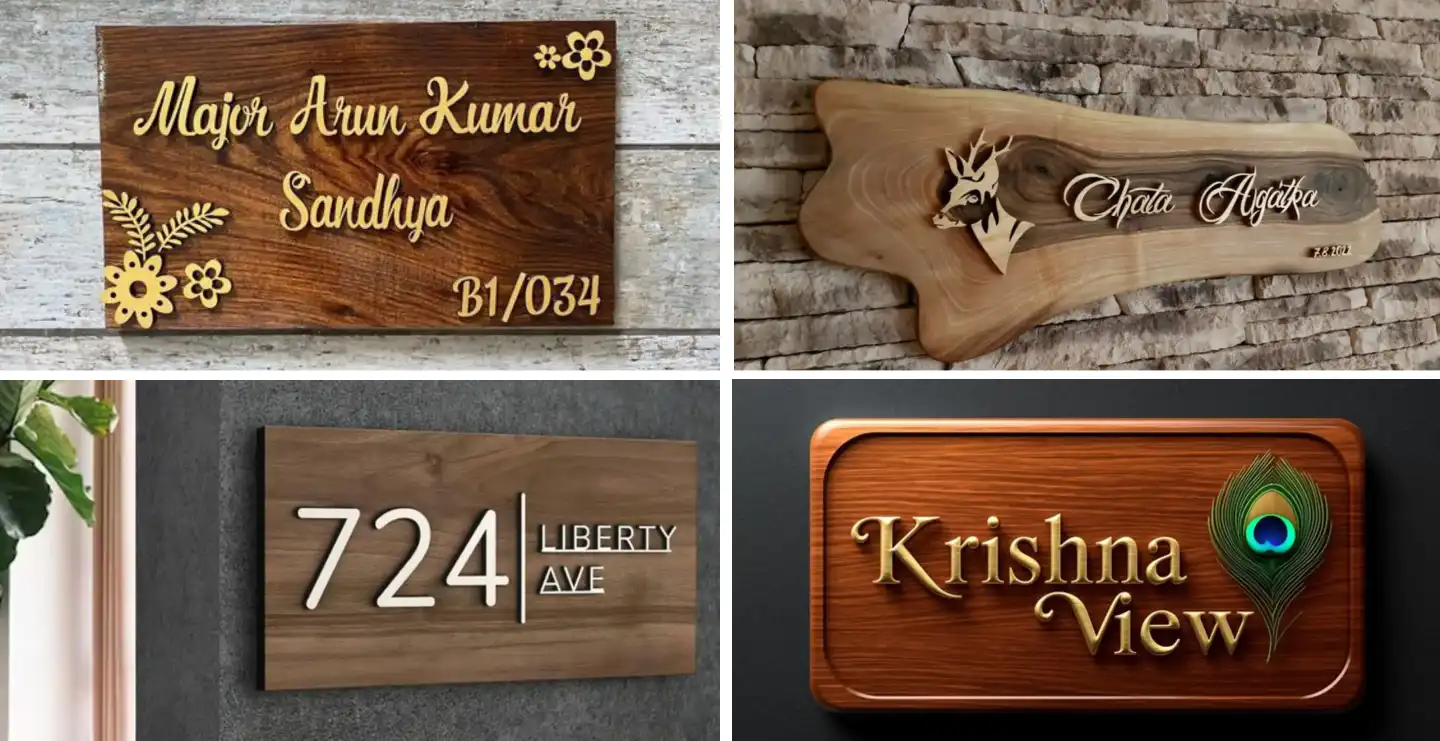
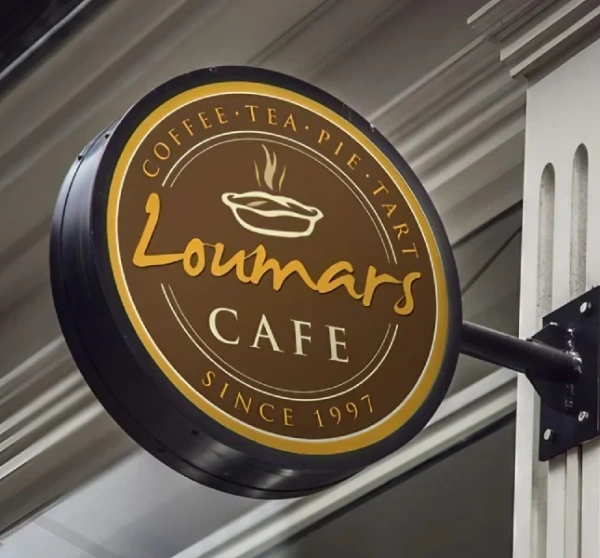
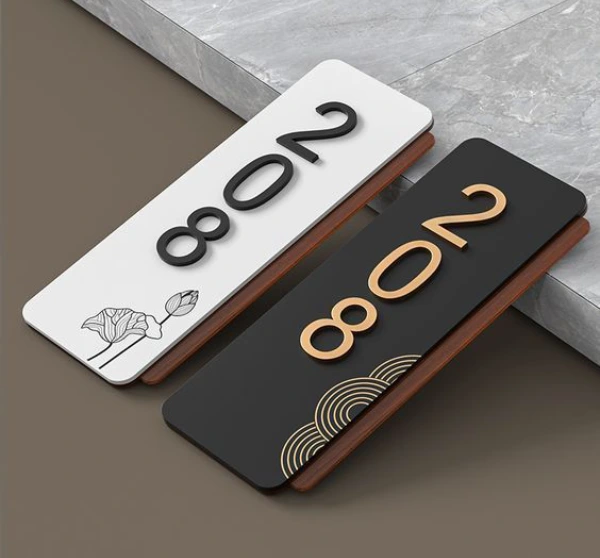
- Decorative street name signs - customised nameplates mounted on poles or building facades, often using ACP or acrylic with heritage-style fonts
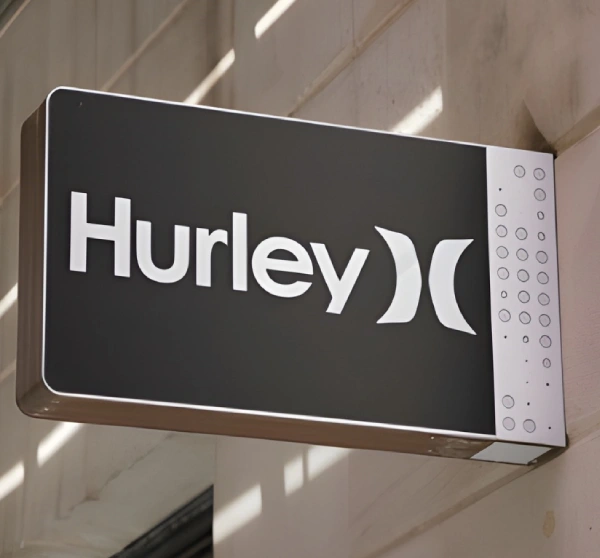
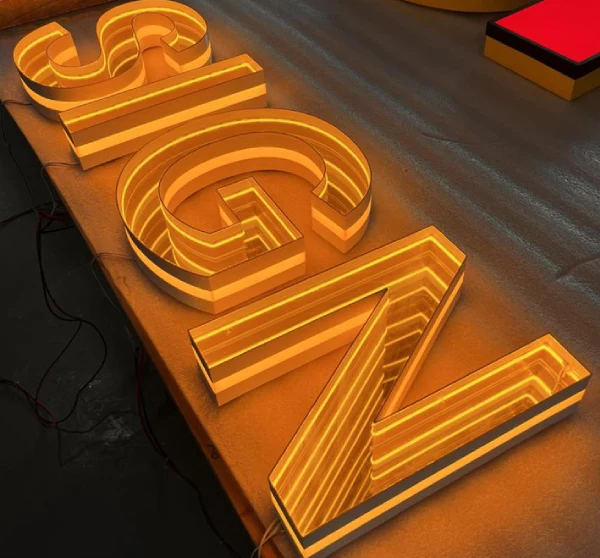
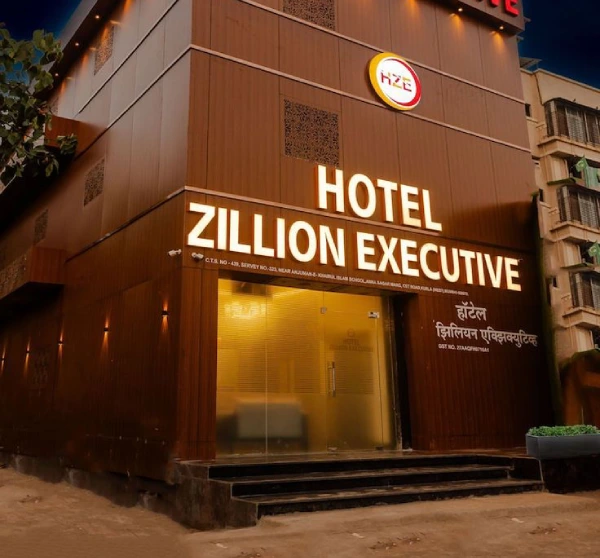
- Illuminated street signs - backlit or front-lit boards using LED modules, ideal for commercial streets, malls, and entertainment districts
- Community entrance arches - large composite structures combining ACP, metal, and acrylic lettering to mark residential colonies or institutional campuses
Factors to Consider Before Finalising Your Design
Before you approve a final street sign board design, keep these practical points in mind:
- Viewing distance and speed - estimate how far away and how fast the typical viewer will be travelling, and size the lettering accordingly
- Local traffic regulations - municipal corporations and road authorities often specify sign dimensions, colours, and mounting heights that must be followed
- Surrounding visual noise - the sign should stand out against neighbouring buildings, trees, and advertising boards without adding to clutter
- Weather exposure - signs facing direct sun, heavy monsoon rain, or coastal salt air need UV-stable inks, rust-proof hardware, and drainage holes
- Maintenance access - plan for safe access to clean, repair, or replace the sign without disrupting traffic flow
Street Sign Board Price in India (2026)


Pricing depends on board size, substrate material, reflectivity grade, and whether illumination is included. Here is a general breakdown to help you budget before requesting a detailed quote.
Raw Material Cost
The substrate itself, before any printing or fabrication, typically costs between Rs. 45 and Rs. 200 per square foot depending on material and thickness. A standard 1.5mm aluminium sheet for small regulatory signs usually falls between Rs. 45 and Rs. 90 per square foot, while a 3mm aluminium composite panel suited for decorative street name boards generally costs Rs. 70 to Rs. 180 per square foot. High-intensity reflective sheeting adds Rs. 80 to Rs. 250 per square foot depending on the grade.
Fabricated Street Sign Board Cost
Once the substrate is combined with printed graphics, reflective film, mounting frames, and installation, the price of a finished sign board rises. Basic non-reflective aluminium street signs with vinyl lettering generally range from Rs. 350 to Rs. 600 per square foot. Reflective regulatory or directional signs, which include engineering-grade or high-intensity reflective films, typically cost Rs. 600 to Rs. 1,000 per square foot. LED-illuminated street signs, including modules, wiring, and solar power units if applicable, can range from Rs. 1,000 to Rs. 1,800 per square foot or more.
| Sign Board Type | Approximate Price per Sq. Ft. |
|---|---|
| Raw aluminium sheet (1.5mm, standard grade) | Rs. 45 - 90 |
| Raw ACP sheet (3mm, exterior grade) | Rs. 70 - 180 |
| Non-reflective street sign, fabricated | Rs. 350 - 600 |
| Reflective street sign, fabricated | Rs. 600 - 1,000 |
| LED-illuminated street sign, fabricated | Rs. 1,000 - 1,800+ |
What Affects the Final Price
- Board size and total square footage
- Substrate thickness and material (aluminium, ACP, or steel)
- Reflectivity grade: non-reflective, engineering, high-intensity, or diamond grade
- Whether LED modules, solar panels, or battery backups are included
- Height and complexity of installation, including pole mounting or overhead gantries
- Design customisation such as curved shapes, heritage fonts, or multi-panel assemblies
These figures are indicative and can vary by city, order quantity, and supplier. It is best to get a detailed quote based on your exact size, material, and reflectivity requirements rather than relying on a general price range, since every project has different specifications.
Choosing the Right Sign Board Manufacturer
The design only performs as well as the fabrication behind it. A skilled manufacturer will guide you on the right substrate thickness, reflective grade, and mounting structure based on your location, road type, and budget, rather than simply executing whatever is asked. They should also handle structural calculations correctly, since a poorly fixed street sign can pose a serious safety risk during storms or high winds.
Reputable signage companies work with municipalities, real estate developers, and businesses across India to design and manufacture street sign boards suited to exact requirements, from standard regulatory signs to fully illuminated wayfinding systems. Every project should be handled from design consultation through fabrication and installation, ensuring the final sign board matches both regulatory standards and the practical demands of its location.
Final Thoughts
A thoughtfully designed street sign board does more than display a road name or regulation. It protects lives, reduces traffic congestion, and helps residents and visitors navigate the city with confidence. By paying attention to colour standards, typography, reflectivity, and material quality, and by working with an experienced manufacturer, you can create street signage that stands up to weather and time while serving the community the way it deserves.
Frequently Asked Questions
Are street sign boards weather-resistant?
Yes. Quality street signs are manufactured from rust-proof aluminium or ACP with UV-resistant coatings and waterproof printing, allowing them to withstand sun, rain, dust, and temperature extremes for several years.
What thickness is best for street sign boards?
For standard pole-mounted street name signs, 1.5mm to 2mm aluminium is usually sufficient. Larger directional boards or entrance arches exposed to wind loads often use 3mm aluminium or ACP for added rigidity.
Can street sign boards be illuminated?
Yes. Street signs in commercial districts, malls, and gated communities are frequently illuminated using LED backlighting, front floodlights, or solar-powered units to ensure visibility after dark.
How long does a street sign board last?
With proper installation and occasional cleaning, a good quality street sign board can last 7 to 10 years outdoors. Reflective films may gradually lose brightness after 5 to 7 years and can be re-laminated or replaced to extend service life.