As businesses look for more sustainable and cost-efficient signage options, solar-powered sign boards have become an increasingly popular choice, especially in areas with unreliable electricity or high grid power costs. A well-designed solar sign board can stay illuminated after dark without running any electricity bill, making it a smart long-term investment for shops, highways, and rural locations alike. If you are considering solar signage, understanding its design fundamentals will help you choose a system that performs reliably in all seasons.
This guide covers what solar sign boards are, why their design matters, the key elements involved, popular styles, and what to consider before installation.
What Is a Solar Sign Board?
A solar sign board is an illuminated sign powered by a solar panel and battery system rather than a direct connection to the electricity grid. During the day, the solar panel charges an integrated battery, which then powers LED lighting for the sign through the night. These signs are commonly used for highway signage, rural shop fronts, gated community entrances, and any location where grid power is unreliable or expensive to run.
A complete solar sign system typically includes a solar panel, a charge controller, a rechargeable battery, LED lighting, and the sign face itself, all housed in a weatherproof enclosure.
Why Solar Sign Board Design Matters
- Eliminates ongoing electricity costs by relying entirely on solar power
- Provides reliable illumination even in areas with frequent power cuts
- Reduces installation complexity since no electrical wiring trench or grid connection is needed
- Supports sustainability goals for businesses and municipalities aiming to reduce energy consumption
- Works well in remote or highway locations far from the nearest power line
- Lowers long-term maintenance needs compared to grid-wired lighting systems
Key Elements of an Effective Solar Sign Board Design
1. Solar Panel Sizing
The solar panel must be sized to generate enough energy during daylight hours to fully charge the battery, accounting for the sign's LED wattage and the expected hours of illumination each night. Panels that are undersized will leave the sign dim or unlit during cloudy periods or longer winter nights.
2. Battery Capacity and Backup Days
A good solar sign design includes enough battery capacity to keep the sign running for two to three cloudy or rainy days without sunlight, sometimes called backup autonomy. Lithium-ion batteries are increasingly preferred over older lead-acid types for their longer lifespan and better performance in varying temperatures.
3. LED Efficiency
Since the entire lighting system runs off stored battery power, energy-efficient LED modules are essential to maximise the hours of illumination per charge. High-efficiency LEDs also generate less heat, which helps protect nearby components and extends the overall system's lifespan.
4. Panel Orientation and Placement
The solar panel should be mounted at an angle and orientation that captures maximum sunlight for the specific geographic location, and it should be free from shading by trees, buildings, or other structures throughout the day. Poor panel placement is one of the most common reasons solar signs underperform.
5. Weatherproof Enclosure
All electronic components, including the battery, charge controller, and wiring, need to be housed in a sealed, weatherproof enclosure to protect against rain, dust, and temperature extremes, since these components are more sensitive to moisture than a simple metal sign panel.
Popular Solar Sign Board Styles
- Solar highway and directional signs - reflective boards with solar-powered LED backlighting for remote road signage
- Solar shop front signs - light box or channel letter signs powered entirely by rooftop or panel-mounted solar systems
- Solar gate and entrance signs - illuminated nameplates for gated communities, farmhouses, or rural properties
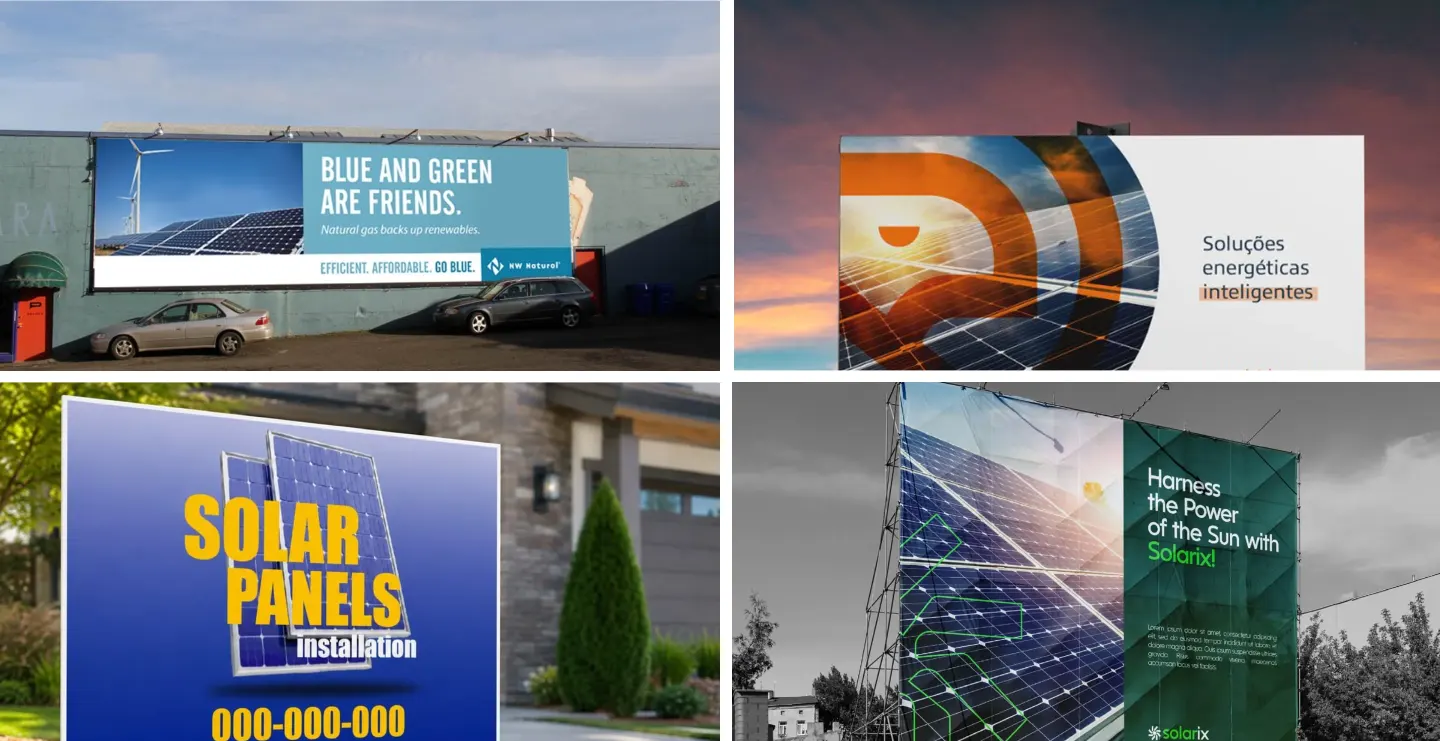
- Solar billboard signage - larger advertising boards using dedicated solar arrays for continuous night illumination
- Solar safety and warning signs - construction or industrial site signs that stay lit after working hours for safety visibility
Factors to Consider Before Finalising Your Design


- Local sunlight availability - regions with more cloud cover or shorter daylight hours need larger panels and batteries
- Required illumination hours - decide how many hours per night the sign needs to stay lit, as this drives battery sizing
- Installation location - ensure the panel can be mounted where it receives unobstructed sunlight throughout the day
- Maintenance access - plan for periodic cleaning of the solar panel, since dust build-up reduces charging efficiency
- Battery lifespan - factor in eventual battery replacement, typically needed every 3 to 5 years depending on battery type
Solar Sign Board Price in India (2026)
Pricing depends on sign size, solar panel capacity, battery type, and LED wattage. Here is a general breakdown to help you plan your budget before requesting a detailed quote.
Raw Material Cost
The sign substrate itself, before solar components, typically costs the same as standard signage materials, ranging from Rs. 60 to Rs. 200 per square foot depending on material. The solar and battery system adds a separate cost, generally Rs. 3,000 to Rs. 8,000 for a small to mid-sized panel and battery setup, depending on capacity.
Fabricated Sign Board Cost
A basic solar-powered sign for a shop front or gate, including panel, battery, LED lighting, and enclosure, typically costs Rs. 8,000 to Rs. 18,000 for a standard-sized board. Larger solar highway or billboard signage with higher-capacity panels and batteries can range from Rs. 20,000 to Rs. 60,000 or more depending on size and illumination requirements.
| Solar Sign Board Type | Approximate Price |
|---|---|
| Small solar gate/shop sign (standard size) | Rs. 8,000 - 18,000 |
| Medium solar directional/highway sign | Rs. 18,000 - 35,000 |
| Large solar billboard signage | Rs. 35,000 - 60,000+ |
What Affects the Final Price
- Solar panel wattage and battery capacity required
- Sign size and the type of LED lighting used
- Battery type, with lithium-ion generally costing more than lead-acid
- Enclosure quality and level of weatherproofing
- Installation complexity, especially for remote or elevated locations
These figures are indicative and vary by city, supplier, and system specifications. Always request a detailed quote based on your exact illumination needs and location.
Choosing the Right Sign Board Manufacturer
Solar signage combines electrical, structural, and design expertise, so it is worth choosing a manufacturer experienced specifically in solar systems rather than standard signage alone. A good manufacturer will correctly size the panel and battery for your location's sunlight availability and expected illumination hours, ensuring the sign performs reliably through all seasons. Reputable solar signage providers handle design, component sourcing, fabrication, and installation as a complete package.
Final Thoughts
A solar sign board offers a smart, sustainable way to keep your signage illuminated without ongoing electricity costs or dependence on the power grid. By carefully sizing the solar panel and battery, choosing efficient LEDs, and ensuring proper weatherproofing, and by working with an experienced manufacturer, you can create signage that stays bright and reliable for years, even in remote locations.
Frequently Asked Questions
How long does a solar sign board stay lit at night?
This depends on battery capacity and LED wattage, but most well-designed solar signs are built to provide 8 to 12 hours of illumination per night, with backup reserves for cloudy days.
Do solar sign boards work well in cloudy or rainy climates?
Yes, as long as the solar panel and battery are sized with sufficient backup autonomy to handle several consecutive low-sunlight days without fully depleting the battery.
How often does the battery in a solar sign need replacement?
Battery lifespan varies by type, but most solar sign batteries need replacement every 3 to 5 years, with lithium-ion batteries generally lasting longer than lead-acid alternatives.
Is a solar sign board more expensive than a grid-powered sign?
The upfront cost is usually higher due to the solar panel and battery components, but the absence of ongoing electricity bills often makes it more cost-effective over the sign's lifespan, especially in remote locations.