Safety sign boards play a critical role in protecting employees, visitors, and the general public from workplace hazards, accidents, and emergencies. Beyond meeting legal requirements, well-designed safety signage communicates important information instantly, often in situations where quick recognition can prevent injury. In 2026, businesses are placing greater emphasis on clear, standardized, and highly visible safety signage across job sites, offices, and public spaces.
This guide covers the best safety sign board design ideas, standard styles, material choices, placement guidelines, and a full cost breakdown for 2026.
Why Safety Sign Board Design Matters
Safety signs are not just a legal requirement in most industries, they are a frontline defense against accidents. A well-designed sign uses universally recognized colors, symbols, and text to communicate hazards or instructions instantly, even to someone who may not read the local language fluently. Poorly designed, faded, or unclear safety signs can lead to confusion during emergencies, increasing the risk of injury or liability for the business.
Best Safety Sign Board Design Categories


1. Danger Signs
Typically using red, black, and white, danger signs indicate an immediate hazard that could result in serious injury or death if not avoided.
2. Warning Signs
Using orange and black, warning signs indicate a potentially hazardous situation that could result in injury if precautions are not taken.
3. Caution Signs
Yellow and black caution signs indicate a hazardous condition that could result in minor to moderate injury, often used for slippery floors or moving equipment.
4. Notice Signs
Blue and white notice signs communicate important information that is not directly related to personal injury, such as policy reminders or procedural instructions.
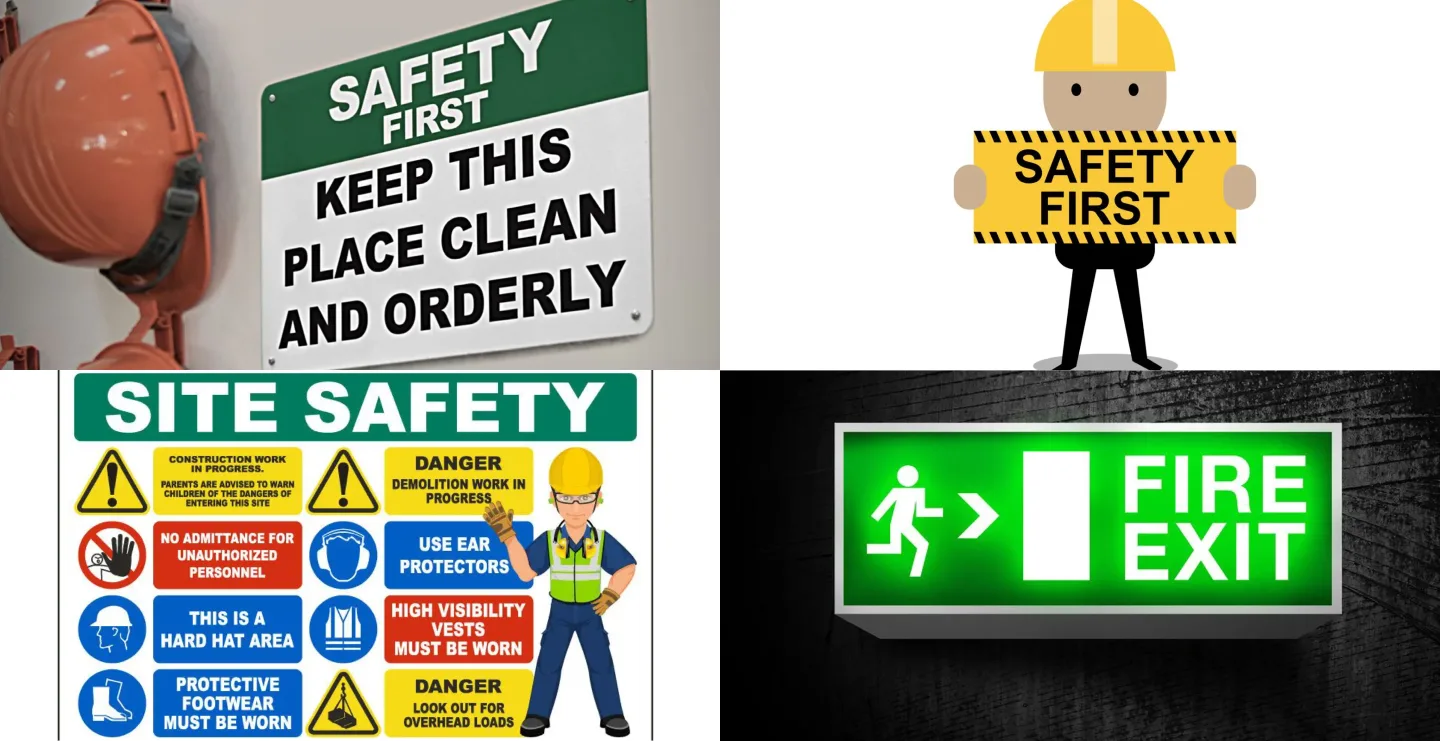
5. Fire Safety Signs
Red signs marking fire extinguishers, fire exits, and fire alarm locations help occupants respond quickly during an emergency.
6. Emergency and First Aid Signs
Green signage marking first aid stations, emergency exits, and assembly points guides people to safety during incidents.
7. Mandatory Action Signs
Blue circular signs indicating required actions, such as wearing a hard hat, safety glasses, or hearing protection, are standard in industrial and construction settings.
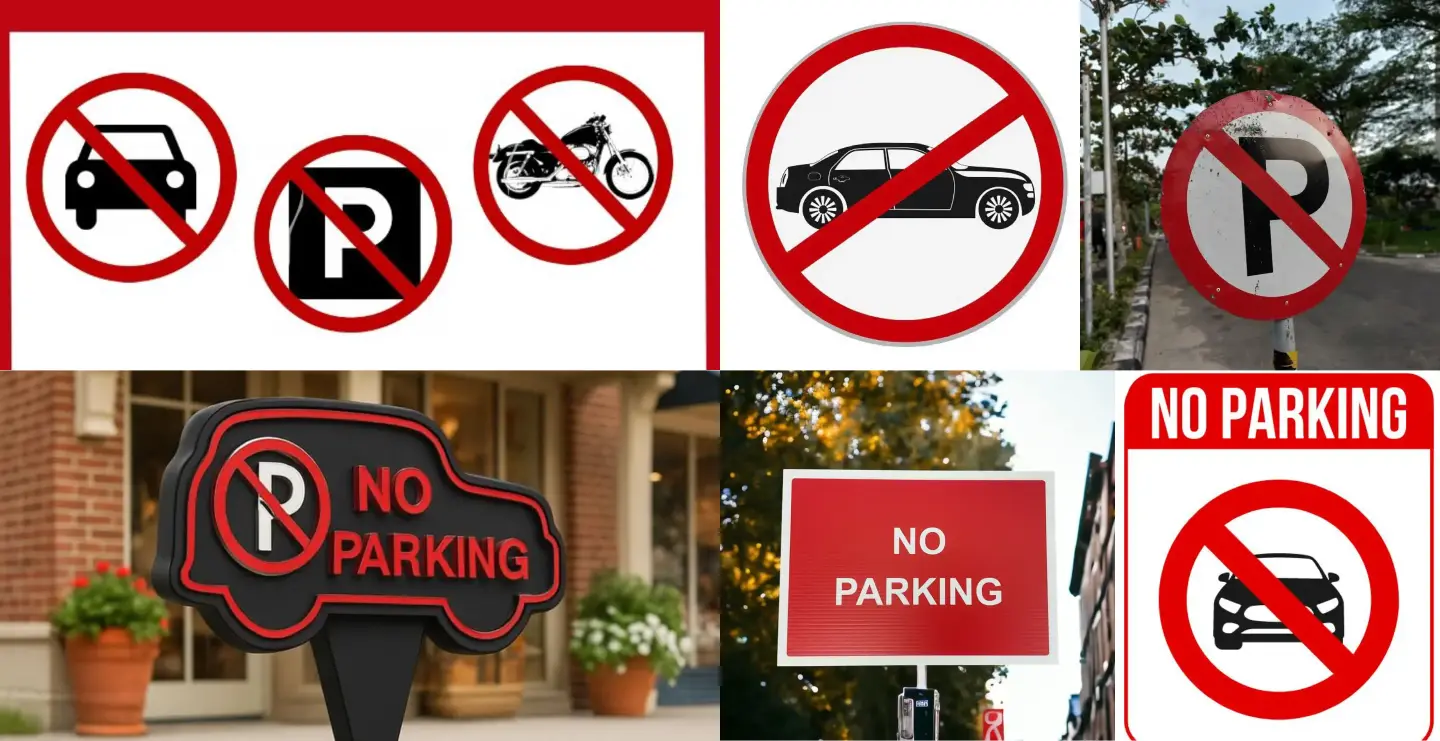
8. Prohibition Signs
Red circular signs with a diagonal line communicate actions that are strictly forbidden, such as no smoking or no entry areas.
Choosing the Right Safety Sign Material
Aluminum
Durable and rust-resistant, aluminum is the most common material for outdoor and industrial safety signs due to its long lifespan.
Reflective Vinyl
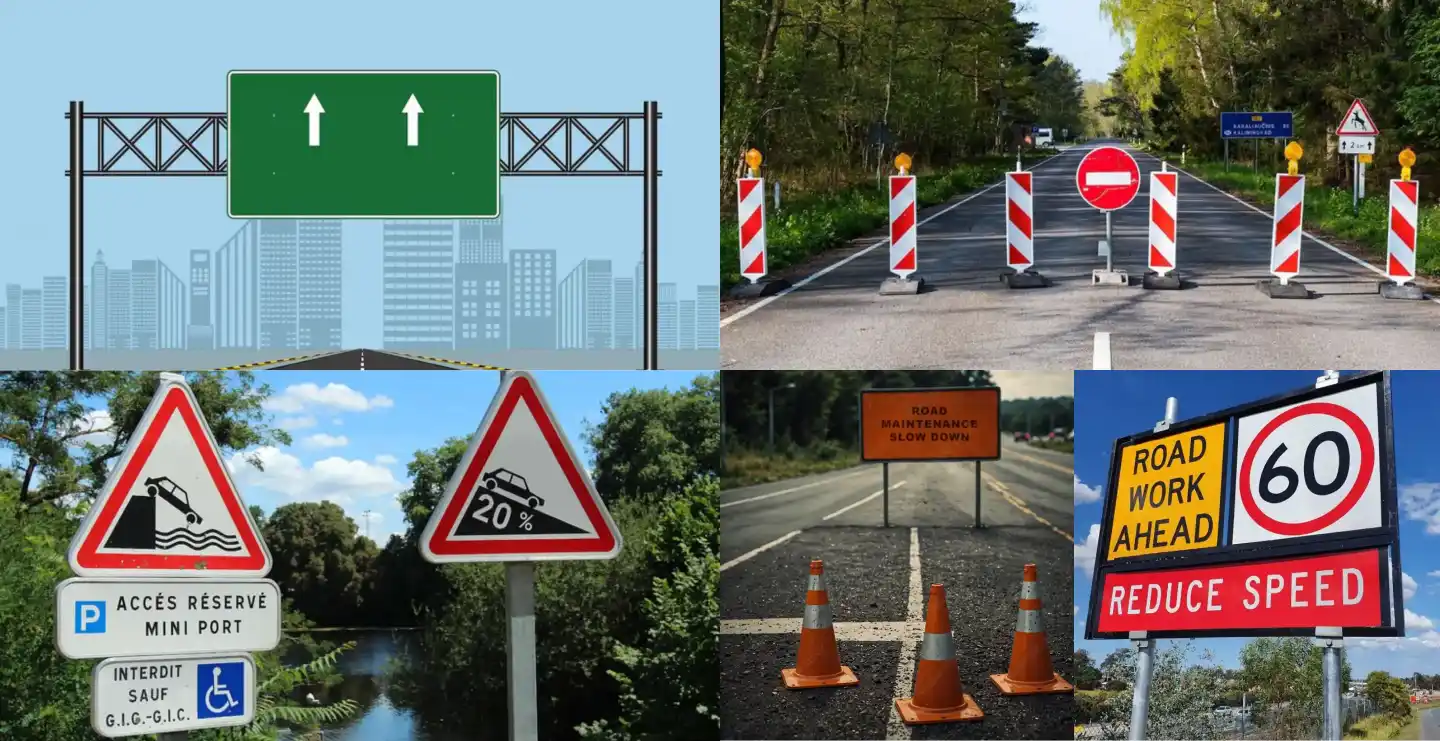
Used on signs that need to remain visible at night or in low-light conditions, such as road and construction site signage.
Rigid Plastic
A cost-effective option for indoor safety signs, offering good durability for controlled environments.
Photoluminescent Material
Glow-in-the-dark signage is increasingly used for emergency exit and evacuation signs, ensuring visibility even during power outages.
Placement Guidelines for Safety Signage
Eye-level visibility: Safety signs should generally be placed at eye level in high-traffic areas to ensure they are easily seen.
Hazard proximity: Warning and danger signs should be placed as close as possible to the actual hazard without creating additional risk.
Consistent standards: Using standardized colors and symbols across a facility helps employees and visitors quickly recognize sign meanings, even under stress.
Emergency route marking: Exit and evacuation signs should be placed at regular intervals along escape routes, remaining visible from multiple angles.
Safety Sign Board Cost in 2026
Small Standard Warning Signs
Basic rigid plastic or aluminum safety signs typically range from 10 to 40 dollars per sign, depending on size and material.
Reflective and Outdoor Signs
Reflective vinyl or heavy-duty aluminum signs for outdoor signages use generally cost between 25 and 80 dollars per sign.
Custom Facility Safety Signs
Signs with custom text, company branding, or specific hazard instructions typically range from 40 to 150 dollars, depending on complexity.
Photoluminescent Emergency Signs
Glow-in-the-dark exit and evacuation signs usually cost between 30 and 100 dollars per sign.
Bulk Facility-Wide Signage Packages
Large facilities ordering signage in bulk for full compliance coverage often spend between 500 and 3,000 dollars or more, depending on facility size and sign variety.
Additional Cost Factors
Compliance requirements: Signs must often meet specific regulatory standards, which can affect material and design costs.
Installation: Mounting hardware and professional installation may be needed for signs in hard-to-reach or structural locations.
Customization: Adding company logos, multiple languages, or specific instructions increases both design and production costs.
Ask Instant Pricing from Expert Signage Manufacturers
Contact Now →Frequently Asked Questions
1. What do the different safety sign colors mean?
Red typically indicates danger or fire equipment, orange indicates warning, yellow indicates caution, blue indicates mandatory action or notices, and green indicates safety or emergency information.
2. Are safety signs legally required in workplaces?
Yes, most industries are legally required to display specific safety signage based on workplace hazards and local occupational safety regulations.
3. What material is best for outdoor safety signs?
Aluminum is the most common choice for outdoor safety signs due to its durability and resistance to rust and weather damage.
4. How much does a basic safety sign cost?
Basic safety signs typically range from 10 to 40 dollars each, depending on size, material, and whether they are custom designed.
5. What are photoluminescent safety signs used for?
These glow-in-the-dark signs are commonly used for emergency exits and evacuation routes to ensure visibility during power outages or low-light conditions.
6. Can safety signs be customized with company branding?
Yes, many safety signs can include company logos or specific facility instructions while still following standard color and symbol requirements.
7. How often should safety signs be inspected or replaced?
Safety signs should be inspected regularly, typically every few months, and replaced if faded, damaged, or no longer clearly legible.
8. Do safety signs need to include multiple languages?
In workplaces with diverse language speakers, many organizations choose to include multiple languages or rely on universally recognized symbols to ensure clear communication.
Final Thoughts
Safety sign board design plays a vital role in protecting people and maintaining regulatory compliance across workplaces, construction sites, and public spaces. By using standardized colors, durable materials, and strategic placement, businesses can ensure their safety signage communicates clearly and effectively in 2026, helping prevent accidents and keeping everyone informed and protected.