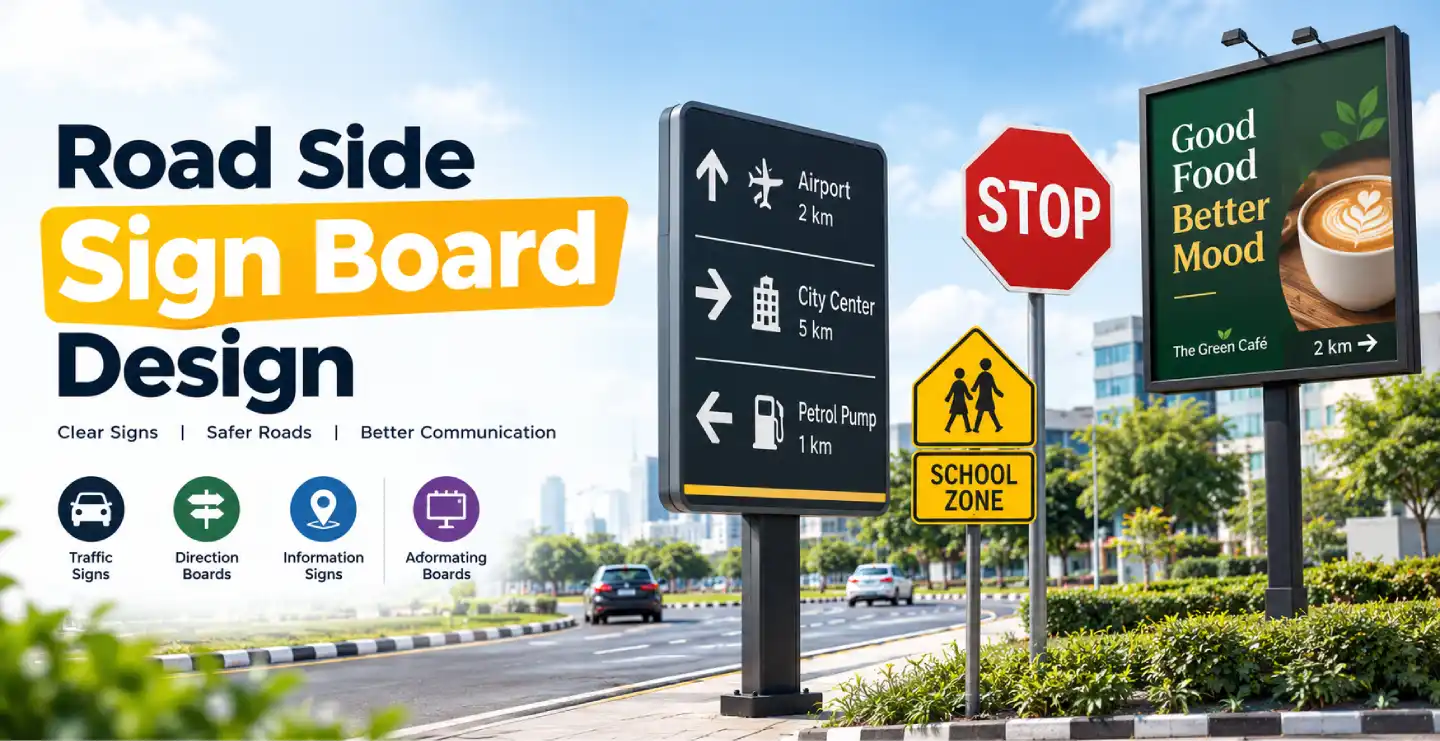
Drivers have only a few seconds to notice a sign, read it and decide whether to act. That is the challenge and the opportunity of road side sign board design. Whether you are advertising a shop, a hotel, a showroom, a school or a service, a roadside board must communicate quickly and clearly, or it will be ignored.
In this guide we explain the principles behind effective roadside signs, from size and colour to materials, placement and safety.
Understand the Viewer: A Person in Motion
Roadside signs are read by people who are driving, riding or travelling as passengers. They are focused on the road, not on your board. That means your message has to be simple, bold and instantly understandable. If someone needs more than three or four seconds to read it, the design is too complicated.
Think about speed. On a busy city street, vehicles move slowly, so slightly more detail is possible. On a highway, speeds are high, so only a name, a logo and one short message will work.
The Golden Rule: Keep the Message Short
A good roadside sign carries just one main idea. Choose the single most important message, such as your business name, a product or a direction, and make that the hero. A common guideline is to keep the text to roughly five to seven words. Phone numbers, long lists and paragraphs belong on brochures or websites, not on a board seen at speed.
If you must include contact details, use only one number or website, and make it large and easy to read.
Letter Size and Readability
Letter height is the most important technical factor. As a basic idea, larger distances need taller letters. If the board will be read from fifty metres away, the lettering must be much bigger than on a board read from ten metres. Always design for the farthest point where you want people to notice the sign.
Choose simple, thick fonts. Sans-serif styles are usually the easiest to read at a distance. Avoid thin scripts, heavy decoration and tightly packed letters. Leave comfortable spacing between letters and lines so words do not blur together.
Colour and Contrast
Contrast beats everything. Black on yellow, white on dark blue, white on green and white on red are classic high-visibility combinations. Avoid placing light colours on light backgrounds or dark on dark. Remember that sunlight, shadows and dust reduce colour clarity, so strong contrast keeps your message readable all day.
Use your brand colours, but if they lack contrast, adjust their shades or add a solid background panel behind the text. Limit the palette to two or three colours so the sign looks clean.
Choosing the Right Board Type


Hoardings and Billboards
Large-format boards placed along highways and main roads. They are suited to brand campaigns, real estate projects and wide-reach advertising.
Unipole and Pole-Mounted Signs
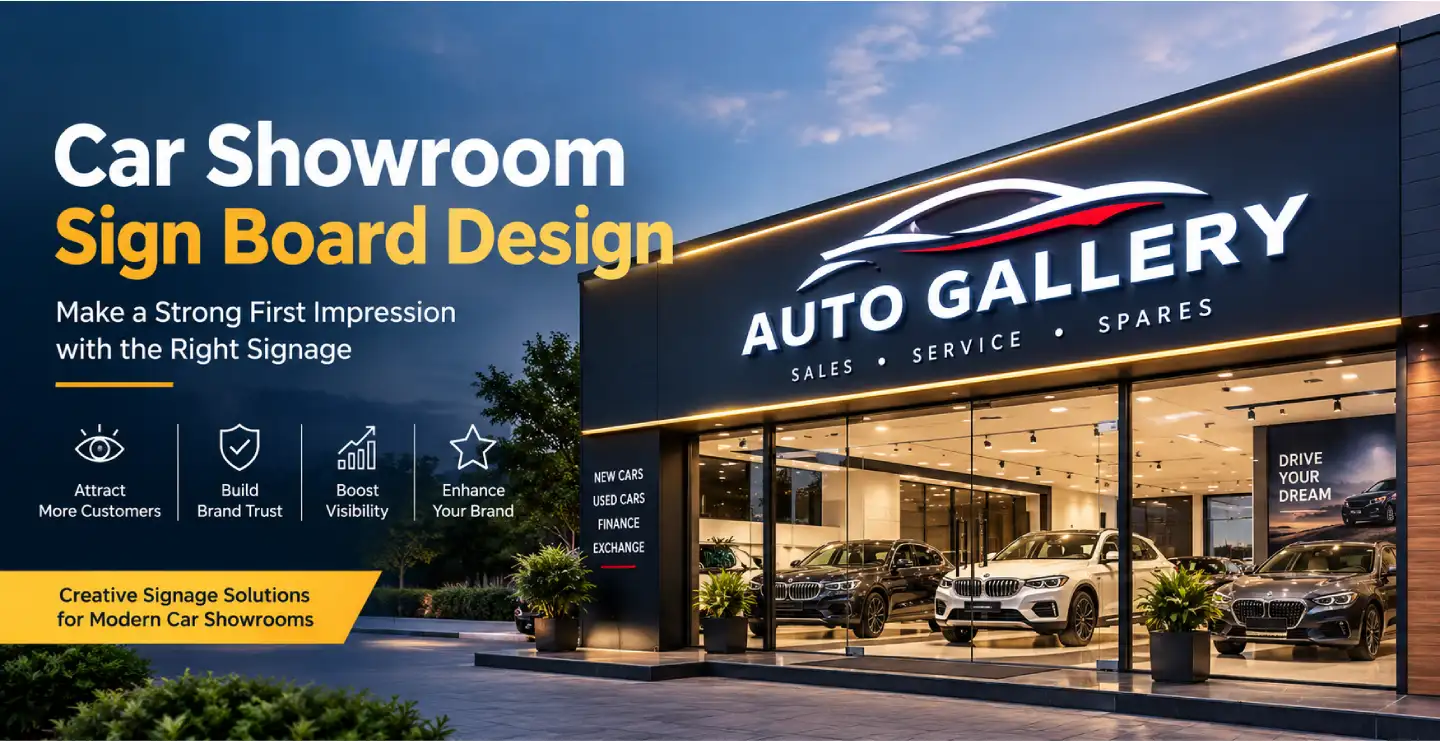
Tall boards mounted on a single pole or structure, ideal for showrooms, petrol stations, hotels and malls that want visibility above surrounding buildings.
Directional Boards
Smaller signs with arrows and distances that guide people to your location, such as a farmhouse, a school or a wedding venue down a side road.
Shop Fascia and Projecting Boards
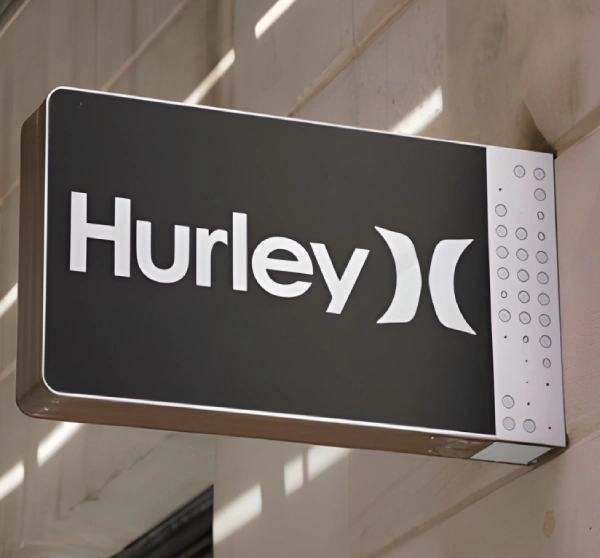
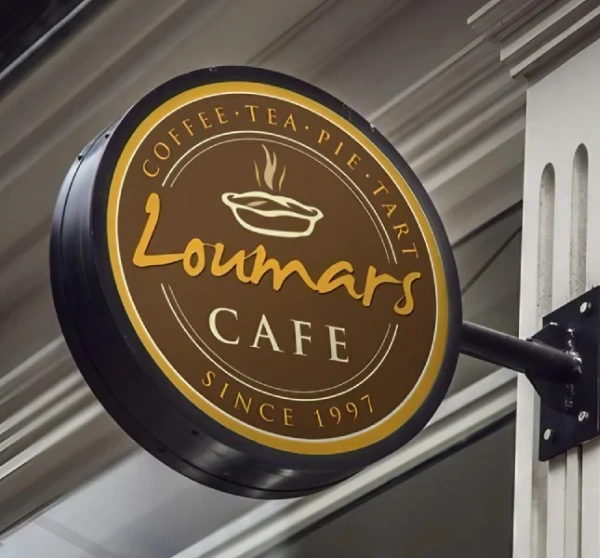
Boards attached to the shop front or sticking out from the wall so they can be seen from both directions of a street.
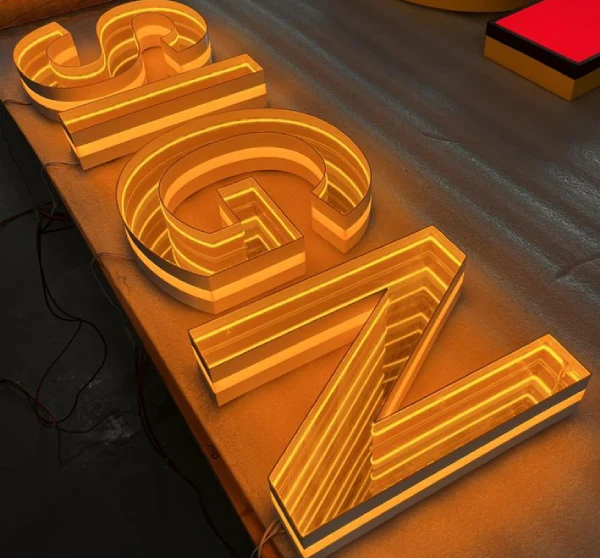
LED and Illuminated Boards
Lit signs ensure visibility after dark and in low-light conditions, increasing the hours during which your board works for you.
Materials for Roadside Durability
Roadside signs live outdoors in sun, rain, wind and pollution. Common materials include aluminium composite panels, galvanised iron frames, stainless steel, acrylic, flex with strong framing and reflective sheeting. For high-wind areas, structural design is crucial. The frame, base and fixings must be strong enough to resist wind pressure and vibration from passing traffic.
Reflective vinyl or retro-reflective sheeting is widely used for directional and safety signs because it shines when vehicle headlights hit it, making it highly visible at night.
Placement Matters as Much as Design
The best design fails if it stands in the wrong place. Position the sign where drivers have time to see it and react, usually before the turn or entrance. Check for obstacles like trees, poles, flyovers, parked vehicles and other signs. Visit the spot at different times of day to see how sunlight and shadows fall on the board. For directional signs, place a first notice early, a confirmation closer to the turn and the final board at the entrance.
Safety and Permissions
Roadside signage is regulated in many places. Municipal bodies, highway authorities and local councils may require permits, set size limits or control placement. Boards must not block traffic signals, distract drivers dangerously or fall onto the road. Structural safety is serious, since large boards face strong winds. Always follow local rules, use qualified installers and ask for proper structural and electrical work when the sign is illuminated.
Design Checklist
- One clear message with minimal words.
- Large, bold, high-contrast lettering.
- Simple logo that remains visible from far away.
- Lighting or reflective materials for night visibility.
- Strong structure suited to wind and weather.
- Placement checked from the driver's point of view.
- Permissions confirmed before installation.
Common Mistakes
The most frequent error is putting too much information on the board. Another is using tiny letters that look fine on a computer screen but vanish on the road. Poor contrast, decorative fonts, cluttered backgrounds and badly placed boards also reduce performance. Finally, many businesses forget maintenance. A torn flex, rusted frame or broken light sends a negative message about your brand.
Roadside Boards for Different Businesses
Different businesses need different roadside strategies. A hotel or resort benefits from a tall board with its name, logo and a short line such as rooms and restaurant. A school or coaching centre should show the name and one strong message, with a directional board pointing to the entrance. Real estate projects often use large hoardings with the project name, a key image and one contact number. A garage, tyre shop or service centre needs a simple, bold sign that clearly says what service is available. Farm stays, wedding venues and shops on interior roads should use a series of directional signs so travellers are guided step by step.
Frequently Asked Questions
How big should a roadside board be?
It depends on road speed and viewing distance. A board on a narrow city road can be smaller, while a highway board must be much larger with fewer words. Always design for the farthest point where you want people to see it.
Is flex good enough for roadside boards?
Flex is economical and fast, but it fades and tears in strong sun and wind. For long-term use, aluminium composite panels or metal-backed boards last longer.
Do roadside boards need lighting?
If customers travel at night, yes. LED lighting or reflective sheeting greatly improves night visibility and extends the value of the board.
Final Thoughts
Effective road side sign board design is about discipline: say less, show it bigger and make it easy to read. When the design, material and location work together, your sign becomes a dependable source of customers and brand recognition.
Brand Signages can help you plan roadside boards that are visible, durable and suited to your business and location.