A petrol pump is one of the few businesses people look for urgently. A driver with a low fuel gauge scans the road for a familiar sign, and the first station they can clearly see often wins the sale. That is why petrol pump sign board design is not just about looks. It is about visibility from a distance, instant recognition, clear information and safety.
This guide covers the key elements of fuel station signage, from the main pylon to canopy branding, price boards and safety signs.
Why Signage Is Critical for Fuel Stations
Fuel stations compete on location, convenience and trust. Customers rarely compare prices closely on the road, so they choose a station that looks reliable, clean and easy to enter. A strong sign system achieves several goals at once. It helps drivers spot the station early, shows what services are available, guides vehicles smoothly through entry and exit points, and supports safety by displaying important instructions.
Key Sign Elements of a Petrol Pump


Main Pylon or Totem Sign
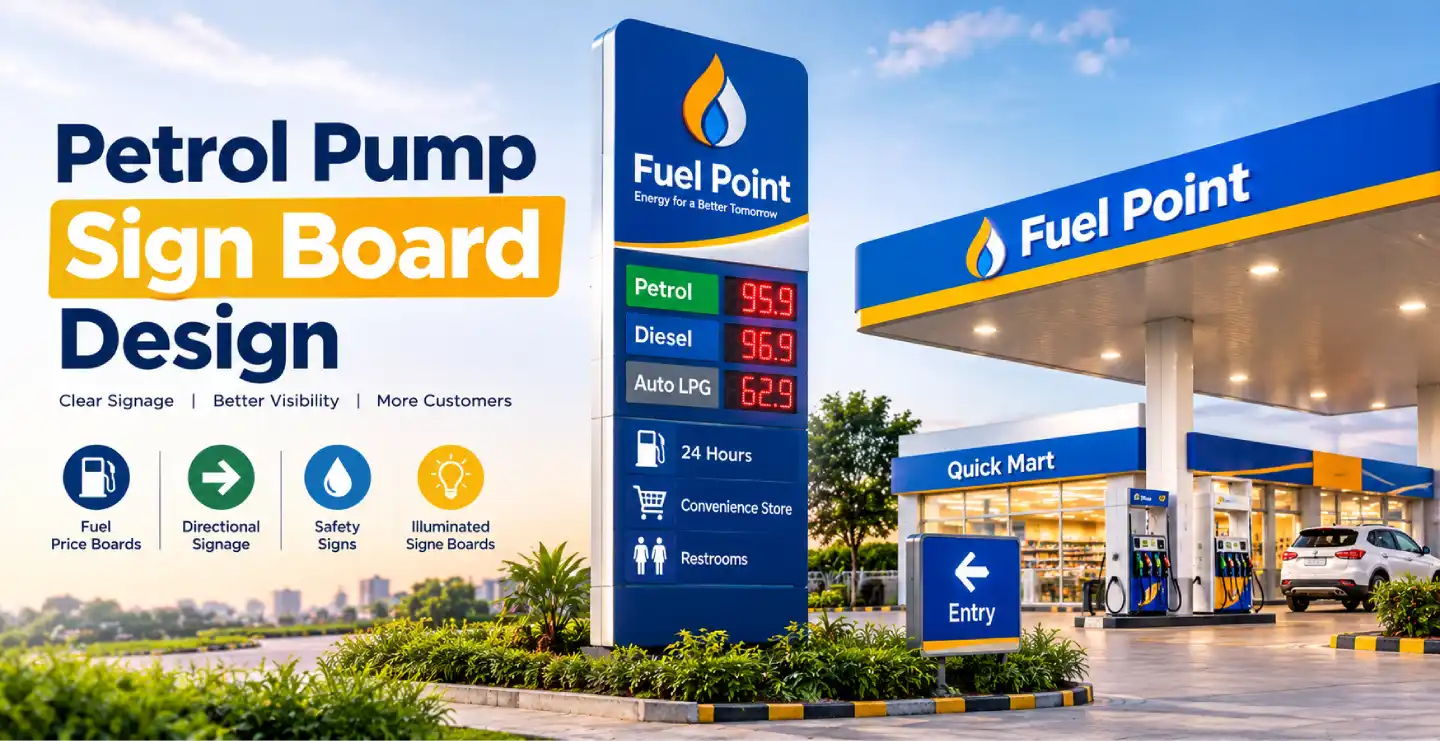
This tall standing sign near the road is the most important element. It carries the brand logo and often displays fuel types and prices. Because it must be visible from a long distance, the pylon is usually built tall with a strong structure and internal illumination.
Canopy Fascia Branding
The edge of the canopy over the dispensing area carries brand colours, logos and lighting. This makes the station recognisable from different angles and at night. Consistent colour bands and neat lighting create a clean, organised image.
Price Display Boards
Digital or manual price boards show fuel rates clearly. LED price displays are common because they allow quick updates and bright visibility. Keep digits large, high-contrast and evenly lit.
Entry and Exit Signs
Clear arrows and text help vehicles enter and leave smoothly, reducing confusion and congestion. Mark entry and exit lanes, one-way directions and turning points clearly.
Dispenser and Island Signs
Signs on or near fuel dispensers mark the fuel type, such as petrol, diesel or premium grades. Use colour coding and simple labels to avoid mistakes at the pump.
Service and Amenity Signs
Boards for air filling, restrooms, convenience store, ATM, car wash, EV charging or tyre services tell customers what else you offer. These signs can build extra revenue by prompting additional purchases.
Safety and Regulatory Signs
Fuel stations require prominent safety messages such as no smoking, switch off engine, no mobile phone use and fire safety instructions. These must be clearly visible, durable and compliant with applicable regulations.
Colour and Branding
Many fuel companies have established colour schemes and brand guidelines. If you operate under a major oil company, you will usually need to follow their approved signage designs and specifications. Independent stations have more freedom but should still choose a consistent, memorable colour palette. Bright, high-contrast combinations such as red and white, blue and yellow or green and white are common because they stand out on busy roads and remain visible in all weather.
Lighting for Day and Night Visibility
Many fuel stops happen late in the evening or overnight, so lighting is critical. LED lighting is widely preferred for its brightness, long life and low power use. Illuminated pylons, backlit canopy fascias and bright price displays help drivers find the station from far away. Even lighting also gives the station a safer and more welcoming feel, which can attract families and night travellers.
Avoid glare. Lights should be bright enough to be noticed but not so intense that they dazzle drivers or disturb nearby residents.
Material and Construction
Petrol pump signs must be sturdy and weatherproof. Typical materials include aluminium composite panels, steel structures, acrylic faces, polycarbonate sheets and weather-resistant vinyl. Pylon structures must be engineered to handle wind loads, and foundations should be solid. Because these stations are fire-sensitive environments, electrical installation needs special care. Use approved fittings, proper earthing and qualified electricians, and follow all applicable safety standards.
Design Principles for Better Performance
Keep It Simple
The primary sign should carry only the brand and the main message. Too much text slows recognition.
Think Like a Driver
Test the sign from vehicle height and approaching speed. Check visibility from both directions of the road, and from far enough away to give drivers time to slow down and turn in.
Use Hierarchy
Make the brand name biggest, fuel types and prices second, and extra services third. This order matches what drivers want to know first.
Maintain Consistency
Use the same fonts, colours and icons across all station signs. Consistency builds trust, because the station looks organised and professionally managed.
Planning Checklist
- Confirm brand guidelines if you are a franchise or dealer.
- Decide the pylon height and location for maximum road visibility.
- Plan canopy lighting and fascia colours.
- Select price display type and size.
- Mark clear entry, exit and traffic flow signs.
- Install visible safety and regulatory signs.
- Check permits and approvals with local authorities.
Maintenance Matters
Dirty, faded or half-lit signs weaken your brand quickly. Clean faces regularly, replace failed LED modules, check structural fixings and inspect wiring on a schedule. At a fuel station, small maintenance problems can also become safety concerns, so regular inspection is a smart habit.
Digital Elements in Modern Fuel Station Signage
Modern fuel stations increasingly use digital elements to improve convenience and brand presence. LED price displays save time and keep rates accurate. Small digital screens at the dispensing area can show offers, safety reminders or loyalty programmes. EV charging stations need clear signs for charger type, parking bays and payment instructions. Some stations add illuminated brand logos on the canopy corners and bright convenience store signs that attract customers who want more than fuel. Whichever features you choose, keep the display clean and avoid overloading drivers with too many messages at once.
Frequently Asked Questions
How tall should a petrol pump pylon be?
Height depends on road width, speed and local rules. The pylon should rise above surrounding obstacles so drivers can see it early, but it must also meet permission and structural requirements in your area.
Can an independent petrol pump design its own signs?
Dealers attached to major fuel companies usually follow the company's approved designs. Independent stations have more freedom, but should still follow safety rules and keep a consistent, professional look.
What lighting is best for fuel stations?
LED lighting is widely used because it is bright, efficient and long lasting. It must be installed by qualified electricians with fittings suitable for the station environment.
How often should station signs be checked?
Inspect them regularly, ideally as part of routine station maintenance. Look for dirty faces, failed lights, loose panels and damaged structures, and fix problems quickly.
Is a separate sign needed for the convenience store?
Yes, if you run a store, cafe or service bay. A separate illuminated board lets drivers know about these extras, and it helps turn a quick fuel stop into additional sales.
Final Thoughts
The best petrol pump sign board design makes your station easy to find, easy to understand and easy to trust. It guides vehicles, supports safety and strengthens your brand every day. When visibility, clarity and construction quality work together, the signage becomes a real business asset.
Brand Signages can help you plan fuel station signage that is visible, durable and built to match your location and requirements.