Across Tamil Nadu, name boards in Tamil have gone from a cultural preference to something closely tied to state policy. Whether it's a home, a shop, an office, or a flat, more people are choosing a name board in Tamil - partly out of pride in the language, and partly because of rules that now apply to commercial signage in the state. This guide covers what those rules actually say, the types of Tamil name boards available, materials and design options, and what to check before you order one.
Why Choose a Name Board in Tamil?
Tamil is one of the oldest living languages in the world and the mother tongue of the majority of people across Tamil Nadu and Puducherry. A Tamil name board reflects pride in that heritage and makes a home or business instantly familiar to neighbours, customers, and local vendors who read Tamil comfortably. For many families and business owners, it also carries an emotional weight that an English-only board simply doesn't.
The Tamil Nadu Rule on Name Boards
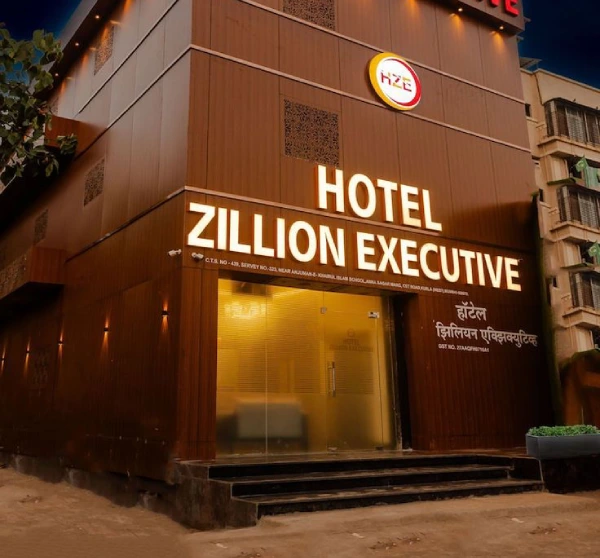
Unlike a purely personal choice, Tamil signage for commercial establishments in Tamil Nadu is backed by an actual government order. A 1977 government order, still enforced today, requires that name boards of shops, restaurants, and other commercial establishments display the name in Tamil at the top, with an English version below it, and any other language below that. The order also specifies a font size ratio of 5:3:2 between Tamil, English, and any third language, meaning the Tamil text should be visibly the largest.
This rule has seen renewed enforcement in recent years. City corporations, including Greater Chennai Corporation, have run surveys to identify non-compliant shops, and the state's Tamil Development and Information Department has warned businesses that establishments without Tamil name boards may face fines. Neighbouring Puducherry has moved to introduce a similar requirement for its own shops and establishments. Because enforcement details and specific penalties can change, it's worth checking the latest circular from your local corporation or municipality before finalising a commercial board.
Types of Tamil Name Boards


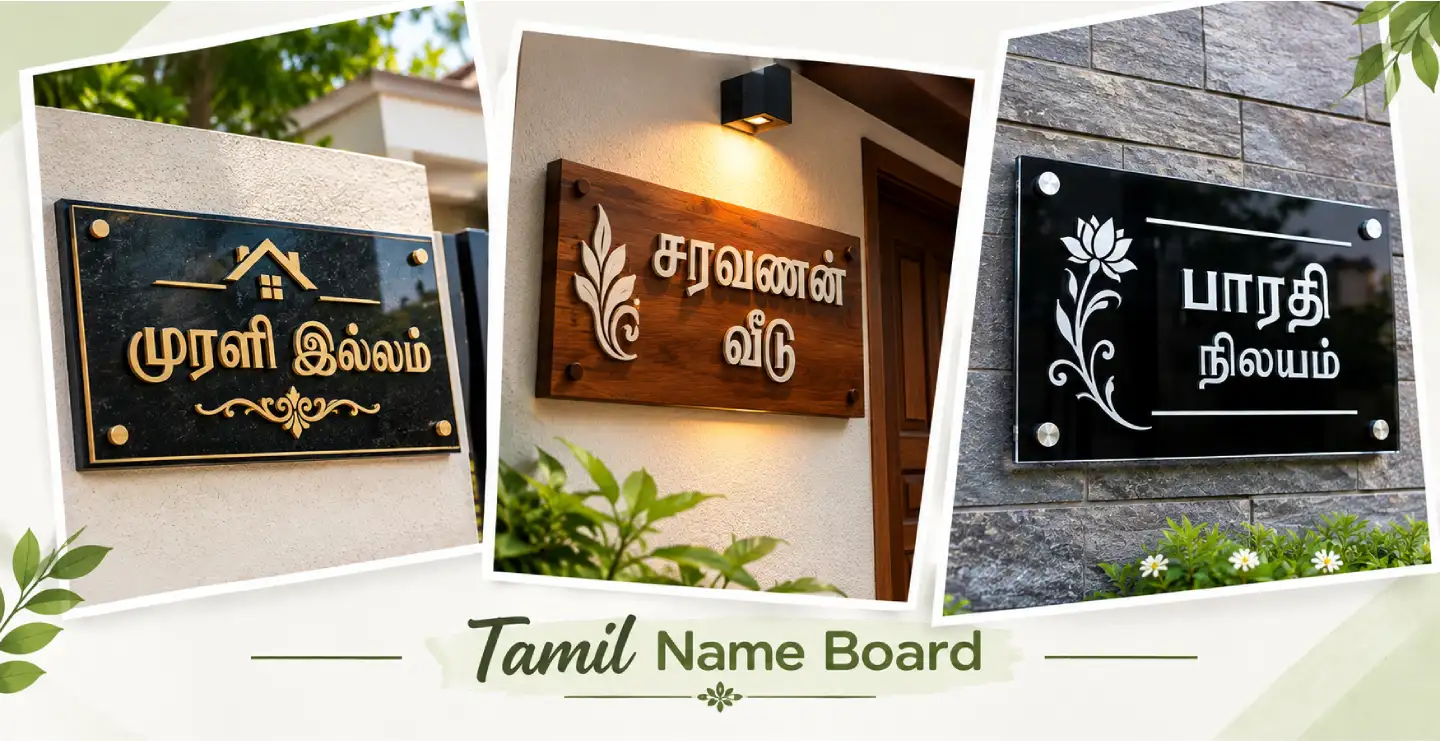
- House name boards – Displayed at the gate or main door, often combining a house name with the family surname.
- Shop and business name boards – Subject to the Tamil-first display rule described above, typically the shop's fascia signage.
- Office and cabin name plates – Used for designations and employee names inside workplaces.
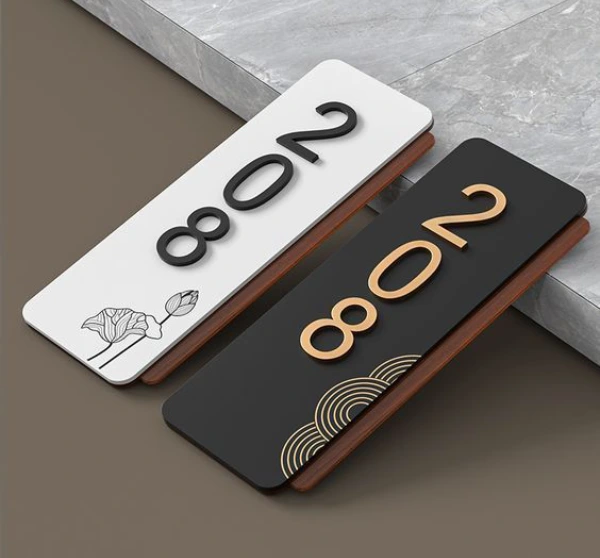
- Flat and apartment door plates – Compact plates for individual flat doors in Chennai, Coimbatore, Madurai, and other cities.
- Vehicle and hoarding name boards – Some business owners also add Tamil lettering to vehicles and larger outdoor hoardings for consistency with their shop signage.
Popular Materials for Tamil Name Boards
- Acrylic and LED backlit boards – A modern option widely used for shop fronts that need to remain visible in the evening.
- Wooden boards – A traditional choice for homes, often hand-carved or engraved with Tamil calligraphy.
- Granite and stone – Extremely durable, popular for house gates and compound walls.
- Vinyl-printed PVC or ACP – The most economical option for shop and commercial boards, especially useful for meeting the Tamil-English size ratio through printed layout.
- Brass and copper – A classic, engraved option for home entrances and professional name plates.
Design Ideas for Tamil Name Boards
Traditional Tamil name boards often use bold, classic Tamil typefaces carved into wood or stone, sometimes paired with temple-inspired borders or motifs. Modern shop signage tends to favour clean sans-serif Tamil fonts on backlit acrylic, designed for maximum visibility from the street. For homes, a bilingual layout - Tamil on top, English below, matching the same top-to-bottom convention used in commercial signage - is a popular and practical choice, since it stays legible to Tamil and non-Tamil readers alike.
How Names Are Converted into Tamil Script
Turning a name from English into Tamil is a matter of transliteration - writing the name phonetically in Tamil letters rather than translating its meaning. Because Tamil has specific rules for how certain sounds are represented, it's worth having the text checked by a native speaker or an experienced signboard maker before production, and always insisting on a design proof so you can confirm the spelling looks and reads correctly before it becomes permanent.
Choosing the Right Size and Layout
For commercial signage following the government order, the layout itself is largely dictated by the rule: Tamil on top in the largest type, English below in a smaller size, and any third language smaller still, in roughly a 5:3:2 proportion. For house and personal name boards, there's more flexibility - a common approach is a two-line layout with Tamil above and English below, sized generously enough that both remain easy to read from a short distance.
How to Choose a Name Board Maker
- Ask for a digital proof of the Tamil text and layout before production begins
- For shop signage, confirm the maker understands the Tamil-first, 5:3:2 sizing convention required by law
- Check reviews and photos of previous Tamil-script work
- Compare material options and finishing within your budget
- Confirm delivery timelines, especially for orders outside major cities
Frequently Asked Questions
Is a Tamil name board legally required for shops in Tamil Nadu?
Yes, a government order requires commercial establishments to display their name in Tamil at the top of the signboard, with English below, and this rule is actively enforced by local corporations.
What is the required size ratio between Tamil and English text?
The specified ratio is 5:3:2 for Tamil, English, and any third language, meaning the Tamil text should be the most prominent element on the board.
Does this rule apply to house name plates as well?
The formal government order applies specifically to commercial establishments; house name plates are more a matter of personal choice, though many households follow a similar Tamil-first layout out of preference.
What happens if a shop doesn't comply with the Tamil signage rule?
Non-compliant establishments risk fines and enforcement action from local corporations, which have run surveys specifically to identify shops without Tamil name boards.
Can I get a bilingual Tamil-English name board for my home?
Yes, this is one of the most popular formats, typically with Tamil on the top line and English below for easy reading by everyone.
How do I make sure my name is spelled correctly in Tamil?
Always request a design proof before production, and where possible, have the transliterated text reviewed by a native Tamil speaker to confirm accuracy.
Does Puducherry have a similar rule to Tamil Nadu?
Puducherry's government has moved to introduce a similar requirement asking shops and establishments to display Tamil versions of their names, following Tamil Nadu's lead.
Conclusion
A name board in Tamil is both a cultural choice and, for businesses in Tamil Nadu, a compliance requirement worth taking seriously. Getting the Tamil-first layout and sizing right for commercial signage - and choosing a design that suits your home or office for personal boards - ensures your name board is both accurate and legible to everyone who passes it.