Some name plates simply display a name. Others make you stop and admire the craftsmanship. Etched name plates belong to the second group. With sharp edges, smooth detail and a finish that feels part of the metal itself, etching has been trusted for decades by homes, offices, institutions and industries that want a plate which looks refined and lasts.
This guide explains what etching is, how it differs from engraving, where etched plates work best, and how to get a great result for your own project.
What Is Etching?
Etching is a process in which a design is created on metal by selectively removing material from the surface. A protective layer, called a resist, is applied to the plate in the shape of the design. The plate is then treated so that only the unprotected areas are eaten away, leaving the pattern recessed into the metal. The recessed portion is often filled with enamel paint, usually black, though other colours are possible, which makes the lettering stand out clearly.
Because the design is created in the metal itself and then protected with a filled finish, the result is crisp, uniform and resistant to everyday wear.
Etching vs Engraving: What Is the Difference?
People often confuse the two. Engraving uses a cutting tool or laser to carve into the surface, which gives deeper, bolder lines. Etching uses a controlled chemical or electrochemical process, which allows extremely fine detail, smooth curves and complex artwork.
- Detail: Etching handles tiny text, thin lines and intricate logos very well.
- Consistency: Etching produces uniform depth across the whole design, even on large batches.
- Depth: Engraving tends to be deeper, while etching is usually shallower and cleaner.
- Look: Etched plates have a neat, flat, premium appearance with a clear colour fill.
Neither is better in every situation. If your plate has delicate artwork or small lettering, etching is usually the stronger option.
Best Metals for Etched Name Plates


Stainless Steel
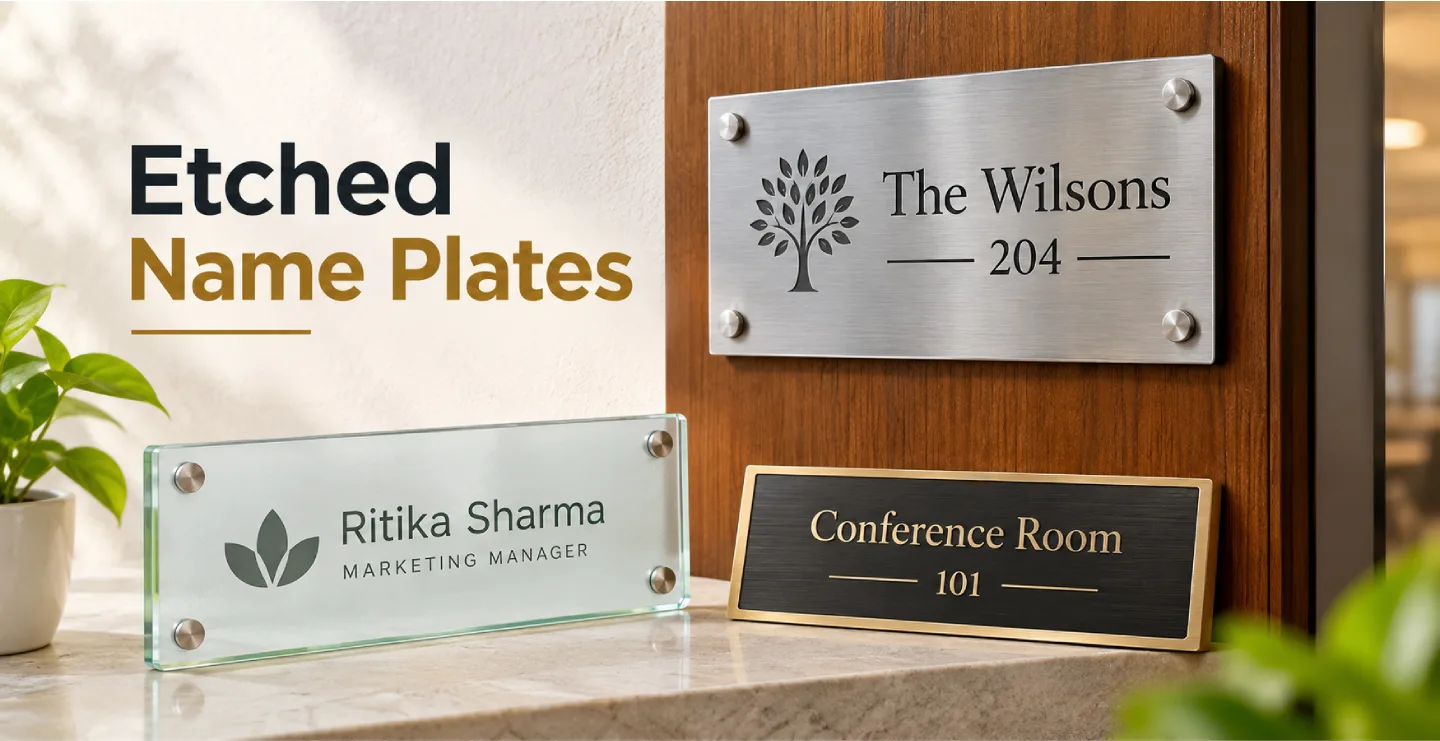
The most common choice. It etches cleanly, resists rust and looks sharp in brushed or mirror finishes. It suits offices, hospitals, factories and outdoor use.
Brass
Brass takes etching beautifully and gives a warm, traditional look. Black enamel against golden brass is a timeless combination used on doors, institutional boards and commemorative plaques.
Aluminium
A lighter and more economical option, suitable for equipment labels, large boards and indoor signs.
Copper
Copper adds a rich, artistic character and is picked for design studios, restaurants and premium residences.
Where Etched Name Plates Are Used
- Homes: House names, family names and door numbers with elegant detail.
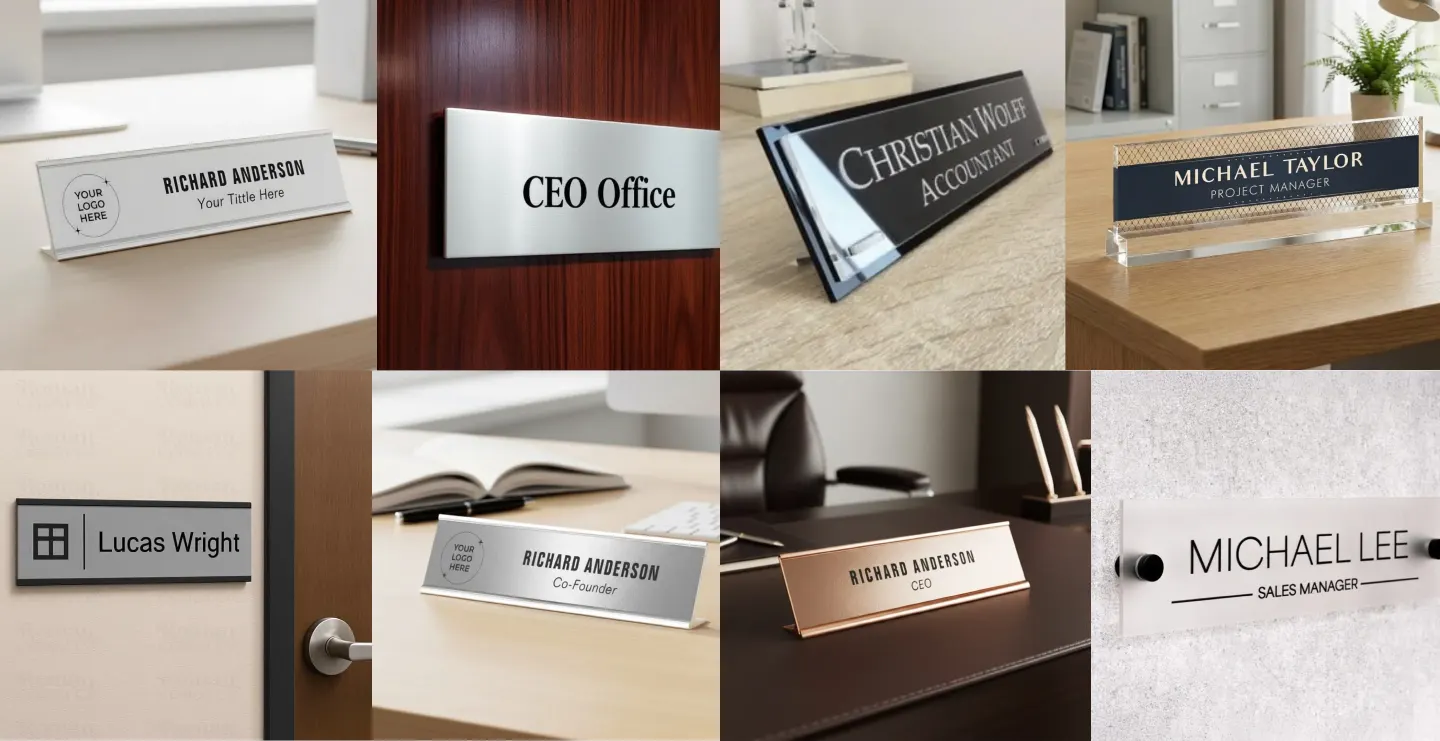
- Offices: Executive cabin plates, reception boards and company identity plates.
- Institutions: Foundation stones, inauguration plaques, award plates and memorial boards.
- Industrial use: Machine identification plates, serial number labels and safety information tags where durability matters.
- Hospitality: Room numbers, directional signs and brand plates in hotels and restaurants.
- Gifts and recognition: Trophies, appreciation plaques and commemorative items.
Advantages of Etched Name Plates
Excellent Detail
Small text, thin borders and delicate patterns stay readable. This is valuable when a logo or crest has fine elements that would blur with other methods.
Long-Lasting Finish
Since the design is recessed and filled, it does not peel off like stickers or surface printing. Day-to-day cleaning and light contact do not easily harm it.
Professional Look
Etched plates carry a formal, quality feel. They are chosen where reputation matters, such as law offices, medical centres, government buildings and educational institutions.
Consistency for Bulk Orders
If you need dozens of identical plates, such as for employees or machines, etching delivers uniform results from the first plate to the last.
Design Tips for Etched Plates
Begin with a clean, vector-based artwork file. High-quality artwork ensures sharp edges. Choose fonts with enough stroke thickness, because extremely thin fonts can lose clarity on small plates. Keep a margin around the border so the text does not look squeezed.
Colour choice matters. Black fill gives the strongest contrast on steel and brass. If you want a branded touch, a deep blue, red or green fill can work, as long as it stays readable. Decide whether the background should be polished, brushed or matte, because the finish changes the overall mood. A brushed background reduces glare and fingerprints, while a mirror background feels luxurious.
Mounting Options
Etched plates can be fixed with screws, standoffs, adhesive or mounted on a wooden base. Screws with decorative caps give a classic finish. Standoffs give a modern floating look. For plaques and awards, a wooden or acrylic backing board adds presence. Select the method based on the wall surface, weight of the plate and how permanent the installation should be.
Care and Maintenance
Maintenance is simple. Wipe the plate with a soft, slightly damp cloth, and dry it afterwards. Avoid strong acids, bleach or scratchy pads. For brass, occasional polishing or a protective clear coat helps maintain brightness. Outdoor plates may need a light rinse to remove dust and pollution. With basic care, an etched plate can stay in good condition for many years.
How to Order the Right Etched Name Plate
- Decide the purpose: home, office, award, or industrial label.
- Select the metal and finish based on indoor or outdoor use.
- Prepare exact text with spellings and designations verified.
- Share your logo or artwork in high resolution.
- Approve a digital proof before production.
- Confirm size, thickness, mounting method and delivery time.
Etched Name Plates for Awards and Plaques
Beyond doors and offices, etched plates are widely used for recognition. Foundation stones, inauguration plaques, achievement awards, retirement gifts and memorial tributes often carry etched text because it looks dignified and holds fine detail. A short heading, the name of the person or event, a date and a brief line of appreciation can all fit comfortably when the layout is balanced. Mounting the etched metal on a polished wooden base gives it a ceremonial presence that suits stage presentations and display shelves alike.
Frequently Asked Questions
Can etched name plates be used outdoors?
Yes. When made on stainless steel or brass with a quality enamel fill, etched plates handle outdoor conditions well. Applying a clear protective coat adds extra resistance.
Is etching suitable for small text?
It is one of the best methods for small text. Fine lines and tiny characters remain sharp, which is why etching is often used for equipment labels and detailed logos.
Can the colour fill be changed?
Yes. Black is the most common, but blue, red, green and other shades can be used. Test the colour for contrast before finalising so the lettering stays easy to read.
How long does production take?
Etching involves several stages, such as preparing artwork, processing the metal, filling colour and finishing. Single plates may be ready in a few days, while large batches need more time. Always confirm the schedule when ordering.
Final Thoughts
Etched name plates are for people who value detail and durability. They turn a simple identification need into a statement of quality. Whether you are marking a front door, honouring an achievement or labelling professional equipment, etching gives clarity and elegance that stands the test of time.
Looking for a custom etched name plate? Brand Signages can guide you through metals, finishes and designs so your plate looks exactly the way you imagined.