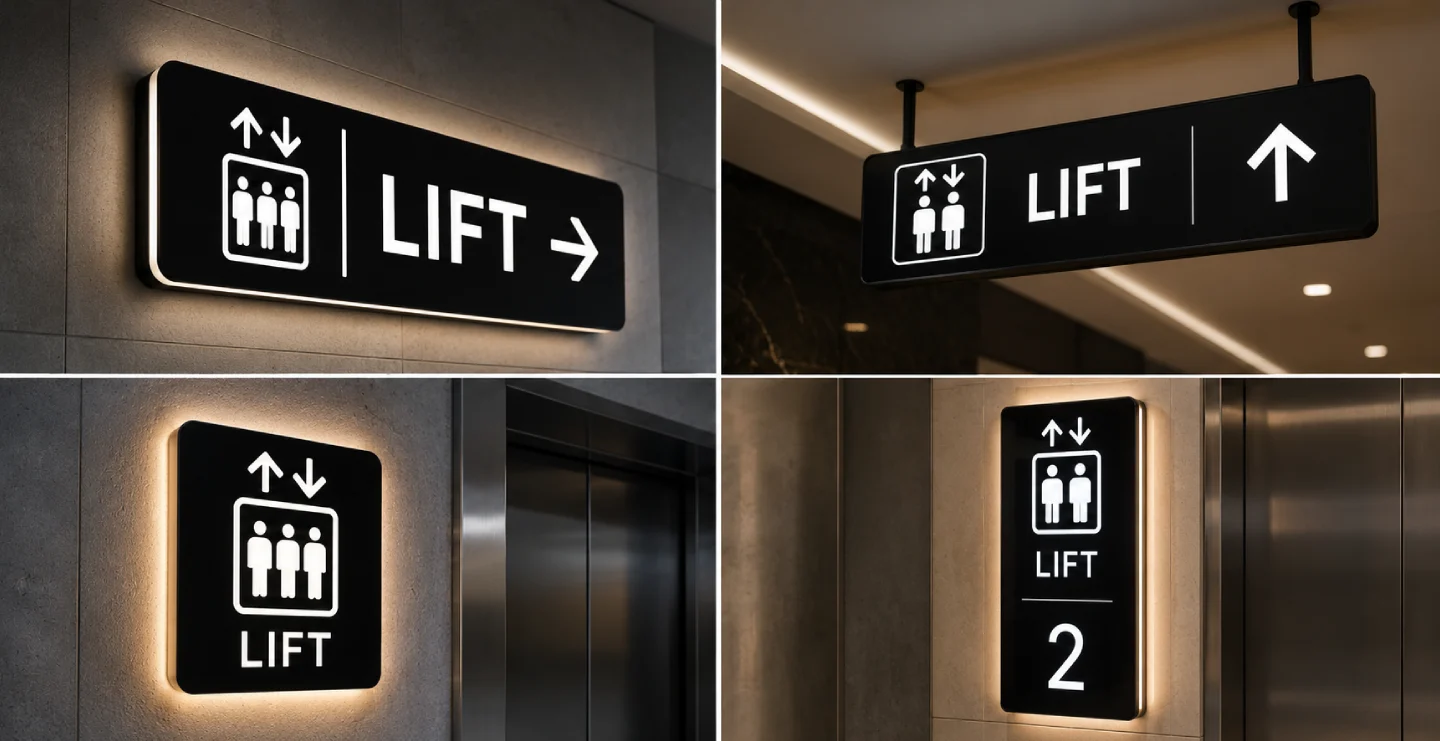
A lift sign board is more than just a display sign near an elevator – it's a vital safety and wayfinding tool that guides passengers, communicates emergency instructions, and ensures compliance with building safety codes. Whether placed inside the elevator cabin, at the lift lobby, or near the control panel, the right sign board keeps building occupants informed and safe.
In a space where clarity and quick understanding matter most, a well-designed lift sign board ensures residents, employees, and visitors know exactly how to use the elevator safely and what to do in an emergency.
Why Buildings Need Lift Sign Boards
Elevators are used by people of all ages and abilities across residential, commercial, and public buildings. A sign board helps:
- Communicate load capacity and safety instructions clearly
- Guide passengers on emergency procedures
- Comply with building safety and fire code regulations
- Support wayfinding for floor numbers and building directories
- Reduce panic during emergencies with clear instructions
It serves both safety and compliance purposes – making it mandatory across residential towers, commercial buildings, hospitals, and malls.
Types of Lift Sign Boards


Lift sign boards come in different designs based on placement and function.
1. Capacity & Load Signs
Installed inside the cabin, these display maximum passenger count and weight limits as required by safety regulations.
2. Emergency Instruction Boards
Provide step-by-step guidance on what to do during a power outage, fire, or entrapment, including emergency contact numbers.
3. Floor & Directory Signs
Used at lift lobbies to indicate floor numbers, departments, or units accessible from each level.
4. Maintenance & Inspection Boards
Display the last service date, inspection certification, and technician contact details for regulatory compliance.
Best Materials for Lift Sign Boards
Since lift signage is handled frequently and must remain legible for years, durability and clarity are essential. Popular material choices include:
- Stainless Steel Plates- Scratch-resistant and ideal for cabin interiors
- Acrylic Panels- Clean, modern finish for lobby directories
- Engraved Metal Signs- Long-lasting option for capacity and emergency instructions
- Photoluminescent Boards- Glow in the dark during power outages for emergency visibility
- Laminated Vinyl Stickers- Budget-friendly for smaller notices and updates
- Braille-Integrated Panels- Supports accessibility compliance for visually impaired users
What Should a Lift Sign Board Include?
A well-planned lift sign board should be concise, standardized, and easy to understand at a glance. Common elements include:
- Maximum Capacity (persons and weight limit)
- Emergency Contact & Helpline Numbers
- Step-by-Step Emergency Instructions
- Floor Directory or Building Map
- Inspection & Certification Details
- Accessibility Icons (Braille, wheelchair symbols)
Depending on the building type, additional details like operating hours, service elevator restrictions, or fire evacuation routes may also be included.
Design Guidelines for Lift Sign Boards
Font Selection
Use clear, bold, sans-serif fonts like Arial, Helvetica, or Roboto that remain legible even in low-light cabin interiors.
Color Palette
Lift sign boards commonly use safety-conscious, high-contrast colors such as:
- White & Black (standard capacity and instructional signage)
- Red & White (emergency and fire safety instructions)
- Green & White (evacuation and safety guidance)
- Silver & Black (premium, modern cabin aesthetics)
Layout
Keep instructions short and sequential, using numbered steps or icons so passengers can act quickly during emergencies.
Size & Placement
Boards should be positioned at eye level inside the cabin and near control panels, sized appropriately for close-range reading.
Benefits of a Well-Designed Lift Sign Board
A thoughtfully crafted lift sign board adds several advantages:
- Enhances Passenger Safety- Provides clear guidance during normal and emergency use
- Supports Regulatory Compliance- Meets building and fire safety code requirements
- Reduces Panic- Clear instructions help occupants stay calm during malfunctions
- Improves Accessibility- Supports visually impaired and differently-abled users
- Long-Lasting- Durable materials withstand frequent handling and daily use
Maintenance Tips for Lift Sign Boards
To ensure the sign board remains effective and compliant:
- Clean surfaces regularly to remove fingerprints and grime
- Check for fading text or peeling stickers periodically
- Update inspection and certification details after each service
- Verify emergency contact numbers remain current
- Ensure photoluminescent signage is functioning during power tests
Who Needs Lift Sign Boards?
They are ideal for:
- Residential Apartments & Housing Societies
- Commercial Office Buildings
- Shopping Malls & Retail Complexes
- Hospitals & Healthcare Facilities
- Hotels & Hospitality Properties
- Educational Institutions & Public Buildings
Any building with elevator access can benefit from clear, compliant lift sign boards.
Lift Sign Board Price Guide
Pricing for a lift sign board depends on material, size, and safety features. Here's an approximate price range to help with budgeting:
- Capacity/Load Sticker or Sign- ₹300 – ₹900
- Acrylic Directory or Floor Sign- ₹1,000 – ₹3,000
- Engraved Metal Emergency Instruction Board- ₹1,500 – ₹4,500
- Stainless Steel Cabin Signage- ₹3,000 – ₹8,000
- Photoluminescent/Braille-Integrated Panel- ₹2,500 – ₹7,000
Final pricing varies based on material, accessibility features, and building compliance requirements. Request a quote with your exact requirements for an accurate estimate.
Frequently Asked Questions
Is a load capacity sign mandatory inside every lift?
Yes, most building safety codes require lifts to display maximum passenger capacity and weight limits clearly inside the cabin.
What should be included in emergency instruction signage?
Emergency signage should include step-by-step guidance for power outages or entrapment, along with emergency helpline numbers and building management contact details.
Why are photoluminescent signs used in lifts?
Photoluminescent signs glow in the dark, ensuring emergency instructions remain visible even during a power outage when cabin lighting fails.
How often should lift signage be updated?
Signage should be reviewed after every maintenance service and updated whenever inspection dates, certification details, or contact numbers change.
Are Braille signs required in lifts?
Many accessibility regulations require Braille or tactile indicators on lift signage to support visually impaired passengers, particularly in public and commercial buildings.
Final Thoughts
A lift sign board is a powerful yet simple communication tool that strengthens passenger safety, regulatory compliance, and overall building trust. With durable materials, accessible design choices, and clear instructions, buildings can ensure a safer elevator experience for everyone.
Choosing the right lift sign board design reflects your building's commitment to safety, accessibility, and responsible facility management.