Laboratory sign boards serve a highly functional role, guiding staff and visitors, marking safety zones, and identifying specific rooms and equipment within research facilities, hospitals, and testing centers. Unlike decorative retail signage, laboratory signboards prioritize clarity, durability, and compliance with safety standards, while still reflecting a clean, professional appearance. In 2026, many laboratories are combining durable acrylic and metal signboards with digital displays for improved communication and safety.
This guide covers the best laboratory sign board design ideas, popular materials, placement guidelines, and a full cost breakdown for 2026.
Why Laboratory Sign Board Design Matters
Laboratories often involve hazardous materials, sensitive equipment, and strict protocols, making clear signage essential for both safety and daily operations. A well-designed laboratory sign board helps staff quickly identify room functions, hazard levels, and required protective equipment, reducing the risk of accidents. Additionally, professional, consistent signage across a facility supports compliance with health and safety regulations while reinforcing an organized, credible environment for visitors, auditors, and collaborators.
Best Laboratory Sign Board Design Ideas


1. Room Identification Signs
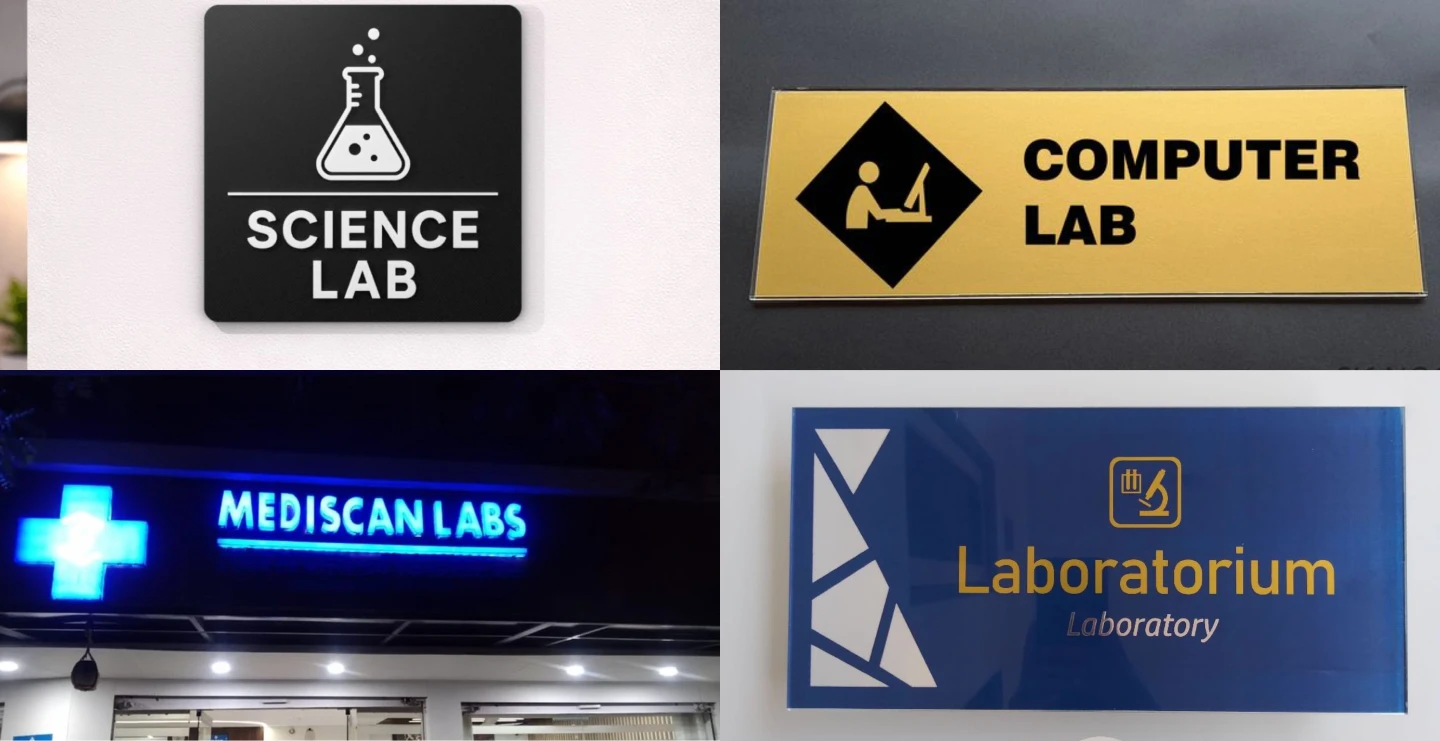
Clear acrylic or metal signboards labeling each room's function, such as "Chemical Storage" or "Microbiology Lab," help staff and visitors navigate quickly and safely.
2. Hazard Classification Signs
Standardized signs indicating biohazards, chemical hazards, radiation, or flammable materials use recognized colors and symbols for instant hazard recognition.
3. Personal Protective Equipment Signs
Mandatory action signs indicating required protective gear, such as gloves, goggles, or lab coats, are placed at entrances to specific lab areas.
4. Digital Status Display Signs
LED digital displays outside sensitive lab areas can indicate real-time status, such as "In Use," "Restricted Access," or ongoing experiment warnings.
5. Emergency and First Aid Signs
Clearly marked signage for eyewash stations, emergency showers, first aid kits, and fire extinguishers ensures quick response during incidents.
6. Equipment Labeling Signs
Small metal or acrylic labels identifying specific machines, storage units, or calibration schedules help maintain organization and accountability.
7. Directional and Wayfinding Signs
Signboards guiding visitors and new staff toward specific labs, offices, or restricted zones reduce confusion in larger research facilities.
8. Compliance and Certification Signs
Displaying relevant safety certifications, biosafety levels, or accreditation information reinforces credibility and regulatory compliance.
Choosing the Right Laboratory Sign Board Material
Acrylic
Acrylic offers a clean, easy-to-clean surface ideal for laboratory environments that require frequent sanitization and a professional appearance.
Metal
Durable and resistant to chemical exposure when properly coated, metal signboards are suited for hazard labeling and equipment identification in demanding environments.
LED Digital Displays
Digital signage allows real-time status updates for lab access and experiment conditions, particularly useful in facilities with frequently changing protocols.
Rigid Plastic
A cost-effective, easy-to-clean option for standard room identification and directional signage within controlled indoor environments.
Placement Guidelines for Laboratory Signage
Entrance visibility: Hazard and PPE signs should be placed directly at the entrance of each lab area, ensuring they are seen before entry.
Eye-level positioning: Room identification and hazard signs should be mounted at eye level for clear visibility by staff and visitors.
Emergency equipment marking: Signs for eyewash stations, showers, and first aid kits should be visible from multiple directions within the lab space.
Consistent labeling system: Using a standardized format for equipment and room labels across the facility improves organization and reduces confusion during audits or emergencies.
Laboratory Sign Board Cost in 2026
Basic Room Identification Signs
Standard acrylic or plastic room signs typically range from 15 to 50 dollars per sign, depending on size and customization.
Hazard and Safety Signs
Standardized hazard classification signs generally cost between 10 and 40 dollars per sign, depending on material and size.
Metal Equipment and Hazard Labels
Durable metal labels for equipment or chemical storage areas typically range from 20 to 80 dollars per sign.
Digital Status Display Signs
LED digital displays for lab status indicators generally start around 300 dollars and can exceed 1,500 dollars for larger, more advanced units.
Facility-Wide Signage Packages
Larger laboratories ordering signage in bulk for full compliance coverage often spend between 800 and 4,000 dollars, depending on facility size and sign variety.
Additional Cost Factors
Compliance requirements: Signs must often meet specific regulatory standards for hazard communication, which can affect material and design costs.
Chemical resistance coatings: Signs used in areas with chemical exposure may require additional protective coatings, increasing material costs.
Customization: Adding specific lab names, equipment details, or multiple languages increases both design and production costs.
Frequently Asked Questions
Ask Instant Pricing from Expert Signage Manufacturers
Contact Now →1. What information should a laboratory hazard sign include?
A laboratory hazard sign should clearly indicate the type of hazard present, such as chemical, biological, or radiation risk, using standardized colors and symbols.
2. What material is best for laboratory signage?
Acrylic is commonly used for its clean, easy-to-sanitize surface, while metal is preferred for hazard labels and equipment identification in demanding environments.
3. Are laboratory safety signs legally required?
Yes, most laboratories are legally required to display specific safety and hazard signage based on workplace regulations and the materials present.
4. Can digital signs be used for lab status updates?
Yes, LED digital displays are increasingly used outside lab areas to show real-time status such as "In Use" or restricted access warnings.
5. How much does a basic room identification sign cost?
Basic plastic or acrylic room signs typically range from 15 to 50 dollars, depending on size and level of customization.
6. Should PPE requirements be posted at lab entrances?
Yes, clearly displaying required protective equipment, such as gloves or goggles, at the entrance helps ensure staff and visitors follow proper safety protocols.
7. How often should laboratory signs be reviewed or replaced?
Laboratory signage should be reviewed regularly, particularly when protocols change, and replaced if faded, damaged, or no longer accurate.
8. Do laboratory signs need to be resistant to cleaning chemicals?
Yes, since labs are frequently sanitized, signage materials should be resistant to common cleaning agents to prevent fading or damage over time.
Final Thoughts
Laboratory sign board design plays a critical role in maintaining safety, organization, and regulatory compliance across research facilities and testing centers. From standardized hazard labels and PPE signage to digital status displays and durable equipment labels, thoughtful signage choices help laboratories operate safely and efficiently throughout 2026.