Highway sign boards are built for one primary purpose, communicating critical information instantly to drivers moving at high speed. Unlike storefront or indoor signage, highway signs must prioritize extreme visibility, bold contrast, and immediate readability, often from hundreds of feet away. In 2026, highway signage continues to rely heavily on durable metal construction paired with reflective materials and LED illumination to remain clear in all weather and lighting conditions, both day and night.
This guide covers the best highway sign board design ideas, popular materials, placement guidelines, and a full cost breakdown for 2026.
Why Highway Sign Board Design Matters
On highways, drivers have only a few seconds to notice, read, and react to a sign before passing it entirely. This makes design choices like font size, color contrast, and reflectivity critically important, not just for advertising effectiveness but for basic road safety. Poorly designed or faded highway signage can lead to confusion, missed exits, or delayed reactions, making durability and visibility the top priorities in any highway sign board project.
Best Highway Sign Board Design Ideas


1. Reflective Metal Directional Signs
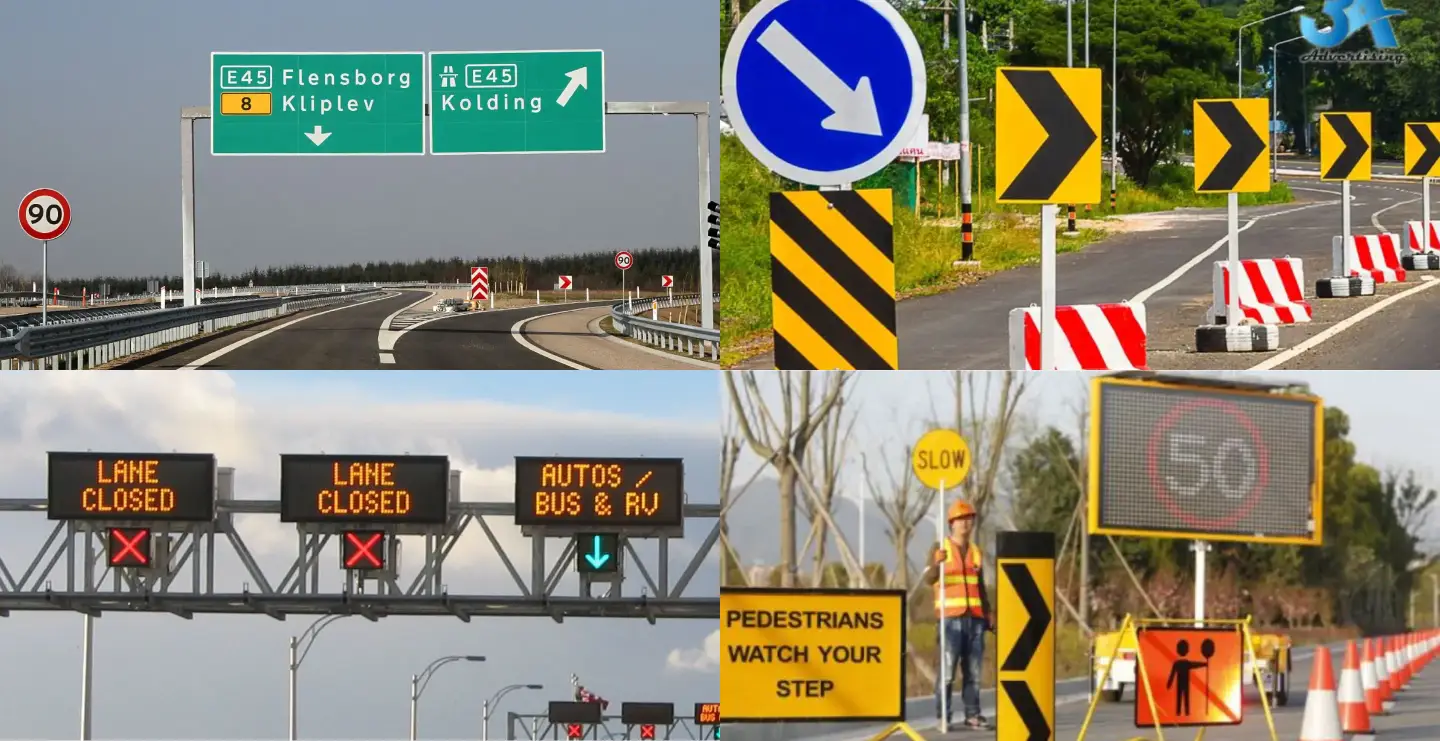
Standard metal signs coated with reflective sheeting ensure visibility from vehicle headlights at night, essential for exit and directional signage.
2. Large Format Billboard Signs
Oversized advertising billboards along highways use bold typography and minimal text to communicate a message within the few seconds a driver has to view it.
3. Digital LED Highway Billboards
Programmable LED displays allow advertisers to rotate multiple messages on a single highway sign board, increasing advertising value per location.
4. Overhead Gantry Signs
Large signs mounted on structures spanning multiple lanes provide clear lane-specific directions, commonly used for major highway interchanges.
5. Illuminated Exit and Mile Marker Signs
LED-backlit or reflective exit number and mile marker signs help drivers track their location and prepare for upcoming turns.
6. Business Off-Ramp Signage
Smaller signs indicating nearby businesses, such as gas stations, restaurants, or hotels, are placed near exits to guide travelers toward services.
7. Warning and Hazard Signs
Bright yellow or orange reflective metal signs alert drivers to road conditions, construction zones, or sudden changes in traffic patterns.
8. Speed Limit and Regulatory Signs
Standardized metal signs displaying speed limits and traffic regulations use consistent design formats required for legal roadway compliance.
Choosing the Right Highway Sign Board Material
Aluminum
Lightweight yet highly durable, aluminum is the standard material for most highway directional, warning, and regulatory signage.
Reflective Sheeting
Applied to metal sign faces, reflective sheeting significantly improves nighttime visibility by reflecting vehicle headlights back toward the driver.
LED Lighting
LED illumination is used for digital billboards and certain exit signage requiring constant visibility regardless of ambient lighting conditions.
Steel Structural Framework
Large overhead gantry signs and billboard structures typically rely on steel framework for the strength needed to support sign panels safely above traffic.
Placement Guidelines for Highway Signage
Advance warning distance: Signs indicating exits, hazards, or upcoming changes should be placed with enough advance distance for drivers to safely react.
Consistent height and size standards: Highway signage typically follows regulated size and mounting height standards to ensure uniform visibility across different locations.
Lane-specific accuracy: Overhead gantry signs must be precisely aligned with their corresponding lanes to avoid driver confusion at complex interchanges.
Nighttime visibility testing: Reflective and illuminated signage should be evaluated under actual nighttime driving conditions to confirm adequate readability.
Highway Sign Board Cost in 2026
Basic Reflective Metal Signs
Standard reflective directional or regulatory signs typically range from 80 to 300 dollars per sign, depending on size and reflective grade.
Large Format Billboard Signs
Static highway billboards generally cost between 3,000 and 15,000 dollars to fabricate and install, depending on size and structure.
Digital LED Highway Billboards
Large-format digital billboard displays typically start around 20,000 dollars and can exceed 80,000 dollars for high-resolution, large-scale installations.
Overhead Gantry Signs
Large multi-lane overhead signage structures generally range from 15,000 to 60,000 dollars, depending on span width and structural requirements.
Exit and Mile Marker Signs
Standard illuminated or reflective exit and mile marker signs typically cost between 150 and 600 dollars per sign.
Additional Cost Factors
Structural engineering: Overhead and large billboard structures require engineering assessments to ensure safety and stability under wind and traffic conditions.
Permits and regulations: Highway signage is heavily regulated, often requiring government permits and adherence to strict design and placement standards.
Installation and equipment: Large-scale highway signage typically requires specialized equipment and professional installation crews.
Frequently Asked Questions
1. Why is reflective material important for highway signs?
Reflective sheeting ensures signs remain visible at night by reflecting vehicle headlights back toward the driver, significantly improving road safety.
2. What material is used for most highway signage?
Aluminum is the standard material for highway signage due to its lightweight yet durable properties, combined with reflective coatings for visibility.
3. How much does a basic highway sign cost?
Basic reflective directional or regulatory signs typically range from 80 to 300 dollars per sign, depending on size and reflective grade.
4. Are digital billboards common on highways?
Yes, digital LED billboards are increasingly used along highways, allowing advertisers to rotate multiple messages on a single sign structure.
5. What is an overhead gantry sign?
An overhead gantry sign is mounted on a structure spanning multiple highway lanes, providing lane-specific directional information at complex interchanges.
6. Do highway signs require government permits?
Yes, highway signage is heavily regulated and typically requires government permits, along with strict adherence to design and placement standards.
7. How long do reflective highway signs typically last?
Quality reflective aluminum signs generally last ten to fifteen years before requiring replacement due to reflective sheeting degradation.
8. Can businesses advertise near highway exits?
Yes, many highways allow smaller off-ramp business signage indicating nearby services such as gas stations, restaurants, or hotels, subject to local regulations.
Final Thoughts
Highway sign board design prioritizes clarity, durability, and instant readability above all else, ensuring drivers can safely navigate and respond to critical information at high speeds. From reflective metal directional signs and illuminated exit markers to large digital billboards and overhead gantry structures, well-designed highway signage plays an essential role in both road safety and roadside advertising throughout 2026.