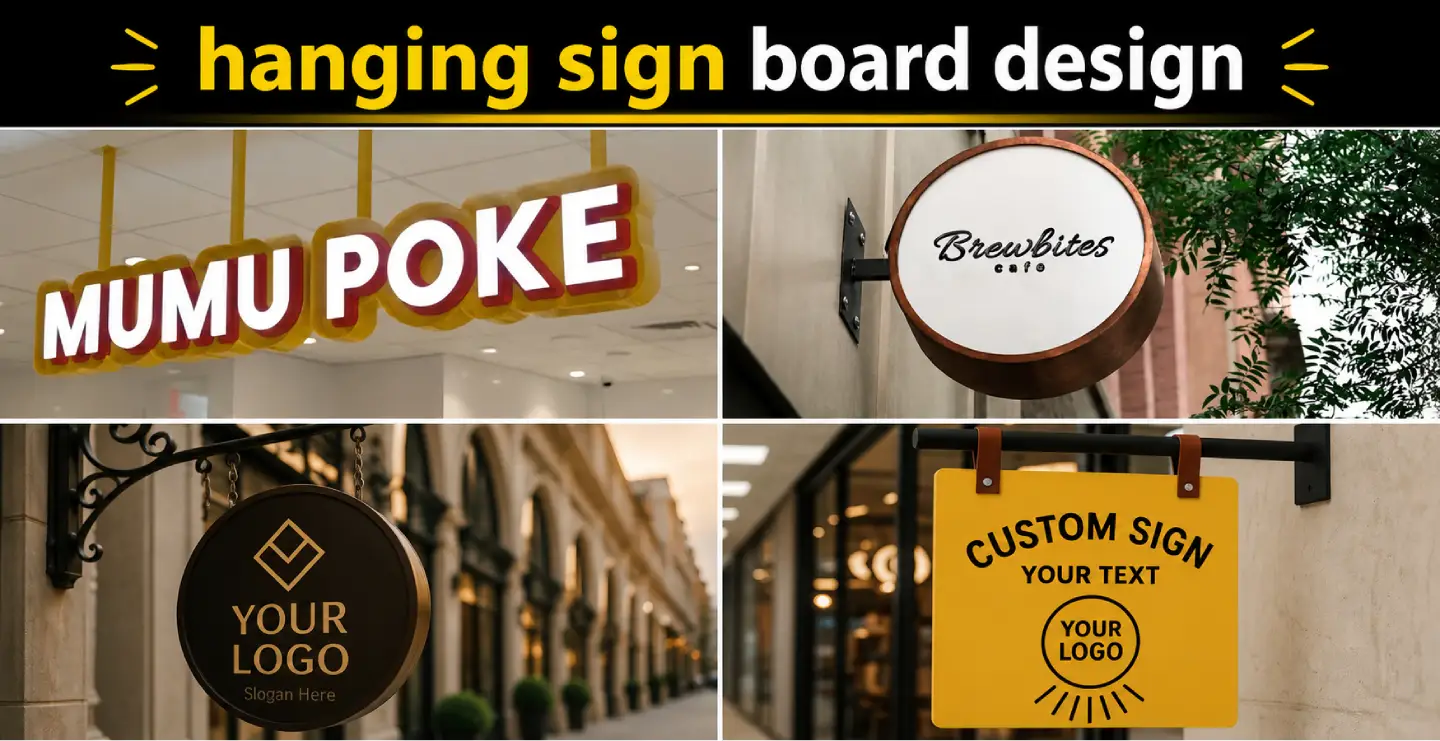
Walk through any busy market street or shopping arcade and you will notice that some of the most eye-catching signage is not mounted flat against a wall at all - it hangs perpendicular to the storefront, visible from both directions as people approach from either side. A well-planned hanging sign board design maximises visibility in pedestrian areas, arcades, and narrow streets where flat wall signage simply cannot be seen from a distance.
This guide covers what hanging sign boards are, why their design matters, key elements to consider, popular styles, and the factors to weigh before finalising one.
What Is a Hanging Sign Board?
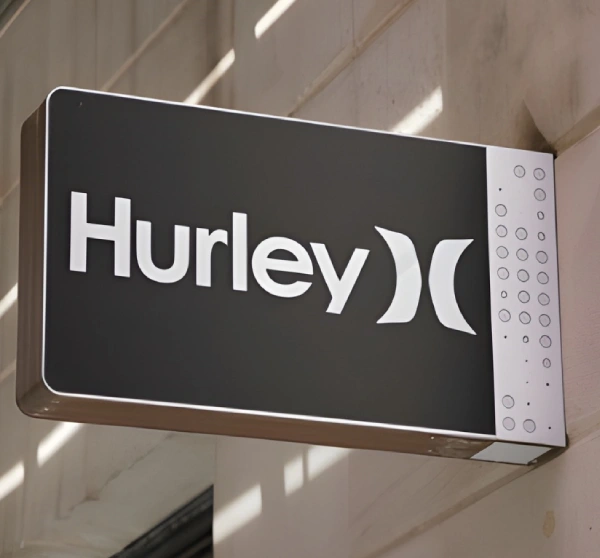
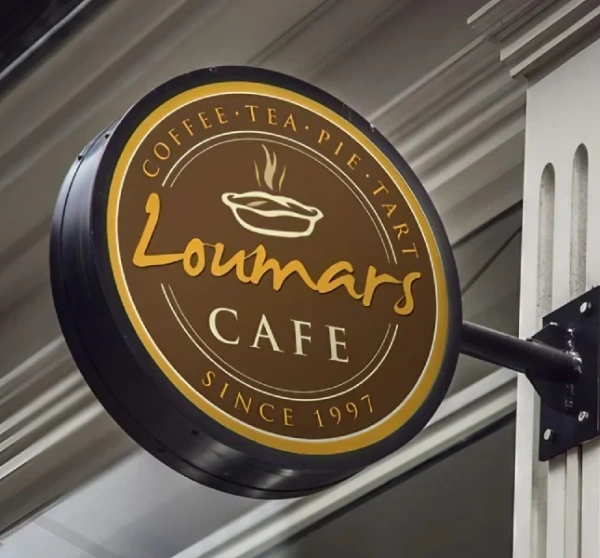
A hanging sign board is a sign suspended from a bracket, rod, or chain, typically projecting outward from a building facade at a perpendicular angle rather than sitting flush against the wall. This orientation allows the sign to be read from both directions along a street or walkway, making it especially effective in pedestrian zones, arcades, and areas with heavy foot traffic. Hanging signs are commonly made from metal, wood, acrylic, or a combination of materials, and can be illuminated or non-illuminated depending on the setting.
Why Hanging Sign Board Design Matters
- Improves visibility for pedestrians approaching from either direction along a street
- Works well in areas where flat wall signage is obscured by awnings, columns, or neighbouring shopfronts
- Adds a traditional, boutique-style charm often associated with heritage markets and pedestrian streets
- Allows for double-sided branding, effectively doubling visibility without doubling the sign's footprint
- Creates a distinctive silhouette that stands out among flat, wall-mounted competitors
- Can incorporate decorative brackets and mounts that add character to a storefront's overall appearance
Key Elements to Consider for Hanging Sign Board Design
1. Double-Sided Layout
Since hanging signs are viewed from both directions, the design should be planned as two mirrored or matching faces rather than a single-sided layout, ensuring consistent branding no matter which direction a pedestrian approaches from.
2. Bracket and Mounting Style
The bracket is as much a part of the sign's visual identity as the panel itself - ornate wrought-iron brackets suit heritage or boutique branding, while sleek stainless steel mounts suit modern commercial storefronts.
3. Size and Projection Distance
The sign must project far enough from the wall to be visible along the street without obstructing pedestrian clearance or violating local projection regulations, which often specify a maximum overhang distance.
4. Weight and Wind Resistance
Because hanging signs are suspended rather than flush-mounted, they are more exposed to wind movement, so material weight, bracket strength, and secure fixing are critical for long-term safety and durability.
5. Illumination Options
Hanging signs can be lit from above with a small gooseneck light fixture, backlit internally for a glowing panel effect, or left unlit for a more traditional daytime-only design, depending on the desired night-time visibility.
Popular Hanging Sign Board Styles


- Classic wrought-iron bracket signs - traditional, ornate mounts paired with wood or metal panels, popular for boutique and heritage-style storefronts
- Illuminated box signs - double-sided lightboxes that glow evenly from within, common for restaurants and retail chains
- Carved or engraved wooden signs - textured, dimensional lettering suited to cafes, inns, and artisanal businesses
- Minimalist metal panel signs - clean-cut stainless steel or aluminium panels for a modern, professional look
- Custom-shaped silhouette signs - signs cut into a shape representing the business, such as a cup, scissors, or key icon, adding instant visual recognition
Factors to Consider Before Finalising Your Design
- Local signage regulations - many municipalities restrict the size, height, and projection distance of hanging signs, so check local rules before finalising dimensions
- Pedestrian clearance - the sign's lowest point must sit high enough to avoid obstructing pedestrians walking beneath it
- Wall or facade strength - the mounting surface must be structurally capable of supporting the bracket and sign weight, especially in windy conditions
- Two-sided consistency - ensure both faces of the sign are equally well-finished, since both will be seen regularly by passers-by
- Maintenance access - illuminated hanging signs should be mounted with future bulb or LED servicing in mind
Hanging Sign Board Price in India (2026)
Pricing depends on material, size, illumination, and bracket complexity. Here is a general breakdown to help you plan your budget before requesting a detailed quote.
Raw Material Cost
Wooden panel material typically costs between Rs. 100 and Rs. 250 per square foot, while metal panels such as aluminium or stainless steel range from Rs. 150 to Rs. 350 per square foot depending on thickness and finish.
Fabricated Sign Board Cost
Non-illuminated hanging signs with standard bracket mounting typically cost Rs. 800 to Rs. 1,600 per square foot including the panel and bracket. Illuminated double-sided hanging box signs generally range from Rs. 1,500 to Rs. 2,800 per square foot depending on size and lighting complexity.
| Sign Board Type | Approximate Price per Sq. Ft. |
|---|---|
| Raw wooden panel | Rs. 100 - 250 |
| Raw metal panel (aluminium/steel) | Rs. 150 - 350 |
| Non-illuminated hanging sign, fabricated | Rs. 800 - 1,600 |
| Illuminated double-sided hanging sign | Rs. 1,500 - 2,800 |
What Affects the Final Price
- Sign size and total square footage across both faces
- Material choice, including wood, metal, or acrylic
- Bracket style and complexity, from simple rods to ornate decorative mounts
- Illumination type, if included, and associated wiring requirements
- Custom shapes or carved detailing versus a standard rectangular panel
These figures are indicative and vary by city, supplier, and exact specifications. Always request a detailed quote for your particular design.
Choosing the Right Sign Board Manufacturer
Hanging signs require careful structural planning to ensure the bracket and mounting can safely support the sign's weight over years of outdoor exposure, including wind and vibration. An experienced signage company will assess the facade, recommend appropriate bracket hardware, and ensure the finished sign meets local regulations while achieving the visual impact you are looking for.
Final Thoughts
A well-designed hanging sign board adds character, improves street-level visibility, and gives a storefront a distinctive presence that flat wall signage often cannot match. By carefully planning the bracket, material, and double-sided layout, you can create a sign that performs well from every angle for years to come.
Frequently Asked Questions
Are hanging signs allowed everywhere?
Not always - many local authorities have specific regulations on hanging sign size, height, and projection distance, so it is important to check local rules before installation.
Can hanging signs be illuminated?
Yes, hanging signs can be illuminated using an internal lightbox, a mounted spotlight above the sign, or LED edge lighting, depending on the desired effect.
What materials work best for outdoor hanging signs?
Weather-treated wood, powder-coated metal, and UV-resistant acrylic are among the most durable choices for outdoor hanging signage exposed to sun and rain.
How much weight can a typical bracket support?
This varies by bracket design and wall material, which is why professional structural assessment is recommended before finalising a large or heavy hanging sign.