Every business has a front door, and every front door needs an identity. A company name plate is the first official introduction of your brand. Customers, vendors, job candidates and inspectors all look for it before they step inside. A clear, well-designed name plate builds trust instantly, while a faded or poorly made one can quietly weaken it.
In this article we look at why company name plates matter, the materials and styles available, the legal and practical points to keep in mind, and how to choose a plate that represents your business well.
Why a Company Name Plate Matters
It Builds Credibility
People judge a business within seconds. A professional name plate suggests a stable, organised company. Even small businesses and start-ups benefit, because a quality plate makes them look established.
It Helps People Find You
Couriers, clients and guests often search for an address by looking for the name board. A visible plate saves time and avoids confusion, especially in buildings that house several companies.
It Strengthens Branding
Your name plate can carry your logo, brand colours and typography. Seen daily by employees and visitors, it reinforces recognition and keeps your identity consistent with your website, visiting cards and stationery.
It Supports Compliance
Many local authorities and building societies expect businesses to display their registered name at the premises. A proper plate helps you meet such requirements and, where relevant, can show registration or licence details. Always check the rules that apply in your city or building.
Popular Materials for Company Name Plates


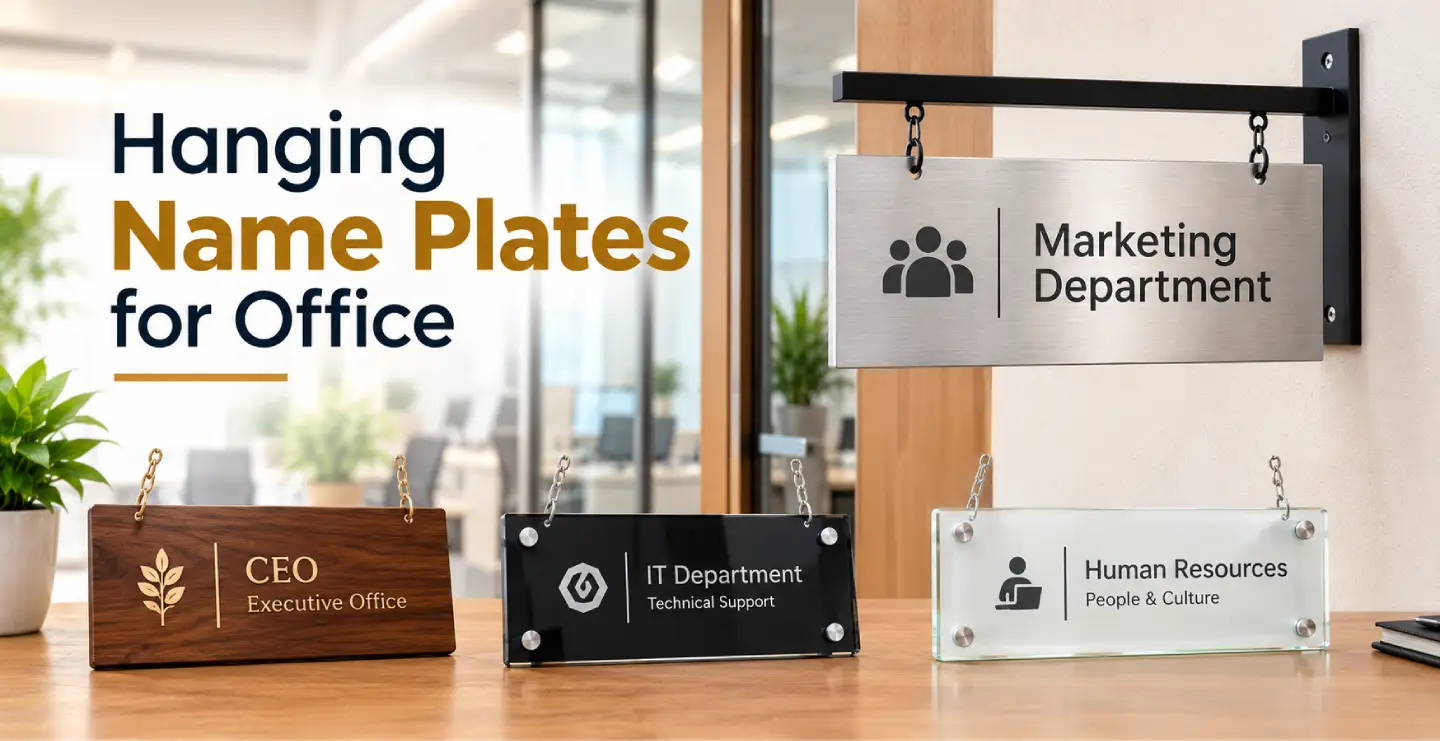
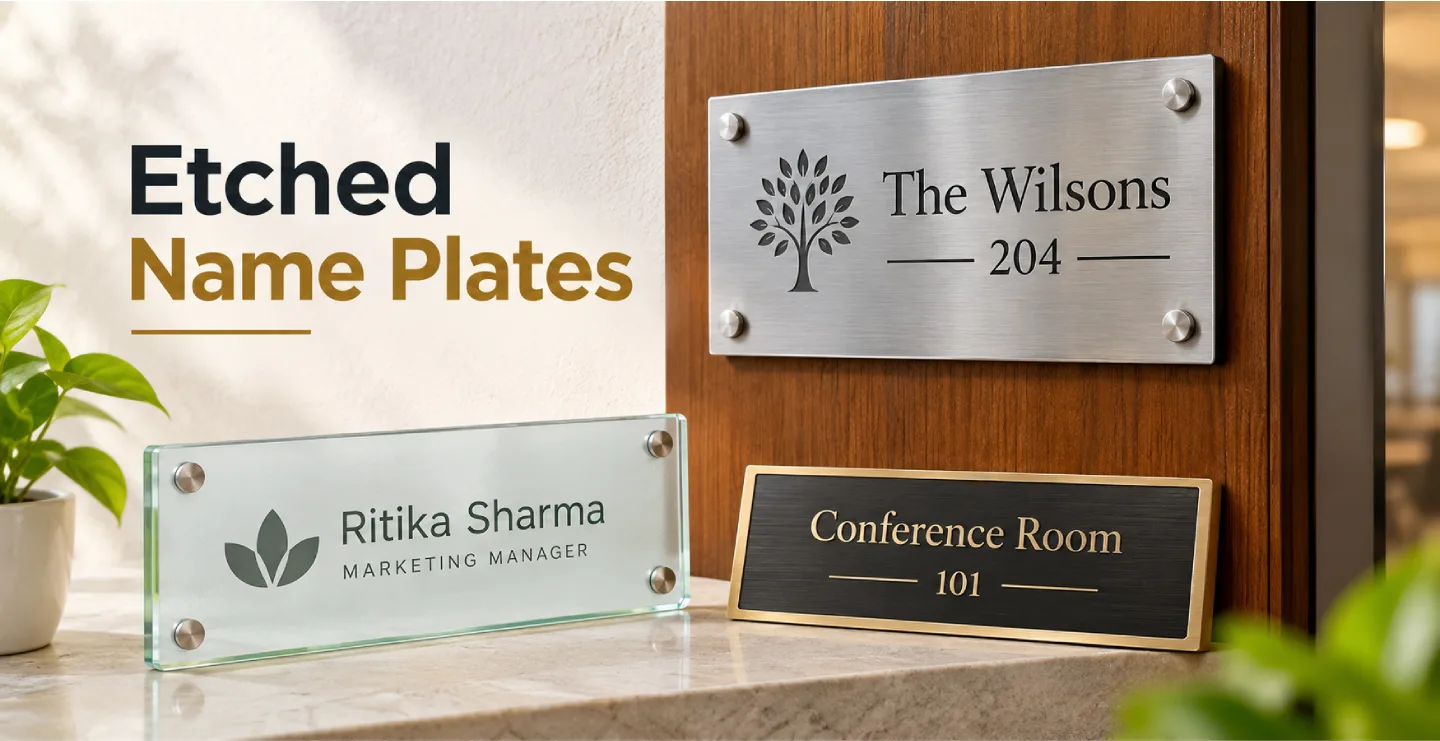
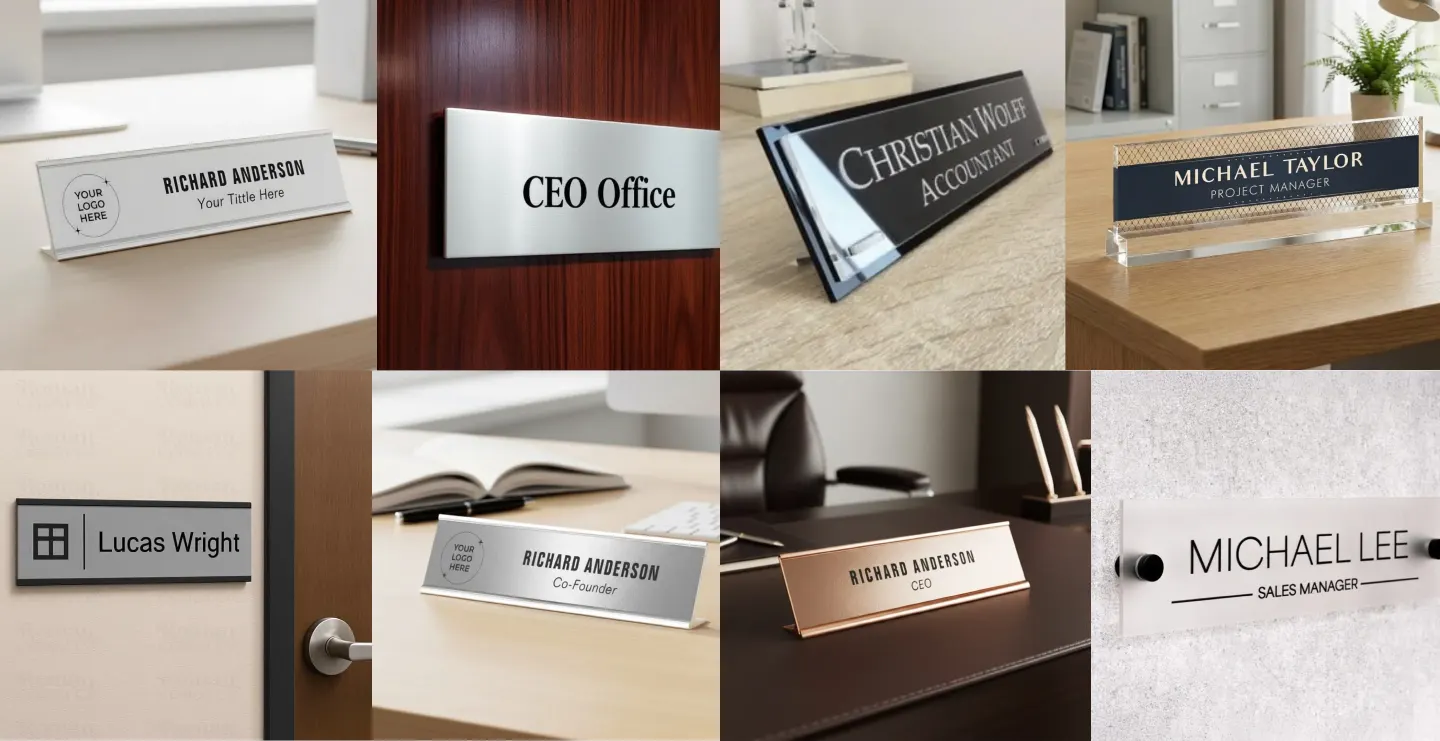
- Stainless steel: Strong, rust resistant and refined. A top choice for corporate offices, factories and outdoor boards.
- Brass: Classic and prestigious, popular with law firms, consultancies, banks and clinics.
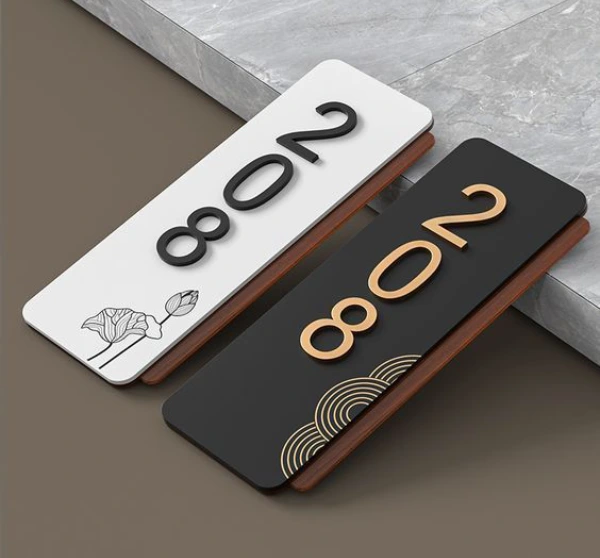
- Acrylic: Modern and customisable, suited to creative agencies, IT firms and indoor reception areas.
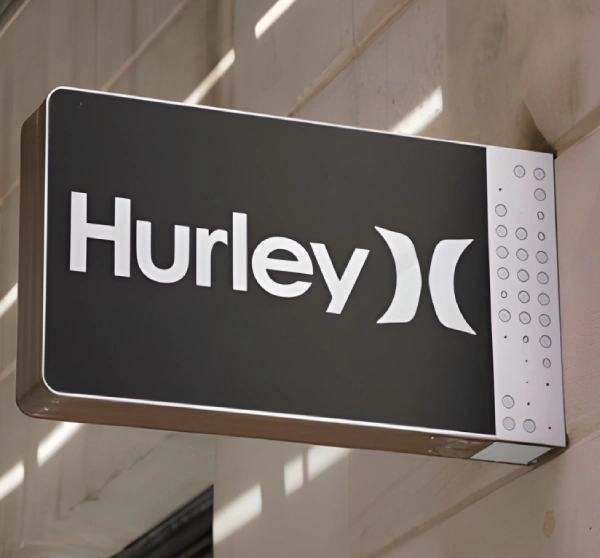
- Aluminium composite panels: Lightweight and weather resistant, good for large boards and storefront signs.
- Wood: Warm and welcoming, ideal for boutique studios, cafes and design businesses.
- Glass: Elegant and premium, often paired with metal fittings for executive entrances.
The best material depends on your industry, location and budget. A law firm may prefer brass for its tradition, while a software company may lean toward brushed steel or acrylic for a modern feel.
Styles of Company Name Plates
Wall-Mounted Plates
The most common style, fixed on the wall beside the entrance. It is simple, secure and works for nearly every business.
Glass-Door Plates
Lettering or a small plate placed on glass doors gives an upscale look for offices and clinics.
Reception Logo Walls
Large three-dimensional logo letters behind the reception desk create a strong brand moment, and are often the backdrop for photos and video calls.
Pylon and Gate Boards
Freestanding boards at the entrance of factories, campuses and business parks help visitors find the right gate from the road.
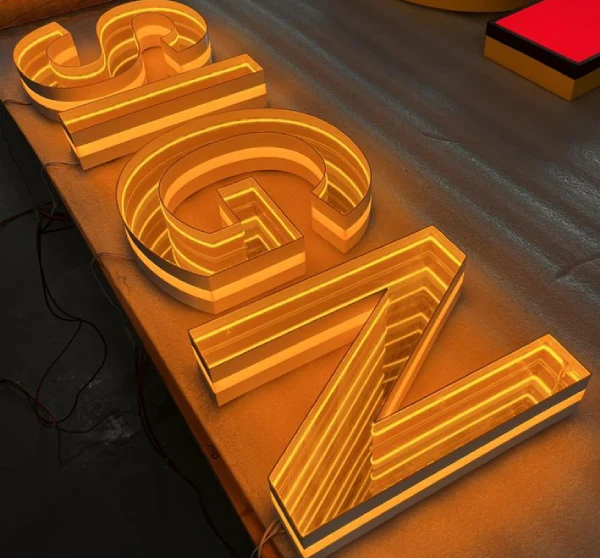
Illuminated Plates
LED backlit or spotlighted plates ensure your name stays visible after sunset, helpful for businesses that operate in evenings or attract night traffic.
What to Include on a Company Name Plate
Less is usually more. The essentials are your registered company name and logo. Depending on your business, you may also add a short tagline, the floor or suite number, and professional credentials or registration numbers. Avoid long paragraphs or lists of services. A name plate is a quick identifier, not a brochure. If you need to show more, place it on a separate information board.
Design Principles for a Better Plate
Start with your brand guidelines. Use the exact logo files, brand colours and fonts so the plate matches everything else you publish. Pick a typeface that stays readable from a distance, and keep adequate spacing between letters and lines. Ensure strong contrast between text and background, for example dark lettering on steel, gold on black, or white on deep blue.
Think about proportion too. A tiny plate on a large wall looks timid, and an oversized plate on a small door looks cramped. A good rule is to leave comfortable empty space around the plate so it can breathe.
Placement and Visibility
Place the plate at eye level, roughly 1.5 metres from the floor, near the main entrance on the side where people naturally look. Make sure trees, pillars, parked vehicles or other signs do not block it. For buildings with multiple tenants, align your plate neatly with others in size and spacing so the whole entrance looks organised.
Budget and Value
Costs vary by material, size, finishing and installation. Instead of looking only at the lowest price, think about lifespan. A cheaper plate that fades in two years costs more over time than a quality plate that lasts a decade. Ask for clear quotations that include design, production, hardware and installation so there are no surprises.
Common Mistakes to Avoid
- Using low-resolution logos that look blurry after production.
- Choosing a decorative font that is difficult to read.
- Ignoring the weather when selecting outdoor materials.
- Skipping a final proof check, leading to spelling or spacing errors.
- Forgetting to update the plate after a rebrand or office relocation.
When Should You Replace Your Name Plate?
Replace or refresh your plate when the finish fades, edges corrode, letters peel, or your logo and company details change. A worn-out board can silently give the impression that the business is not keeping up. Many companies review their signage every few years, along with other branding updates.
Company Name Plates for Different Industries
Every industry sends a different message, and the plate should match it. Law firms, chartered accountants and banks usually prefer brass or stainless steel for a serious, trustworthy look. Technology firms and creative agencies often choose acrylic, brushed metal or mixed-material designs that feel fresh and modern. Manufacturing units and warehouses need tough, weather-resistant plates that remain readable from a distance. Clinics and hospitals benefit from clean, simple plates with clear contrast so patients can read them easily. Restaurants, cafes and boutique shops can use wood or illuminated signs to create atmosphere and attract walk-in customers.
Frequently Asked Questions
How big should a company name plate be?
It depends on viewing distance and wall space. A small office may need a plate about the size of a notebook page, while a factory gate may need a large board. A mock-up on the actual wall helps you judge proportion before production.
Can I update the plate after a rebrand?
Yes, but it is easier if you plan ahead. Some businesses use modular boards where only the front panel or logo needs replacing, saving time and cost.
Is it better to choose a standard or a fully custom plate?
Standard sizes are quicker and cheaper, while custom plates allow exact branding and unique shapes. If the plate is a key part of your brand identity, custom is usually worth the extra investment.
Final Thoughts
A company name plate is one of the simplest and most effective branding tools. It welcomes visitors, supports your reputation and tells the world exactly who you are. With the right material, clean design and smart placement, it becomes a lasting asset for your business.
Brand Signages can help you plan and create a company name plate that matches your brand, space and budget. Share your logo and requirements, and build an entrance that makes a confident first impression.