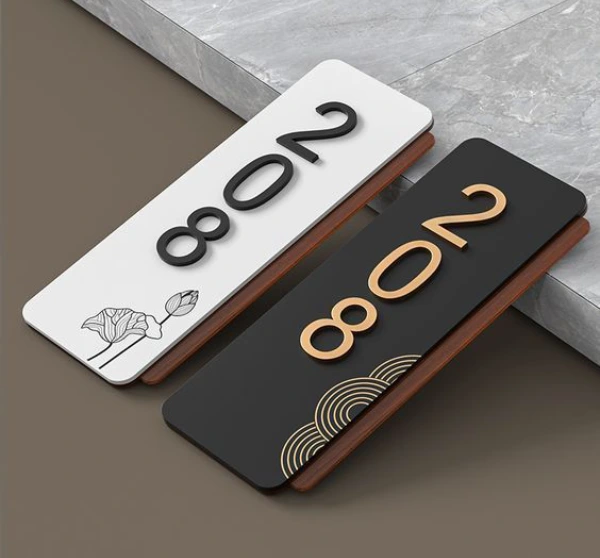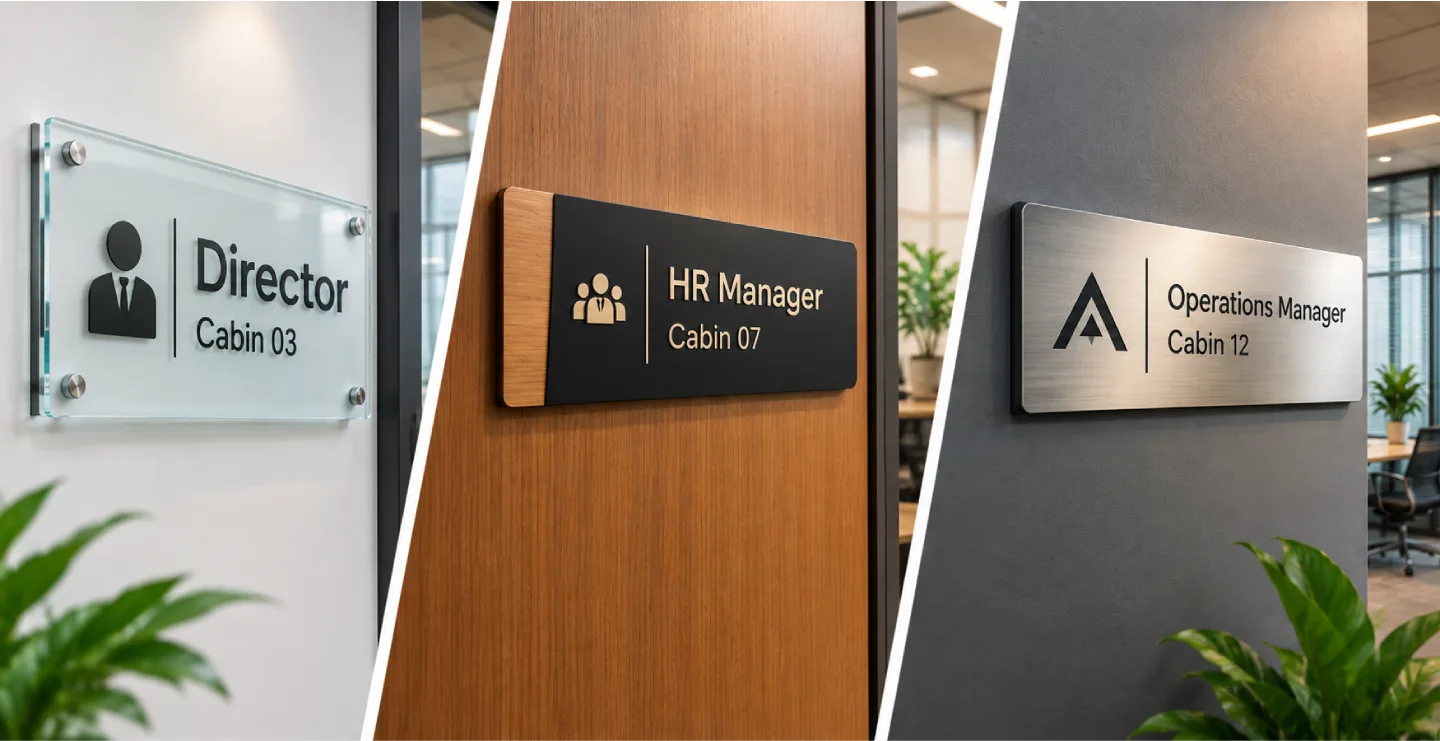
Walk through any corporate office and you'll notice the small details that keep it feeling organised - and cabin name plates are one of them. An office cabin name plate identifies who sits where, helps visitors and colleagues navigate the space, and quietly reinforces a professional look throughout the office. This guide covers the types, materials, sizes, and mounting options worth knowing before ordering plates for your workplace.
What is an Office Cabin Name Plate?
An office cabin name plate is a small sign mounted on or beside a cabin or office door, usually showing the occupant's name, designation, or both. It's distinct from the larger reception or lobby signage that represents the company as a whole - cabin plates work at the individual level, helping people find the right room or person.
Types of Office Cabin Name Plates


- Fixed name plates – Permanently engraved or printed with one person's name and designation, best suited to roles that don't change often.
- Sliding or interchangeable name plates – A slider or slot mechanism lets you swap the name card inside, ideal for shared cabins, meeting rooms, or hot-desking arrangements.
- Designation-only plates – Show just the job title, such as "Finance Manager," without a specific name, useful where the person in the role changes periodically.
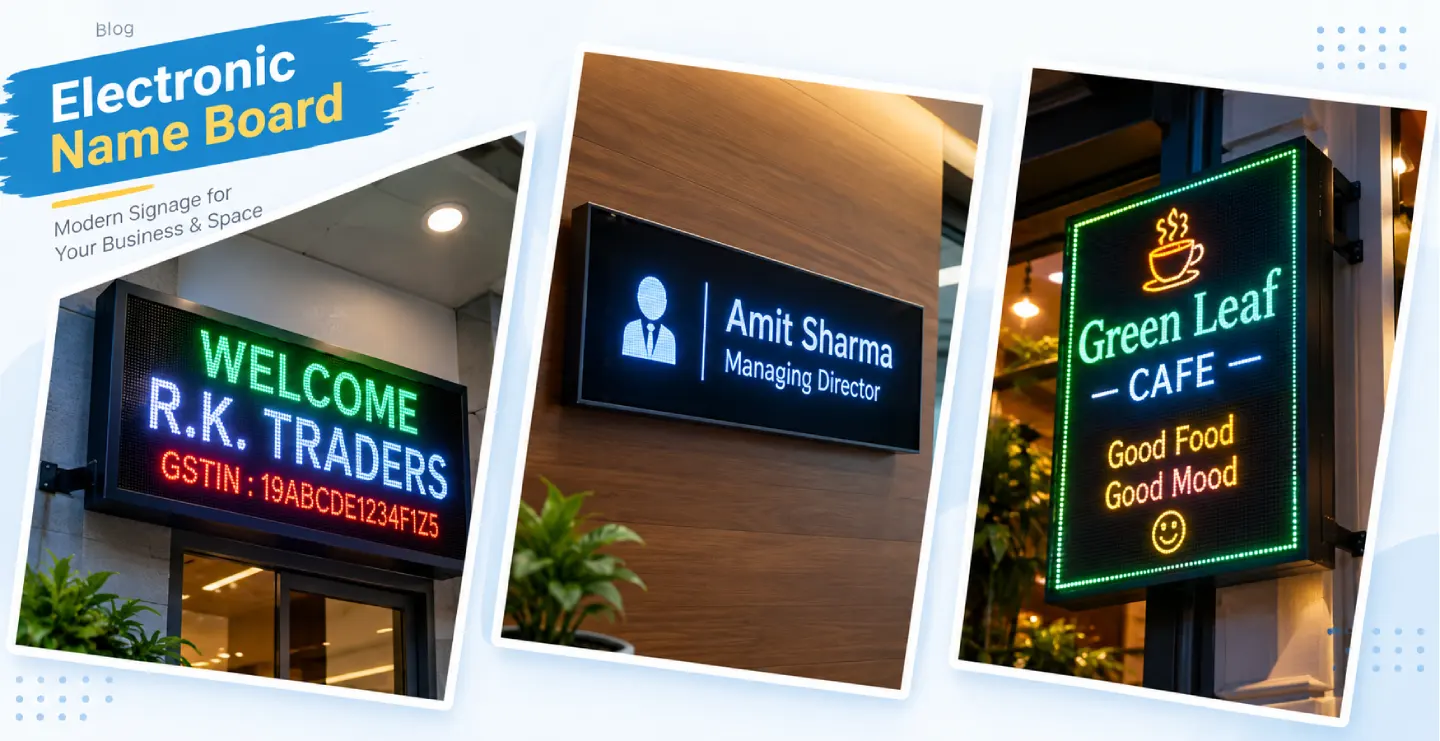
- Digital or e-ink name plates – A more modern option some offices use for cabins or desks with frequently changing occupants, though this comes at a higher cost.
Materials Suited for Office Cabin Name Plates
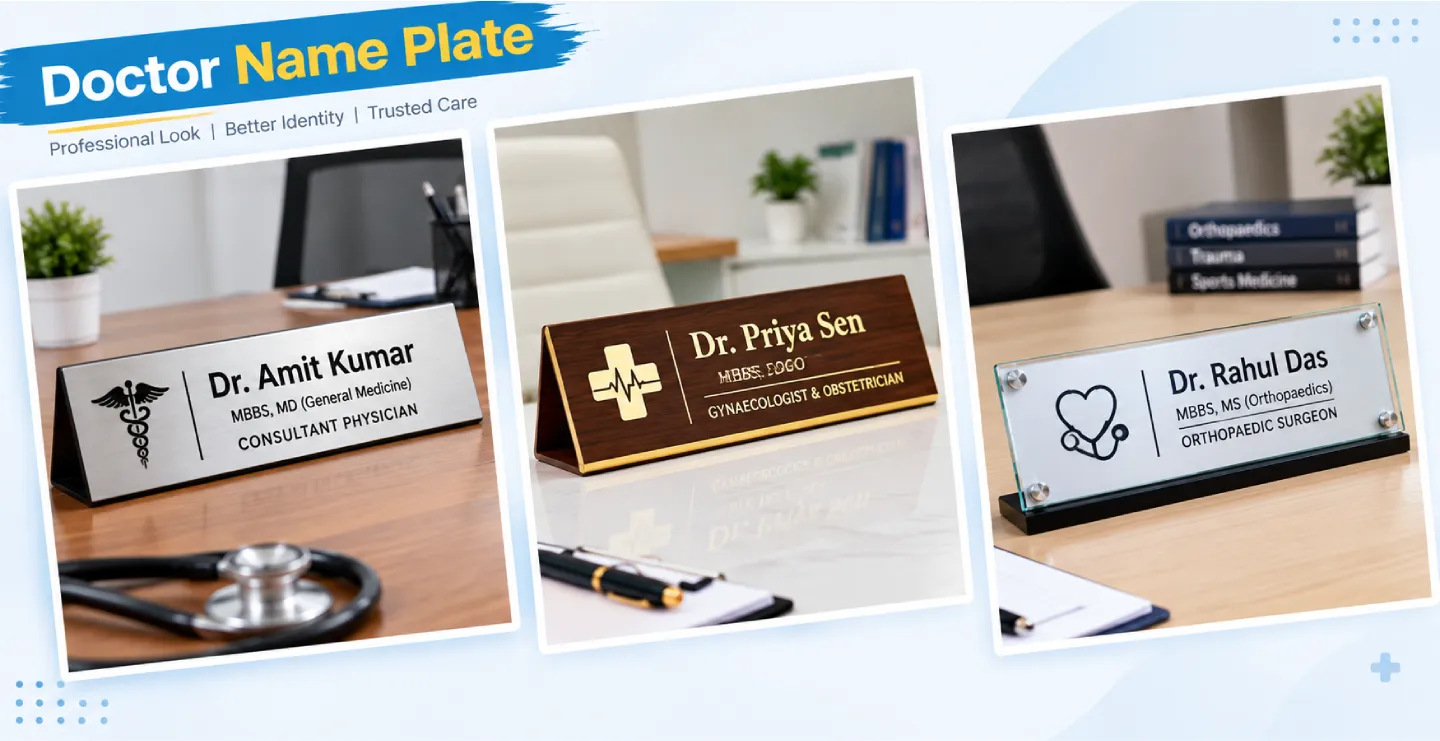
- Acrylic – Clean and modern, budget-friendly, and easy to customise with different colours and fonts.
- Brushed steel or aluminium – A premium, corporate look often chosen for senior management or leadership cabins.
- Wood – Adds warmth and is sometimes used for boutique offices or leadership suites that want a less clinical look.
- PVC or laminate – The most economical option, well suited to large offices ordering plates in bulk for many cabins.
Standard Sizes for Cabin Name Plates
Most door-mounted cabin plates fall in the range of roughly 8x2 inches to 10x3 inches, which comfortably fits a name and designation on one or two lines. Plates that also include a company logo or additional details, such as a department name, are often sized slightly larger to avoid a cramped layout.
Mounting Options
- Double-sided adhesive tape – Simple and drill-free, well suited to glass doors and partitions.
- Magnetic mount – Popular in offices that reorganise seating or cabins frequently, since plates can be moved without damage.
- Screw-mounted – The most secure and permanent option, best suited to wooden or metal doors.
- Slide-in holder or frame – Keeps a fixed outer frame in place while allowing the printed name card inside to be changed as needed.
Design Tips for a Professional Look
Keep fonts clean and easy to read at a glance rather than overly decorative. Where possible, match the company's brand colours and, if relevant, include the logo in a small, consistent position across all plates. Stick to one or two lines of information - typically name and designation - since a cluttered plate is harder to read quickly. Most importantly, keep the style consistent across every cabin in the office; a mix of different materials, fonts, or sizes across doors looks unplanned rather than intentional.
Bulk Ordering for Offices
When ordering plates for an entire office, it helps to standardise the template and size across all cabins before production begins, and to get one sample plate approved before the full batch is made. It's also worth keeping a few spares on hand for common or frequently reused designation titles, so a new plate doesn't need to be ordered every time there's a small team change.
Frequently Asked Questions
What's the difference between a fixed and a sliding cabin name plate?
A fixed plate is permanently engraved or printed for one person, while a sliding plate has a slot or holder that lets you swap the name card without replacing the whole unit.
What size works best for a standard office door?
Around 8x2 inches to 10x3 inches is typical for most doors, though the right size also depends on how much information the plate needs to show.
Can cabin name plates be moved without damaging the door?
Yes, magnetic mounts or removable adhesive strips are designed for this and won't leave marks or damage the door surface.
Is acrylic or metal better for a cabin name plate?
Acrylic is more budget-friendly and easy to customise, while metal, such as brushed steel, tends to convey a more premium, senior look - the right choice depends on the office's overall style and budget.
How do offices handle frequent staff changes on cabin plates?
Sliding or slot-style name plates are the most practical solution, letting the name card be swapped in seconds without ordering a new plate each time.
Should the plate show the designation, the name, or both?
Most offices include both for individual cabins, though shared or rotating spaces often use designation-only plates to avoid frequent replacements.
How far in advance should we order name plates for a new office?
For a bulk order across many cabins, it's a good idea to place the order at least two to three weeks before move-in to allow time for a sample approval and full production.
Conclusion
A good set of office cabin name plates is a small investment that makes a workplace feel organised and professional. Choosing the right mounting style for how often your office changes, and keeping the design consistent across every door, will keep things looking polished well beyond the first day of installation.