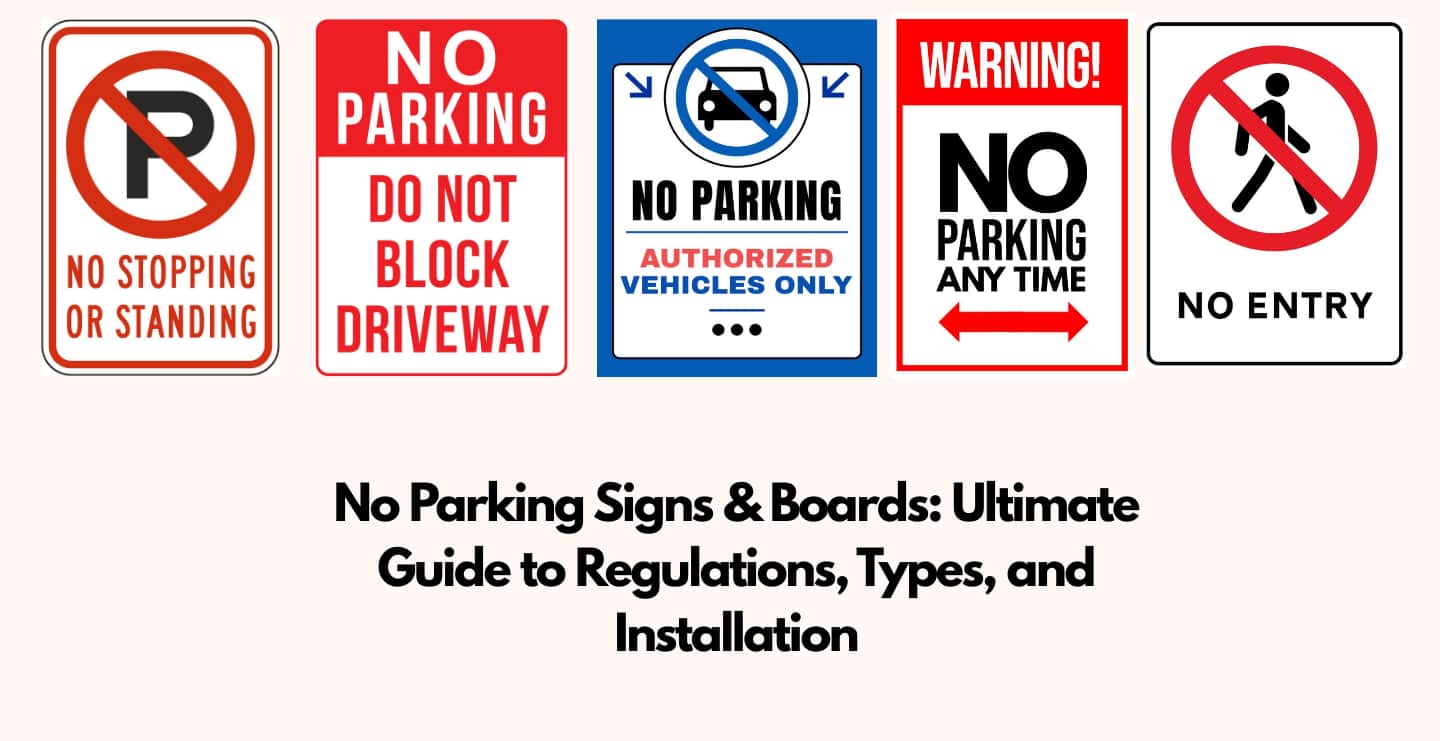
No parking signs are essential traffic control signs designed to clearly communicate vehicle parking rules in both public roads and private properties. When people ask what does no parking sign mean, it refers to a parking prohibition sign that restricts vehicles from stopping in specific areas to maintain safety, visibility, and smooth traffic flow. These road signs for no parking are commonly used in parking lots, commercial spaces, hospitals, and residential zones. By guiding drivers and supporting effective parking management, no parking signs help prevent congestion, reduce violations, and ensure orderly movement across designated areas.
Deciphering Parking Regulations: No Parking, No Standing, No Stopping

Understanding the difference between no parking, no standing, and no stopping signs is essential for following curbside regulations correctly. A no parking sign allows temporary stops for passenger loading, while vehicle parking is prohibited. The no standing sign definition restricts waiting or loading, permitting only brief passenger drop-offs. The no stopping sign meaning is the strictest, banning any halt except for emergencies. These legal distinctions in parking restriction rules help manage traffic flow and reduce congestion, with violations often leading to fines or towing.
Legal Frameworks & Compliance for No Parking Signs
No parking signs must comply with established legal and regulatory standards to be enforceable and effective. In the U.S. and many regions influenced by global best practices, guidelines such as the MUTCD define how regulatory parking signs should be designed, placed, and interpreted. Whether installed on public roads or private premises, signage compliance ensures clarity for drivers, supports parking enforcement, and protects property owners from disputes. Properly implemented parking enforcement signs also help authorities maintain order, safety, and consistent traffic control across different environments.
MUTCD Standards for No Parking Signs
The Manual on Uniform Traffic Control Devices (MUTCD), issued by the Federal Highway Administration, sets uniform traffic sign standards for no parking signs. These MUTCD sign specifications define approved colors, symbols, wording, sign dimensions, and mounting heights. By standardizing regulatory sign standards, the MUTCD ensures that road users instantly recognize parking restrictions, regardless of location. Compliance with these guidelines makes no parking signs legally valid and easily enforceable.
Public vs. Private Property Regulations
Public street parking rules are governed by municipal parking regulations, requiring strict adherence to approved sign formats and placements. On private property, such as commercial complexes or residential communities, property owner rights allow customized enforcement, but private property no parking sign laws still demand clear visibility and unambiguous messaging. Commercial property parking signs and homeowner parking enforcement must clearly state restrictions to support legal action.
Enforcement and Penalties
Parking enforcement relies on visible, compliant signage to issue tickets or authorize towing. Tow away zone signs, parking violation penalties, and impoundment rules are enforced by local authorities or designated agencies. Unauthorized parking consequences may include fines, wheel clamping, or vehicle impoundment, making clear signage critical for fair enforcement and legal protection.
Types of No Parking Signs & Their Specific Applications
No parking signs come in multiple formats, each designed for a specific parking management purpose. From no parking signs on busy roads to private property no parking signs in commercial spaces, these parking lot signs help enforce vehicle control, improve safety, and prevent unauthorized parking. The design, wording, and placement of each sign determine its effectiveness, especially in areas requiring strict enforcement such as fire lanes, tow away zones, and loading areas.
General Prohibition Signs
General prohibition signs include the widely recognized no parking any time sign, which indicates absolute no parking regardless of time or circumstances. These signs support general no parking rules and are commonly used in high-traffic zones, emergency access routes, and narrow roads where stopping could cause obstruction or safety risks.

Location-Specific & Enforcement Signs
Location-specific signs address targeted parking concerns. A private property no parking sign protects owner rights, while a tow away zone sign with arrow warns of immediate enforcement. Fire lane no parking signs ensure emergency access, and handicap parking enforcement signs preserve designated parking areas. These signs clearly define no parking access and legal consequences.
Temporary & Event-Based Signs
Temporary no parking signs are used for short-term needs such as event parking restrictions, construction no parking signs, or street cleaning signs. Removable parking signs offer flexibility while maintaining compliance and clear communication during changing site conditions.
Customizing Your No Parking Signage
Custom no parking signs allow property owners and facility managers to communicate parking rules clearly while aligning with their site’s layout and branding. From customizable no parking signs for driveways to personalized parking signs for commercial spaces, bespoke signage improves visibility, authority, and parking management. When designed correctly, custom text parking signs not only deter unauthorized vehicles but also ensure clarity and compliance, making them a practical solution for both private and semi-public environments.

Design Considerations & Options
Effective custom parking sign design balances clarity with visibility. Options include tailored text, clear symbols, arrow direction signs for guidance, and graphic customization to match site needs. Businesses can also add a logo to no parking signs or use reflective custom signs to improve night-time visibility and durability.
Legal Aspects of Custom Signage
Custom sign legal compliance is critical for enforceability. While personalization is allowed, signs must follow local ordinance parking sign rules and custom sign guidelines for colors, symbols, and wording. Including clear legal disclaimers on signs helps avoid disputes and supports lawful enforcement.
Printable vs. Professionally Ordered Custom Signs
Printable no parking signs and DIY parking signs offer short-term, low-cost solutions but lack durability. Professionally manufactured custom signs provide weather resistance, compliance, and long-term value, making them ideal for permanent parking control despite higher upfront costs.
Selecting the Best Material for Durable Outdoor No Parking Signs
Choosing the best material for outdoor no parking signs is crucial for long-term performance and visibility. Outdoor environments demand weather-resistant signs that can withstand sun exposure, rain, wind, and temperature fluctuations. Factors such as sign material durability, reflectivity, and cost all influence the right choice. High-quality materials not only enhance compliance but also reduce replacement costs, making them a smart investment for effective parking control.
Common Sign Materials: Pros & Cons
Aluminum no parking signs are lightweight, rust-proof, and highly durable, making them ideal for permanent outdoor use. Plastic and corrugated plastic signs are cost-effective and suitable for short-term needs but may fade or crack over time. Steel parking signs offer strength but require proper coatings to prevent corrosion. Acrylic signs and vinyl signs provide a clean appearance but are better suited for controlled environments.
Reflectivity and Visibility
Reflective no parking signs improve conspicuity, especially in low-light or nighttime conditions. Engineer grade reflective sheeting offers basic visibility, while high-intensity reflective sheeting delivers superior brightness and longer viewing distances. Selecting the right reflective level ensures clear visibility at night and during poor weather, supporting safer traffic and parking management.
Durability and Weather Resistance
For maximum longevity, UV resistant signs with protective coatings are essential. Rust resistant parking signs, weather-proof finishes, and anti-graffiti coatings help maintain readability. Signs designed for extreme weather durability perform reliably in harsh sunlight, heavy rainfall, and temperature extremes.
Effective Installation of No Parking Signs
Proper installation plays a vital role in making no parking signs visible, enforceable, and long-lasting. Whether installing no parking signs on private property, commercial premises, or parking lots, following correct sign placement guidelines ensures clear communication and legal validity. Secure mounting, correct height, and strategic positioning help prevent disputes while improving parking compliance and traffic flow across different environments.
Pre-Installation Checklist
Before installation, review parking sign location rules and local zoning laws for signs to ensure compliance. Identify high-visibility areas based on traffic movement and sign visibility requirements. Gather essential tools for sign installation, including posts, brackets, drills, anchors, and protective gear, to avoid delays during mounting.
Step-by-Step Installation Guide
- Mark the exact installation point based on approved placement.
- Install the sign post securely using concrete or ground anchors.
- Attach the sign using proper hardware for signs, ensuring tight fasteners.
- For wall mount sign installation, drill anchor holes and fix brackets firmly.
- Use fence mounting brackets when installing on gates or fences, ensuring stability.
Optimal Placement & Visibility Tips
Ensure visible parking signs are placed within clear sight lines for drivers. Maintain proper sign height, avoid obstructions like trees or poles, and use strategic sign placement to maximize readability from a distance.
Purchasing No Parking Signs: Options and Cost Considerations
When purchasing no parking signs, understanding where to buy and what affects pricing helps you make a smart, long-term investment. Buyers often ask how much do no parking signs cost, but the answer depends on material quality, durability, and compliance standards. Choosing trusted no parking sign suppliers like Brand Signages ensures you receive compliant, durable, and affordable no parking signs suitable for both private and commercial use.
Where to Buy: Online vs. Local Retailers
Those looking to buy signs online benefit from wider variety and competitive pricing, especially for bulk no parking signs. Local sign shops and hardware store parking signs offer quicker access and face-to-face support. Ordering direct from a manufacturer such as Brand Signages combines customization, consistent quality, and better pricing control.
Factors Influencing Cost
The sign board price varies based on material, size, reflectivity, and customization. Aluminum signs cost more than plastic but last longer. Custom sign pricing, bulk order discounts, and sign material price differences all impact the final cost, along with shipping costs for signs.
Tips for Choosing a Reputable Supplier
Look for best sign manufacturers with proven expertise, positive customer reviews for signs, clear warranties on signs, and adherence to sign quality standards. A reputable sign company like Brand Signages offers reliable service, compliance assurance, and long-term value.
If you’re looking to install high-quality, compliant no parking signs that last? Brand Signages offers expertly designed, durable, and fully customizable signage solutions tailored to your property and regulatory needs connect with our team today to get signage that delivers clarity, compliance, and confidence.
Frequently Asked Questions
1. What does a “No Parking” sign mean?
A no parking sign indicates that vehicles are not allowed to park in the marked area, though brief stops for passenger pick-up or drop-off may be permitted unless otherwise stated.
2. What is the legal difference between “No Parking,” “No Standing,” and “No Stopping” signs?
“No Parking” allows temporary stopping, “No Standing” prohibits waiting but allows quick drop-offs, and “No Stopping” strictly forbids any stopping except for emergencies.
3. Why are no parking signs important for safety and traffic flow?
No parking signs help prevent congestion, ensure emergency access, improve visibility at intersections, and maintain smooth traffic movement in high-risk or high-traffic areas.
4. Who is responsible for enforcing no parking zones?
On public roads, enforcement is handled by local authorities. On private property, enforcement is typically managed by property owners or authorized towing agencies, provided signage is clearly displayed.
5. Are custom no parking signs legally enforceable?
Yes, custom no parking signs can be legally enforceable if they follow local regulations and, where required, align with MUTCD guidelines for visibility and clarity.
6. What does a “No Parking Any Time” sign indicate?
A “No Parking Any Time” sign means vehicles are prohibited from parking at all hours, without exceptions for time or duration.
7. What is a “Tow Away Zone” sign, and what does it mean for drivers?
A tow away zone sign warns drivers that unauthorized vehicles may be towed immediately at the owner’s expense if parked in the restricted area.
8. Is aluminum or plastic better for outdoor no parking signs?
Aluminum no parking signs are preferred for outdoor use due to their rust resistance, durability, and long lifespan, while plastic signs are better suited for temporary applications.
9. What should I look for in a no parking sign supplier?
Choose suppliers like Brand Signages that offer compliant designs, durable materials, customization options, clear warranties, and proven expertise in regulatory signage.