Apartment living comes with its own signage needs, quite different from an independent house. A name board for flats might mean a compact plate on a single door, a directory listing every resident in the building, or a nameplate at the society's main gate. This guide covers each type, the materials that work best in compact apartment settings, and how to navigate housing society rules when choosing your design.
Types of Name Boards Used in Flats and Apartments


- Individual flat door plates – Mounted directly on or beside the door of each unit, usually showing the resident's family name.
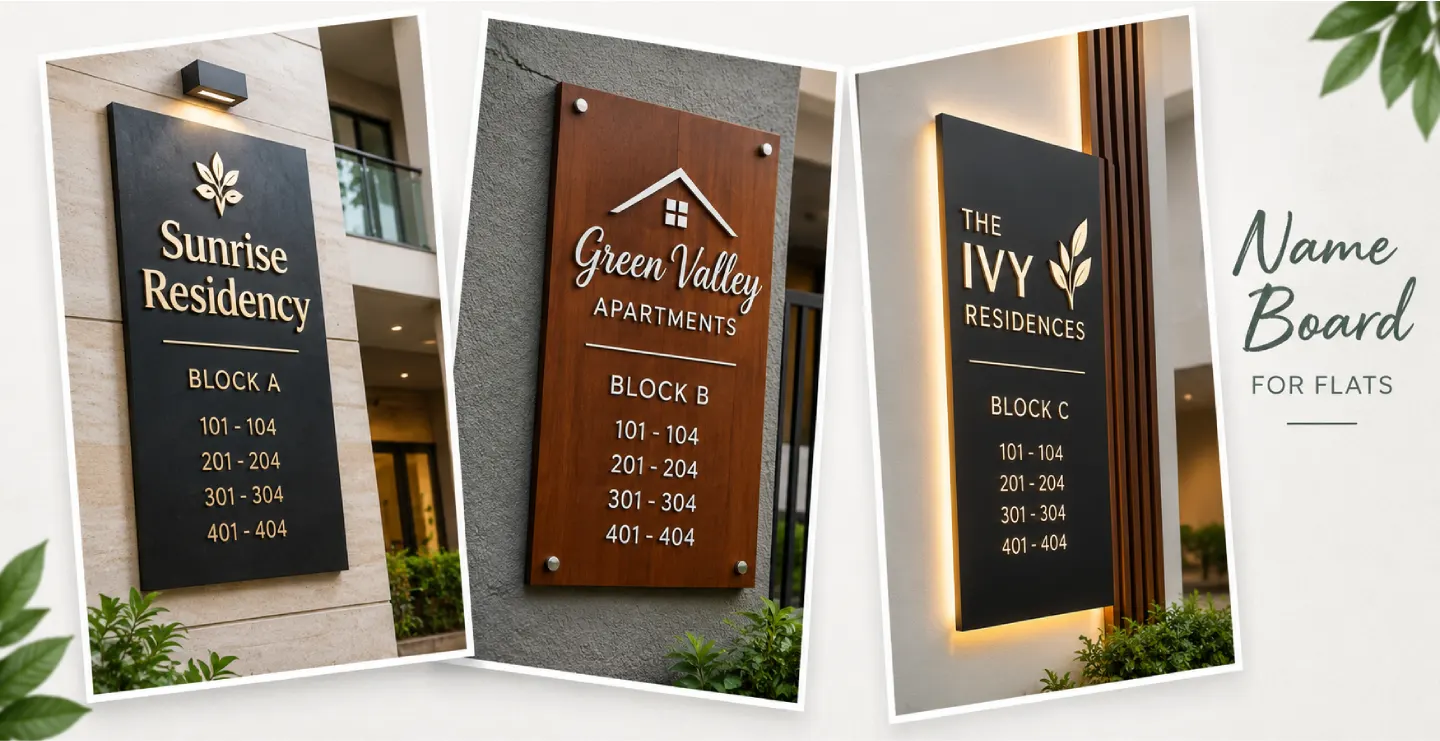
- Building or society entrance boards – Larger signage at the main gate or lobby identifying the apartment complex by name.
- Floor and wing directories – Lobby or lift-area boards listing flat numbers against resident names, helping visitors and delivery staff navigate.
- Block or wing indicator boards – Used in larger complexes with multiple towers or wings to direct people to the right block.
Why Flat Name Boards Differ from House Name Plates
Space is the biggest constraint — a flat door typically offers far less room than a bungalow gate or compound wall, so plates need to be compact without looking cramped. Consistency also matters more here, since a mismatched mix of styles across doors in the same corridor looks disorganised in a way that's less noticeable between independent houses on different streets. Many apartment complexes also have their own rules about what residents can install on shared or common-facing surfaces, which rarely applies to an independent home.
Materials Suited for Flat Door Plates
- Acrylic – Lightweight, easy to customise, and the most common choice for modern flats.
- Brass or stainless steel – A slightly more premium option that still fits a compact door plate format.
- PVC or laminate – Budget-friendly and practical, especially when a whole building is ordering plates in bulk.
- Wood – Adds warmth, though slightly less common than acrylic or metal in newer apartment developments.
Checking Your Housing Society's Guidelines
Many housing societies and Resident Welfare Associations (RWAs) set guidelines on door plate size, material, or even a standard design that all residents are expected to follow, particularly in gated communities that want a uniform look across corridors. Before ordering a custom design, it's worth checking with your society office or RWA whether there are existing rules on this, since a plate that doesn't match the approved format may need to be replaced later. Some societies go further and arrange bulk orders for all residents through a single vendor to keep the building looking consistent.
Design Ideas for Flat Door Plates
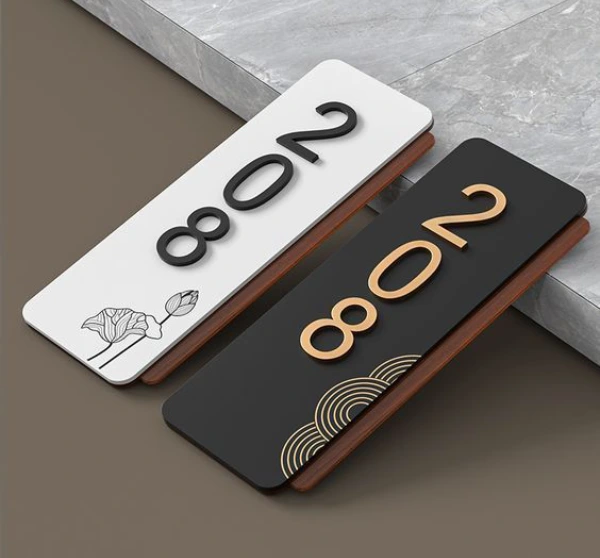
Within whatever constraints your society sets, there's still room for personalisation. Minimalist acrylic plates with clean sans-serif lettering suit most modern apartment doors. Bilingual plates, showing the name in both English and a regional language, are popular in many cities for the same reasons they work well on independent homes. Small decorative touches — a thin border, a subtle motif, or a two-tone colour scheme — can personalise a plate without breaking from a building's overall uniform look.
Building Entrance and Directory Boards
At the society or complex level, entrance boards typically display the building or society's name in larger lettering, often in a material like granite, stone, or illuminated acrylic that suits the scale of a compound gate. Lobby or lift-area directories, listing flat numbers against resident names, are especially useful in larger buildings and are usually updated by the society office as residents move in or out, so a slide-in or magnetic-card format is often more practical here than a permanently engraved board.
Choosing the Right Size for a Flat Door
Standard flat door plates typically range from about 8x5 inches to 10x6 inches, sized to fit comfortably beside the door frame without overwhelming it. If your plate needs to include both a family name and a flat number, or text in two languages, it's worth sizing slightly larger within that range so the layout doesn't feel crowded.
Ordering for a Single Flat vs an Entire Building
For an individual resident, ordering is straightforward — choose a material, confirm the text, and approve a design proof before production. For an entire building or society coordinating plates for every flat, it helps to agree on one template covering size, material, and font in advance, collect each resident's name and flat number in a single list, and get one sample approved before the full batch goes into production, which keeps costs down and avoids a mismatched final result.
Frequently Asked Questions
What size is typical for a flat door name plate?
Most flat door plates range from around 8x5 inches to 10x6 inches, though the right size depends on the door frame and how much text needs to fit.
Do housing societies restrict what door plates residents can install?
Many do, particularly gated communities aiming for a uniform corridor appearance, so it's worth checking with your RWA or society office before ordering a custom design.
What's the best material for a flat door plate?
Acrylic is the most popular choice for its light weight and easy customisation, though brass or stainless steel are common where a more premium look is wanted.
Can flat number and family name go on the same plate?
Yes, this is a common layout — the flat number is usually placed either above the name or in a smaller line below it.
How are lobby directory boards usually updated when residents change?
Many buildings use a slide-in card or magnetic-label format for directory boards specifically so individual entries can be updated without replacing the whole board.
Can an entire building order matching door plates together?
Yes, and it's often more cost-effective — agreeing on one template and placing a single bulk order keeps pricing down and ensures every door looks consistent.
Is a bilingual name plate a good option for a flat door?
Yes, many residents choose a bilingual layout showing the name in English and a regional language, which keeps it easy to read for neighbours, staff, and visitors alike.
Conclusion
A name board for flats has to work within tighter space and, often, a housing society's own design expectations — but that still leaves plenty of room for a plate that looks personal and well-made. Checking your building's guidelines first, then choosing a compact, durable material, is the simplest way to get a door plate that fits both your taste and your community's overall look.