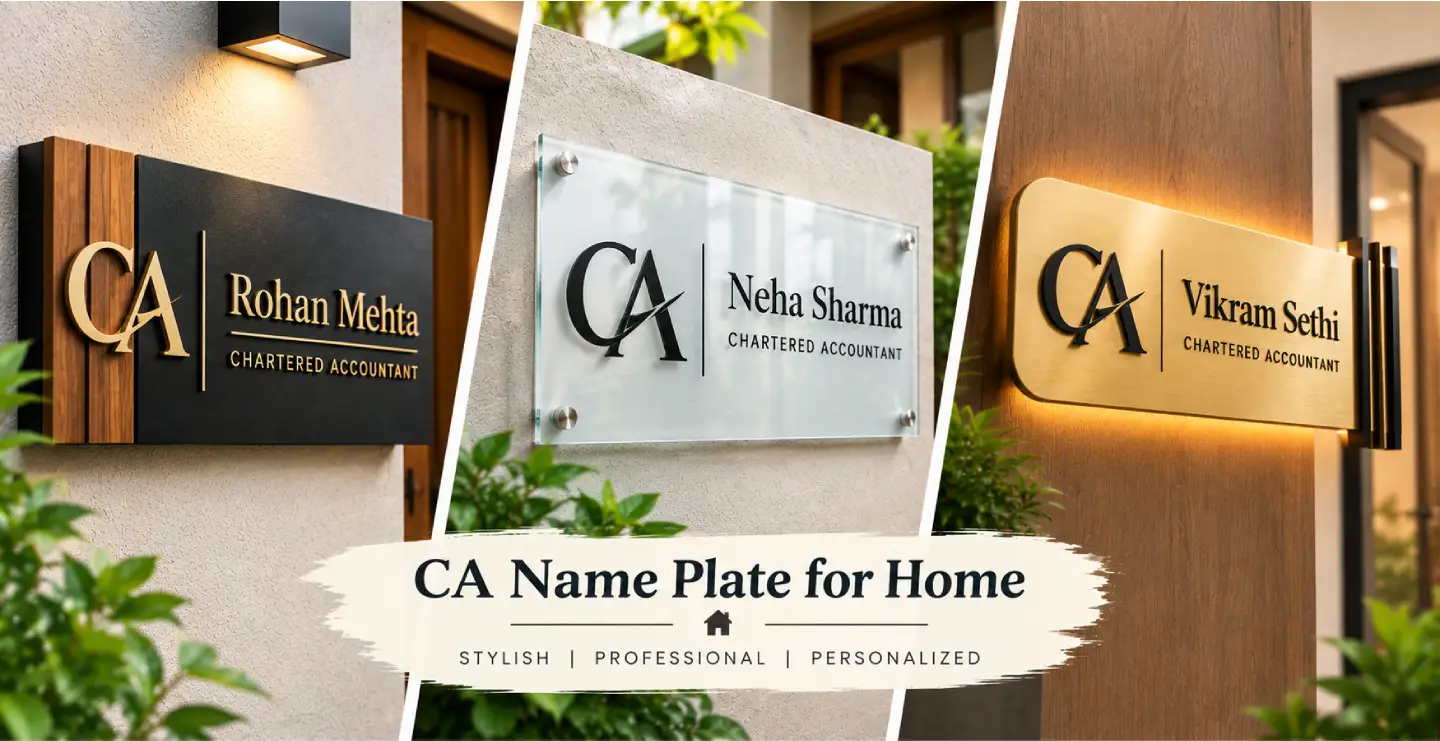
A name plate is often the first thing a guest notices when they arrive at your home. For families across Karnataka, choosing a house name plate in Kannada is more than a decorative choice - it is a way of celebrating the local language and making the home instantly recognisable to neighbours, postal workers, and visitors. Over the last few years, more homeowners in Bengaluru, Mysuru, Mangaluru, and smaller towns across the state have started moving away from plain English boards and choosing name plates that reflect their roots. In this guide, we cover everything you need to know before you order one, from materials and design to placement, sizing, and cost.
Why Choose a House Name Plate in Kannada?
Kannada is the official language of Karnataka and the mother tongue of millions of people in Bengaluru, Mysuru, Mangaluru, Hubballi, and beyond. A Kannada house name plate reflects pride in the local language and culture. It also makes practical sense in residential layouts, gated communities, and villages where Kannada is the language most people read comfortably. Many families feel that a name plate in their mother tongue carries more warmth and personal meaning than one in English, and it often becomes a talking point with guests and neighbours who appreciate the effort. For older family members especially, a Kannada name plate at the entrance feels more familiar and welcoming than an English one.
Popular Materials for Kannada House Name Plates
The material you choose affects the look, durability, and cost of your name plate. Here are the most popular options:
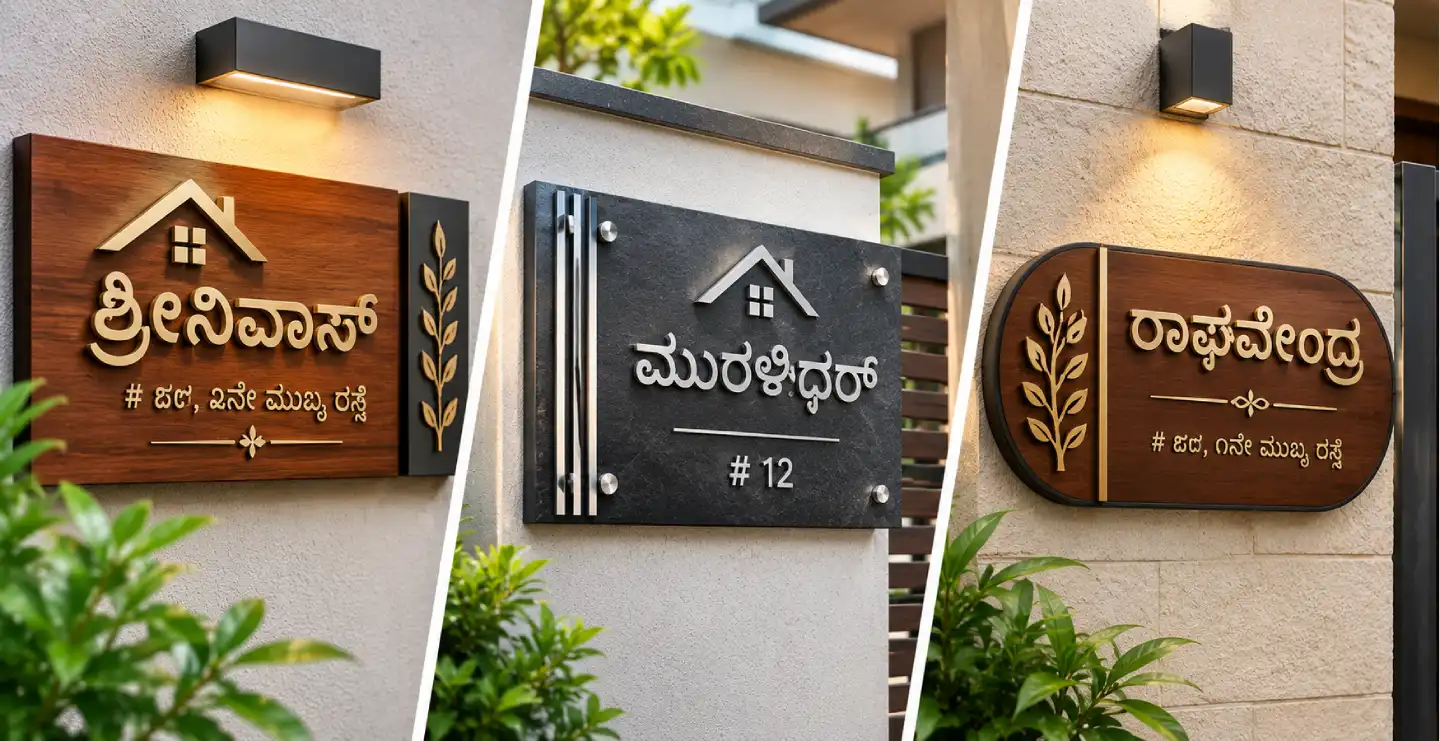
- Wooden name plates – Teak or sheesham wood, hand-carved or laser-engraved with Kannada text, gives a warm and traditional look.
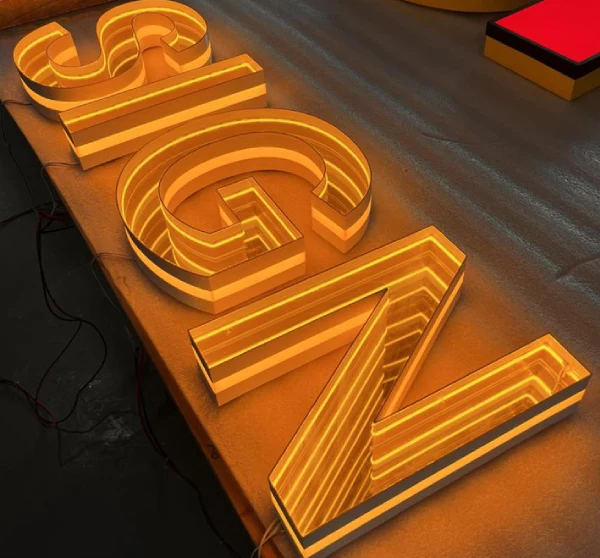
- Acrylic and LED name plates – A modern option, often backlit, ideal for a contemporary house front.
- Granite and marble name plates – Extremely durable and weather-resistant, engraved or sandblasted with Kannada letters, suited for outdoor gates.
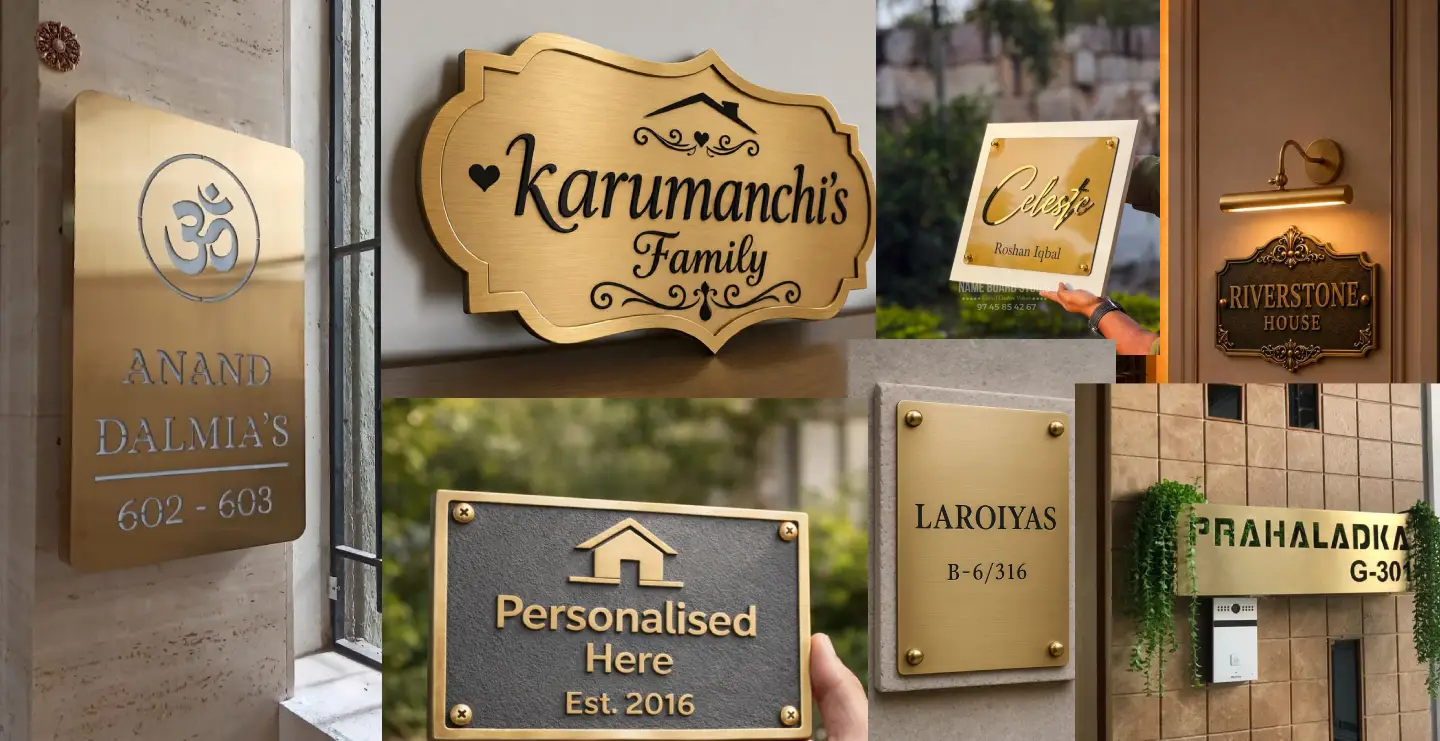
- Brass and copper name plates – A classic choice with an engraved or etched finish that ages beautifully over time.
- Ceramic tile name plates – Hand-painted ceramic plates are a traditional South Indian favourite, often decorated with motifs like peacocks or temple designs alongside the Kannada text.
- Stainless steel name plates – A low-maintenance, rust-resistant option that suits modern apartment complexes and independent homes alike.
Design Ideas and Trends


Kannada name plates today come in a wide range of styles, and homeowners are increasingly treating them as a design feature rather than just a label. Some popular design trends include:
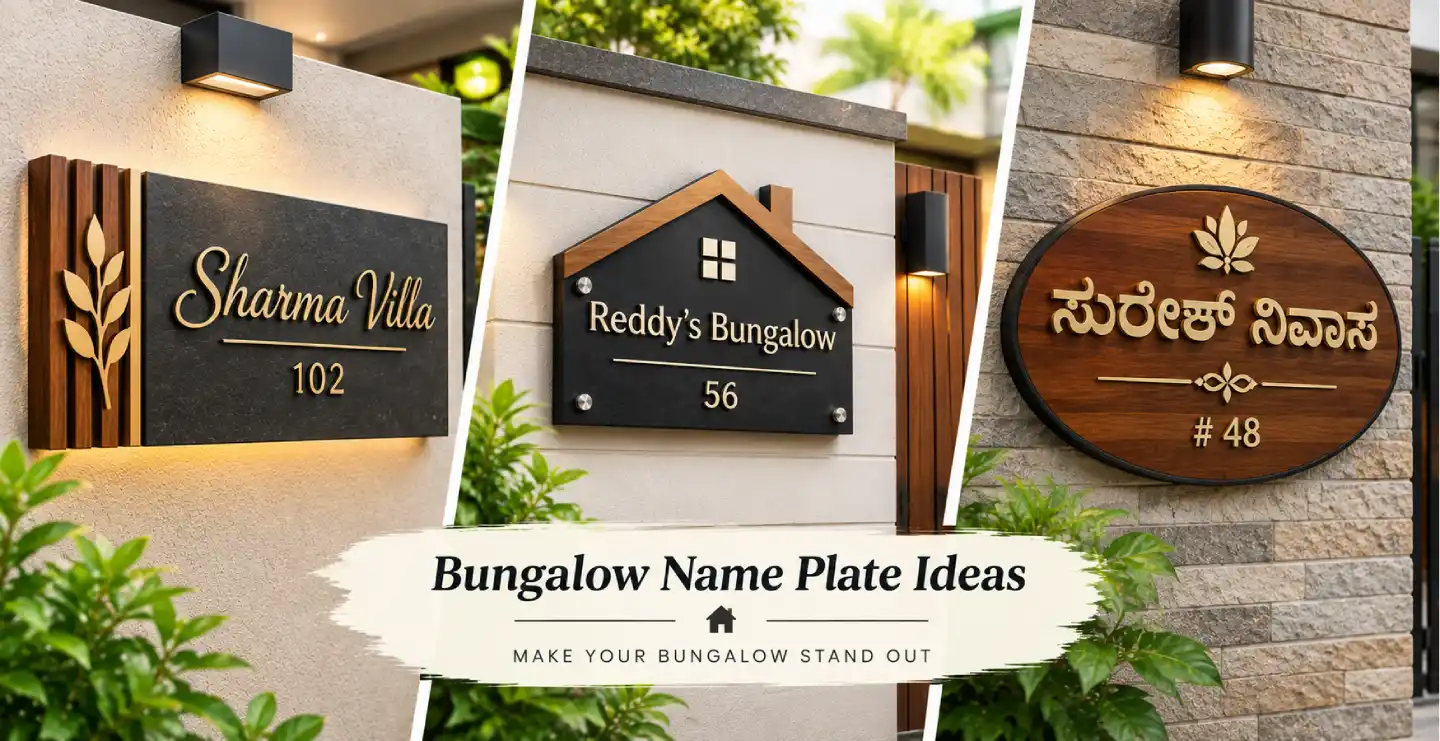
- Traditional carved wooden boards with bold Kannada calligraphy
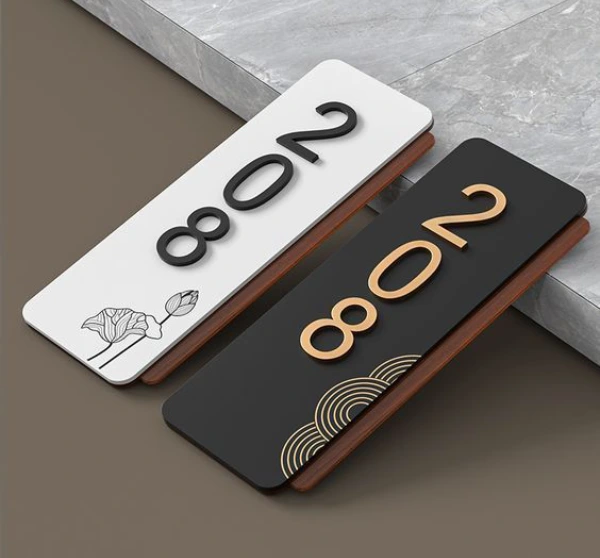
- Minimalist black acrylic plates with white or golden Kannada lettering
- Ceramic tiles combining Kannada text with Mysore painting-style artwork
- Name plates that pair Kannada text with auspicious symbols such as Om or Ganesha
- Bilingual plates that show the name in both Kannada and English for easy reading by everyone
Bilingual Name Plates: Kannada with English
Many households today prefer a bilingual name plate that displays the name in Kannada on one line and in English just below or beside it. This is especially popular in cities like Bengaluru, where families, delivery staff, and visitors may be more comfortable with either language. A bilingual layout keeps the cultural and emotional value of the Kannada script while ensuring the name plate stays practical for everyone who reads it, including courier services and ride-hailing drivers relying on map pins and addresses.
Choosing the Right Size for Your Name Plate
Size depends on where the plate will be installed. A compound wall or main gate plate is usually larger, ranging from around 12x8 inches to 18x12 inches, so it is visible from the road. Apartment or flat door plates are more compact, typically 8x5 inches to 10x6 inches, to fit neatly beside the doorframe. If your name plate includes both Kannada and English text, or additional details like a house name and door number, it is worth choosing a slightly larger size so the text does not look cramped.
Vastu Tips for Placing Your House Name Plate
According to Vastu Shastra, the placement of a house name plate can influence the energy at your entrance. A few commonly followed tips include:
- Fix the name plate on the east or north-facing wall of the main entrance where possible
- Keep it at eye level so it is easy to read from the gate
- Avoid placing it directly above the main door threshold
- Keep the area around the name plate well-lit and clutter-free
Cost Factors for Kannada House Name Plates
Prices vary depending on material, size, and design complexity. Acrylic and ceramic plates are usually the most budget-friendly, while granite, marble, and brass plates cost more due to material and craftsmanship. Custom carving, LED backlighting, and multi-line text such as name plus house name or address can also add to the final price. Delivery charges for heavier materials like granite or marble may also be higher, especially for outstation orders. It is a good idea to get quotes from two or three makers before finalising your order, and to ask whether the price includes installation hardware.
How to Choose the Right Kannada Name Plate Maker
Since accuracy of the Kannada script matters, always check a few things before placing your order:
- Ask for a digital proof of your name in Kannada before production begins
- Check reviews and photos of previous work by the maker
- Compare materials and finishing options within your budget
- Confirm delivery timelines, especially for outstation orders across Karnataka
- Ask if a warranty or replacement policy is offered in case of damage during shipping
Frequently Asked Questions
Can I get my house name plate in both Kannada and English?
Yes, most makers offer bilingual name plates with the name written in Kannada and English together. This is one of the most popular choices for homes in Bengaluru and other cities.
How long does it take to get a custom Kannada name plate made?
Production time usually ranges from 5 to 10 days depending on the material and design complexity, plus delivery time. Simpler acrylic plates are generally faster to produce than carved wood or engraved granite.
Which material lasts the longest outdoors?
Granite, marble, and stainless steel are among the most weather-resistant options and hold up well against sun, rain, and dust over many years with minimal maintenance.
Can I check the Kannada spelling before the plate is manufactured?
Yes, always ask for a design proof or sample image before production starts. This lets you confirm the Kannada text is accurate and well spaced before it becomes permanent.
What size name plate is ideal for an independent house?
For a compound wall or main gate, a size between 12x8 inches and 18x12 inches works well for most homes, giving enough space for the name and any additional details.
Are Kannada name plates suitable for apartments as well?
Yes, compact Kannada name plates sized for flat doors are widely available and are a popular choice in apartment complexes across Karnataka.
Do I need approval from my housing society before installing one?
Many gated communities and apartment associations have guidelines on name plate size and placement, so it is a good idea to check with your society or RWA before installation, especially for compound wall or gate plates.
Conclusion
A well-designed house name plate in Kannada adds character to your home while honouring the local language. Whether you prefer a traditional wooden board, a bilingual acrylic design, or a modern LED plate, choosing the right material, size, and placement will make your entrance welcoming for years to come.