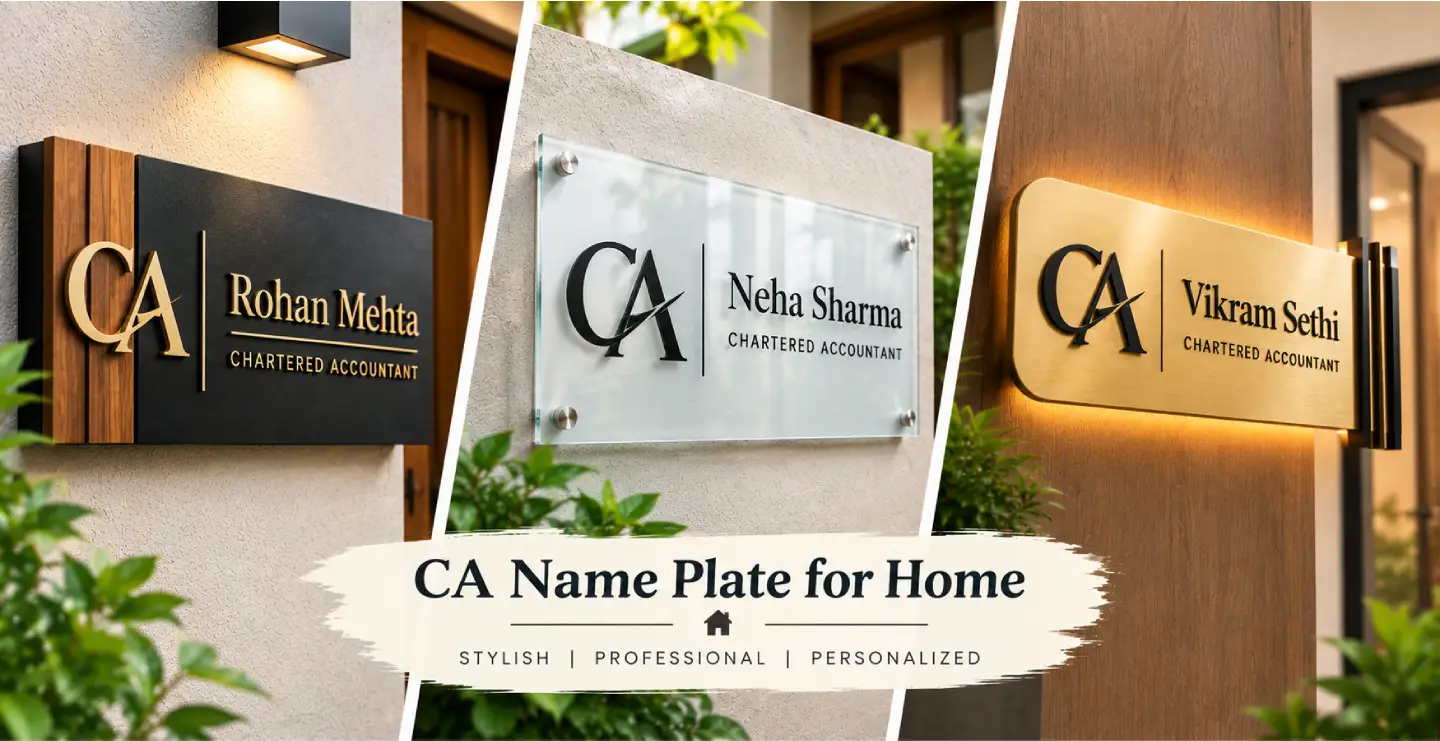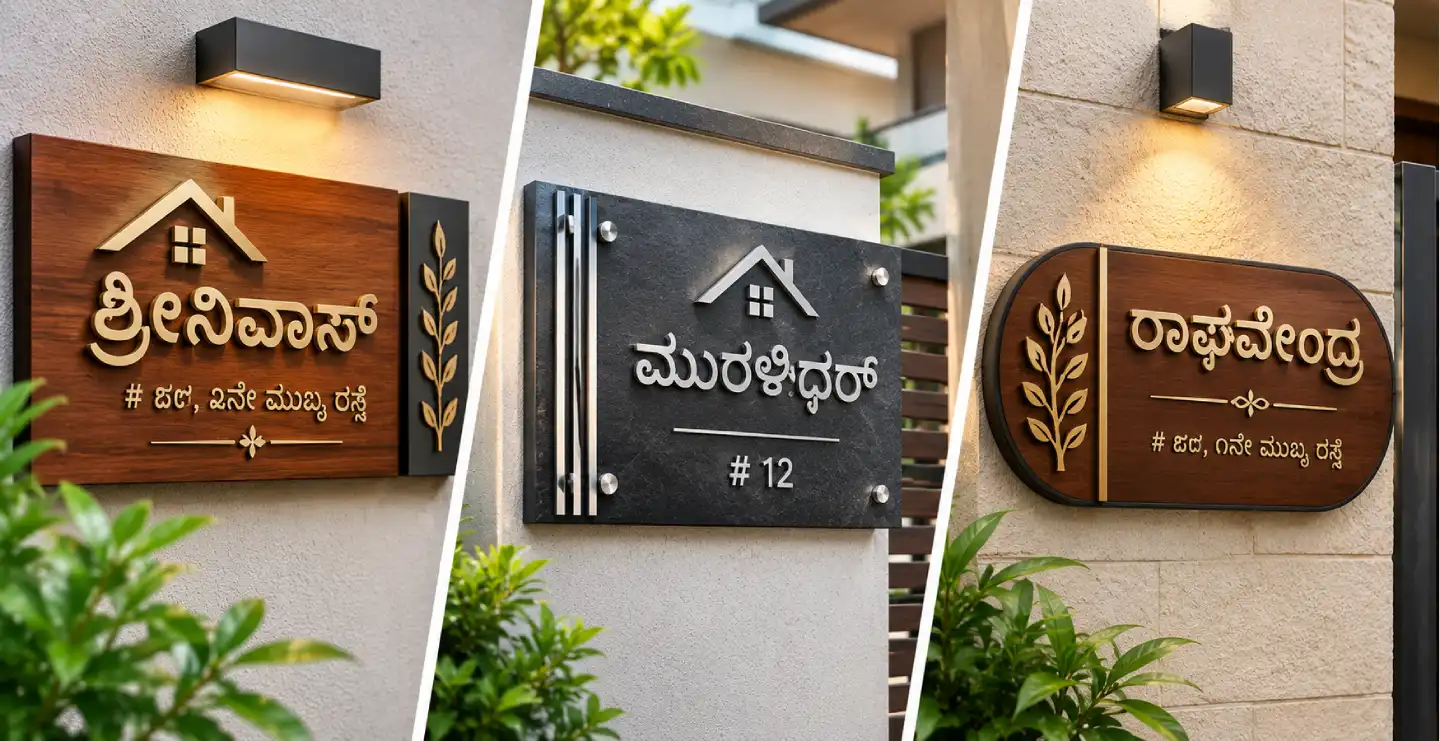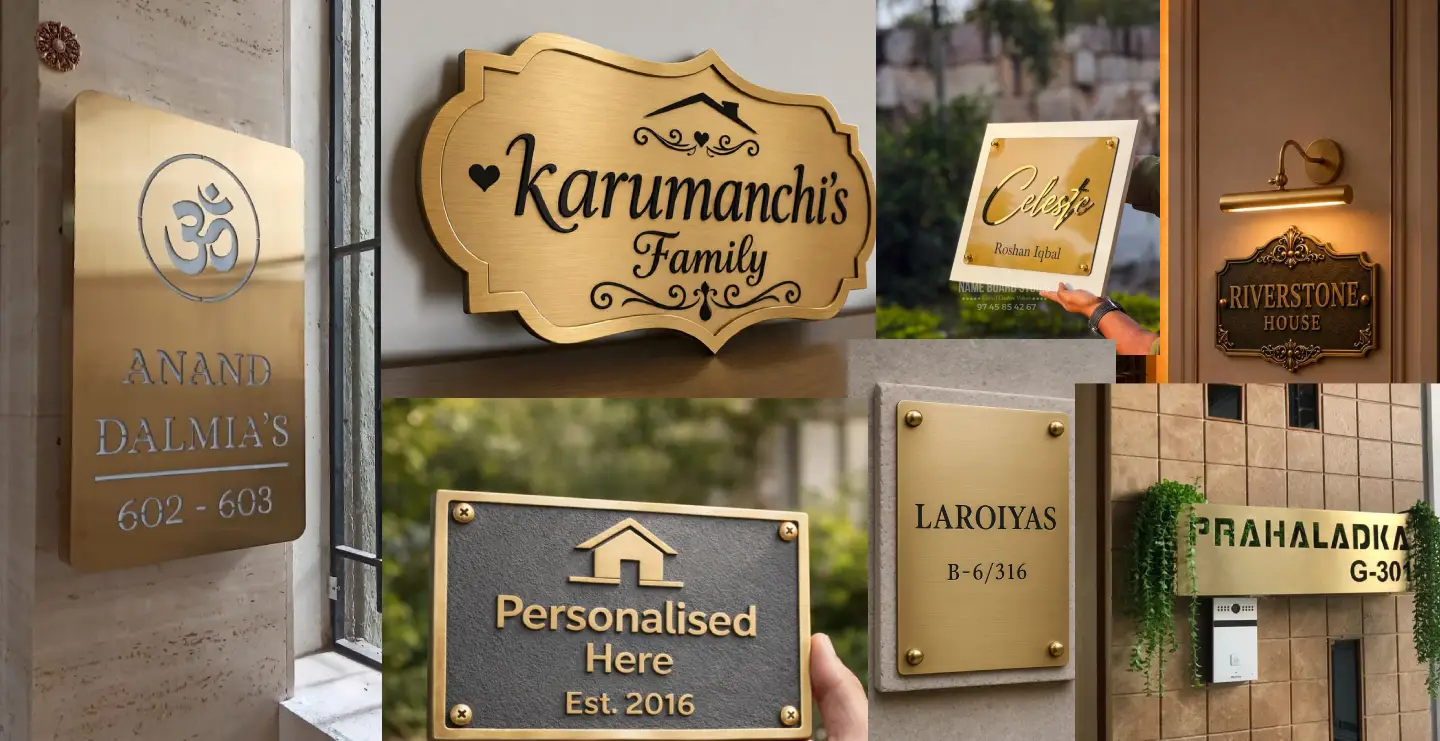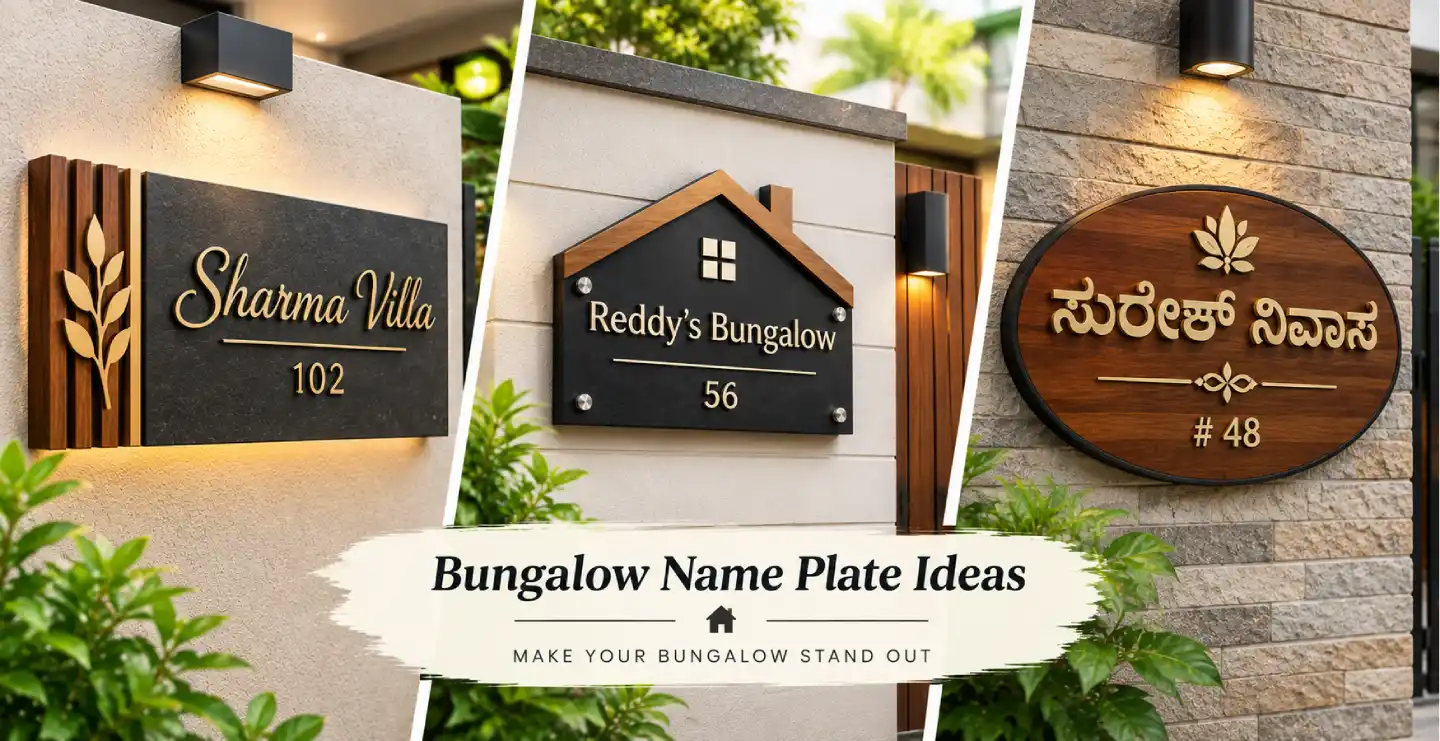
A bungalow is often the most spacious and individual home in a neighbourhood, and its entrance deserves a name plate that matches that character. Unlike a compact apartment door plate, a bungalow name plate usually has a bigger canvas to work with - a gate, a compound wall, or a pillar at the start of the driveway - which opens up far more possibilities in size, material, and design. This guide walks through the materials, styles, sizing, and placement ideas that work best for independent bungalows, along with practical tips for choosing a maker.
Why a Bungalow Deserves a Statement Name Plate
Bungalows typically sit on larger plots with a compound wall, gate, or portico, giving homeowners room to treat the name plate as a design feature rather than a purely functional label. A well-placed, well-proportioned name plate can set the tone for the entire property before a visitor even reaches the front door. It is one of the few elements of a home's exterior that combines identity, first impressions, and everyday practicality - helping guests, couriers, and cab drivers locate the house with ease.
Best Materials for Bungalow Name Plates
Because bungalow name plates are often larger and more exposed to the weather, material choice matters even more than it does for a flat or apartment door.
- Natural stone and granite – Gives a stately, permanent look and holds up extremely well against sun and rain, making it a favourite for gate pillars.
- Corten (weathering) steel – A popular choice for contemporary bungalows, developing a rustic, warm rust-toned patina over time that many homeowners love.
- Teak or other hardwood – A classic option for a warm, traditional entrance, especially when paired with carved lettering.
- Brass and copper – Suited to a grand, heritage-style bungalow, with engraved or etched lettering that ages gracefully.
- Acrylic with LED backlighting – Ideal for modern bungalows where the name plate needs to remain visible after dark.
- Marble – A premium, elegant option often used on pillars or feature walls at the entrance.
Design Styles That Suit Bungalow Entrances


Because bungalows vary widely in architectural style, the name plate should echo the character of the house itself:
- Traditional heritage design – carved stone or wood with classic serif lettering
- Contemporary minimalist design – brushed metal or acrylic with clean sans-serif lettering
- Coastal or resort-style design – light wood tones with simple, breezy lettering
- Garden-integrated design – a stone or wooden plate mounted amid planters or landscaping near the gate
Where to Place a Bungalow Name Plate
Unlike apartment plates, which have only one realistic spot (the door), bungalows offer several good placement options:
- On the main gate or gate pillar, at eye level for someone standing just outside
- On the compound or boundary wall, close to the gate
- On a dedicated signage post at the start of the driveway
- On the portico or verandah wall, for a more understated look
Choosing the Right Size for a Large Entrance
Because bungalow entrances usually have more setback from the road, name plates here can be significantly larger than apartment or flat plates without looking out of place. Sizes commonly range from around 18x12 inches up to 24x16 inches or more for gate pillars, ensuring the name remains legible even from a passing car. Smaller portico or verandah plates can stay closer to 12x8 inches for a more intimate feel.
Vastu Considerations for Bungalow Name Plates
As with any home entrance, many families like to factor in Vastu guidance when installing a bungalow name plate:
- Prefer the east or north-facing side of the gate or compound wall where the layout allows
- Mount it at a height that is easy to read at eye level from the road
- Keep the surrounding area clean, well-lit, and free of clutter
- Avoid fixing it directly above the threshold of the main door
Cost Factors for Bungalow Name Plates
Because bungalow name plates tend to be larger and are often made from premium materials like granite, marble, or brass, they generally cost more than a standard apartment door plate. Complex carving, multi-line text, LED backlighting, and delivery or installation of heavier stone and metal pieces all add to the final price. It is worth getting a written quote that clearly separates material cost, customisation charges, and installation or delivery fees before confirming your order.
How to Choose a Maker for a Custom Bungalow Name Plate
- Look for a portfolio that includes large-format, gate-mounted, or pillar-style name plates, not just small door plates
- Confirm whether the maker offers on-site installation for heavy stone or metal pieces
- Ask for a design proof with accurate scale so you can visualise the final size
- Check reviews specifically from bungalow or independent house customers
Frequently Asked Questions
What size name plate is best for a bungalow gate?
Most bungalow gate or pillar name plates range from 18x12 inches to 24x16 inches, though the ideal size depends on how far the gate sits from the road and how large the pillar or wall surface is.
Which material is most durable for an outdoor bungalow name plate?
Granite, marble, and corten steel are among the most weather-resistant choices and require very little maintenance over the years, even with direct sun and rain exposure.
Can a bungalow name plate include a house name as well as the family name?
Yes, larger bungalow plates comfortably fit both a house name and a family surname, often on two separate lines, and many owners also add the house number or street name.
Is LED backlighting worth it for a bungalow name plate?
If your gate or entrance is not well lit at night, an LED backlit acrylic or metal plate keeps the name visible after dark, which is especially useful for guests and delivery visits in the evening.
How long does installation take for a stone or metal bungalow name plate?
Installation itself is usually quick, often under an hour, but production of a custom stone or metal plate can take anywhere from one to three weeks depending on material and design complexity.
Should the name plate match the bungalow's architectural style?
It generally looks best when it does - a heritage-style bungalow suits carved stone or wood, while a contemporary bungalow pairs better with metal or acrylic in a clean, minimal font.
Can I get a sample or mock-up before the final plate is made?
Most reputable makers will share a digital design proof showing the exact text, layout, and proportions before production begins, which is worth insisting on for a large, custom order.
Conclusion
A bungalow name plate is one of the simplest ways to add character and a sense of arrival to a larger home. With the extra space a gate or compound wall provides, homeowners can afford to be more ambitious with material, size, and design than they could with a compact apartment plate - turning a functional necessity into a genuine architectural detail.