A ready-made, off-the-shelf name plate can only take you so far - the moment you want a specific font, an exact colour match to your brand, an unusual shape, or a particular language, you're looking at a custom name board. Customisation has become the default rather than the exception for most name plates today, whether for a home, an office, or a shop. This guide walks through everything that can actually be customised, how the ordering process typically works, and what to expect in terms of cost and turnaround time.
What Does "Custom" Actually Mean for a Name Board?
A custom name board is one designed and made to your exact specifications, rather than picked from a limited set of pre-made templates or sizes. This can be as simple as customising the wording and font on an otherwise standard plate, or as involved as a fully bespoke shape, material combination, and lighting setup designed from scratch for a specific space.
What Can Be Customised
- Text and wording – Name, title, house name, tagline, or any combination you choose
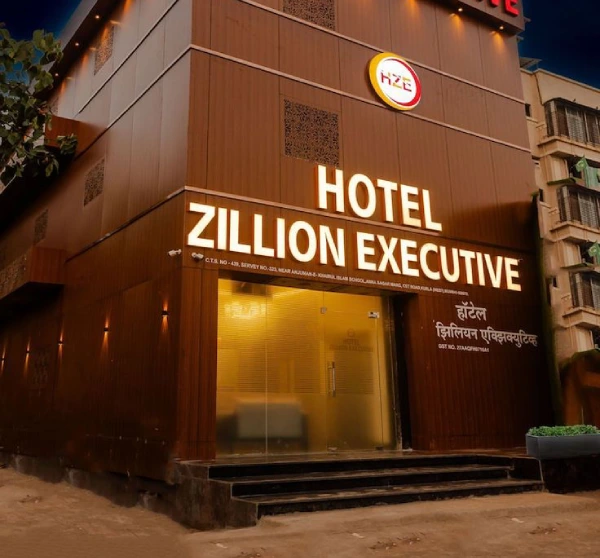
- Language and script – Single language, bilingual, or trilingual layouts in the script of your choice
- Font style – From traditional carved calligraphy to clean modern sans-serif typography
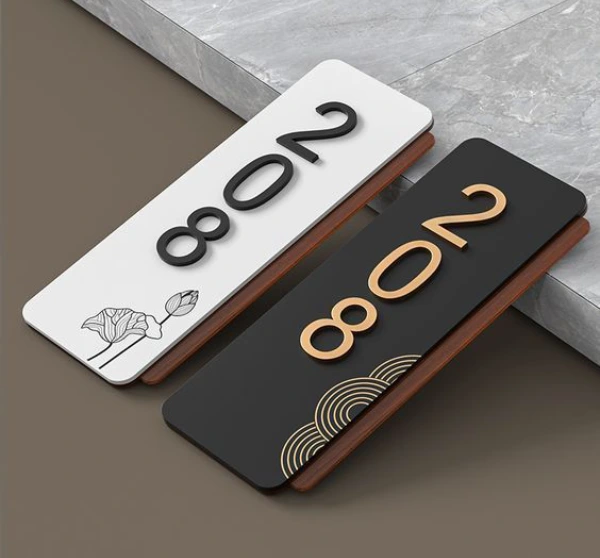
- Colour and finish – Matte, glossy, metallic, brushed, or frosted finishes in almost any colour combination
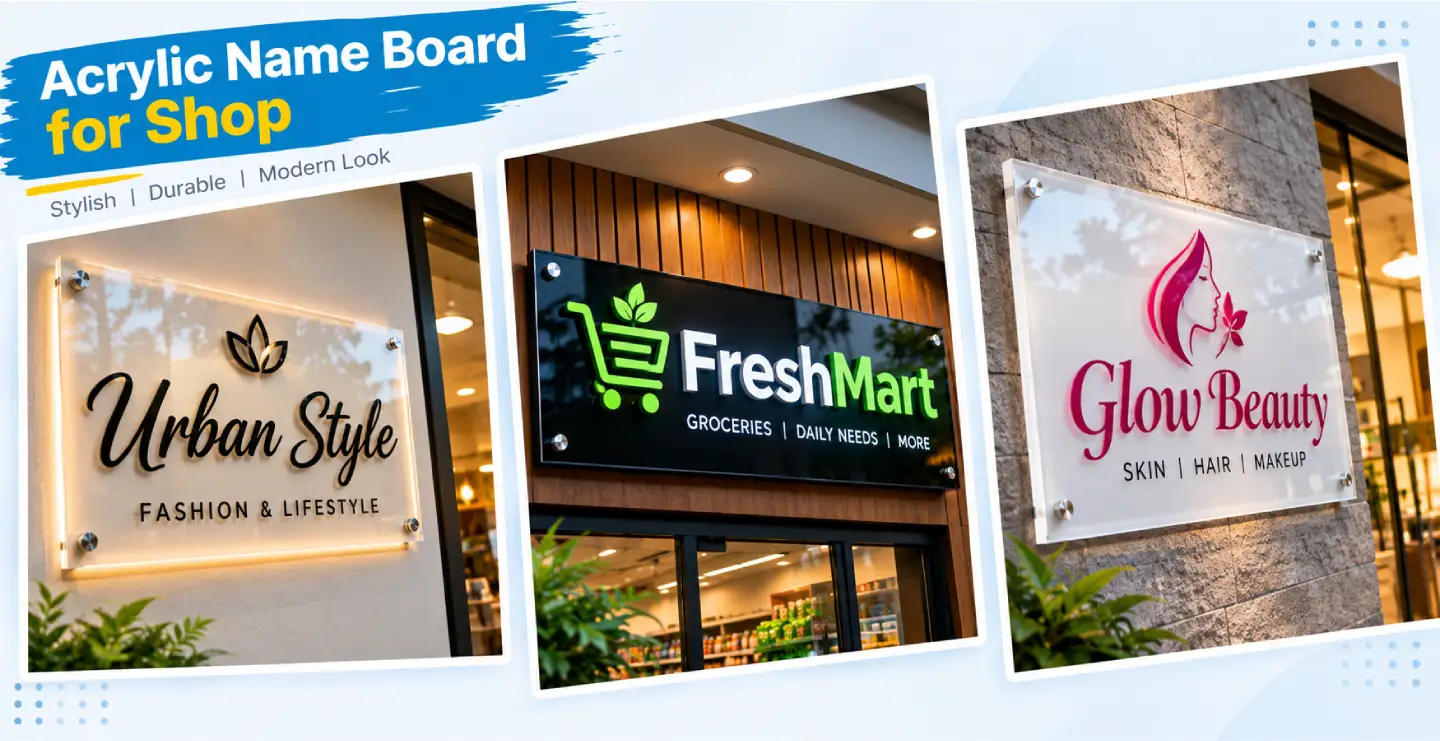
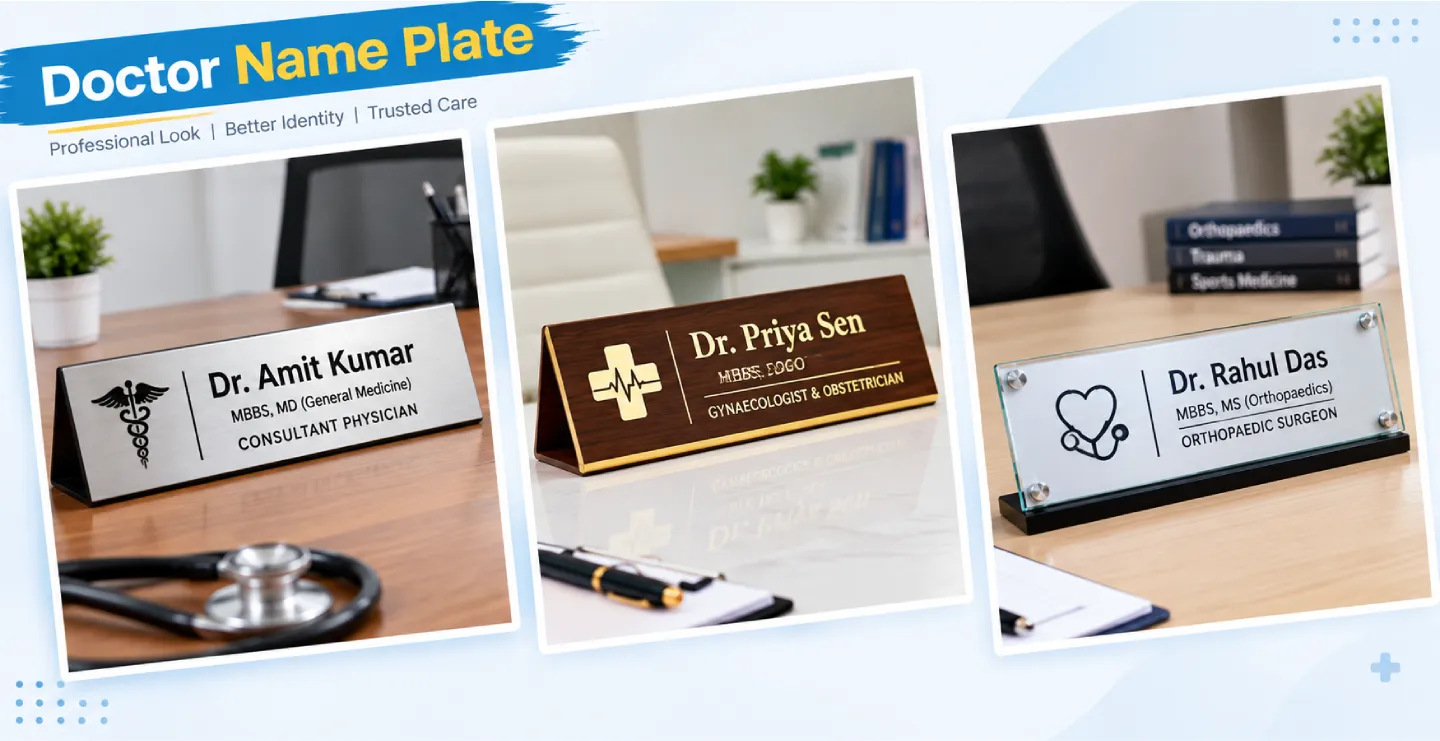
- Material – Wood, metal, acrylic, stone, PVC, or a mix of materials layered together
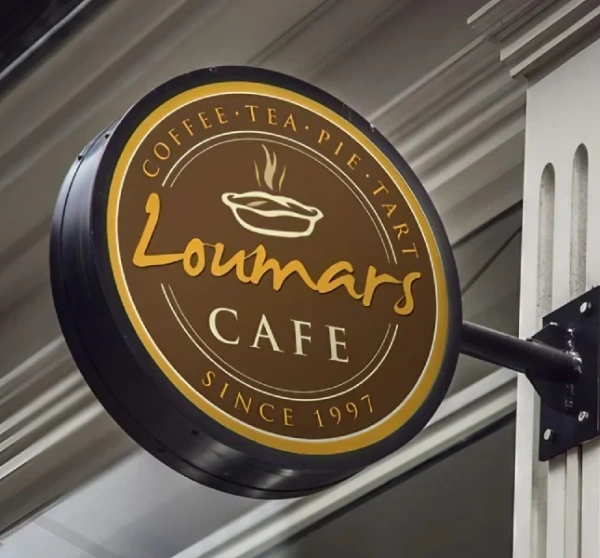
- Shape and cut-outs – Custom outlines, logo-shaped cut-outs, or decorative borders beyond a standard rectangle
- Size – Scaled to fit your exact door, gate, wall, or desk space
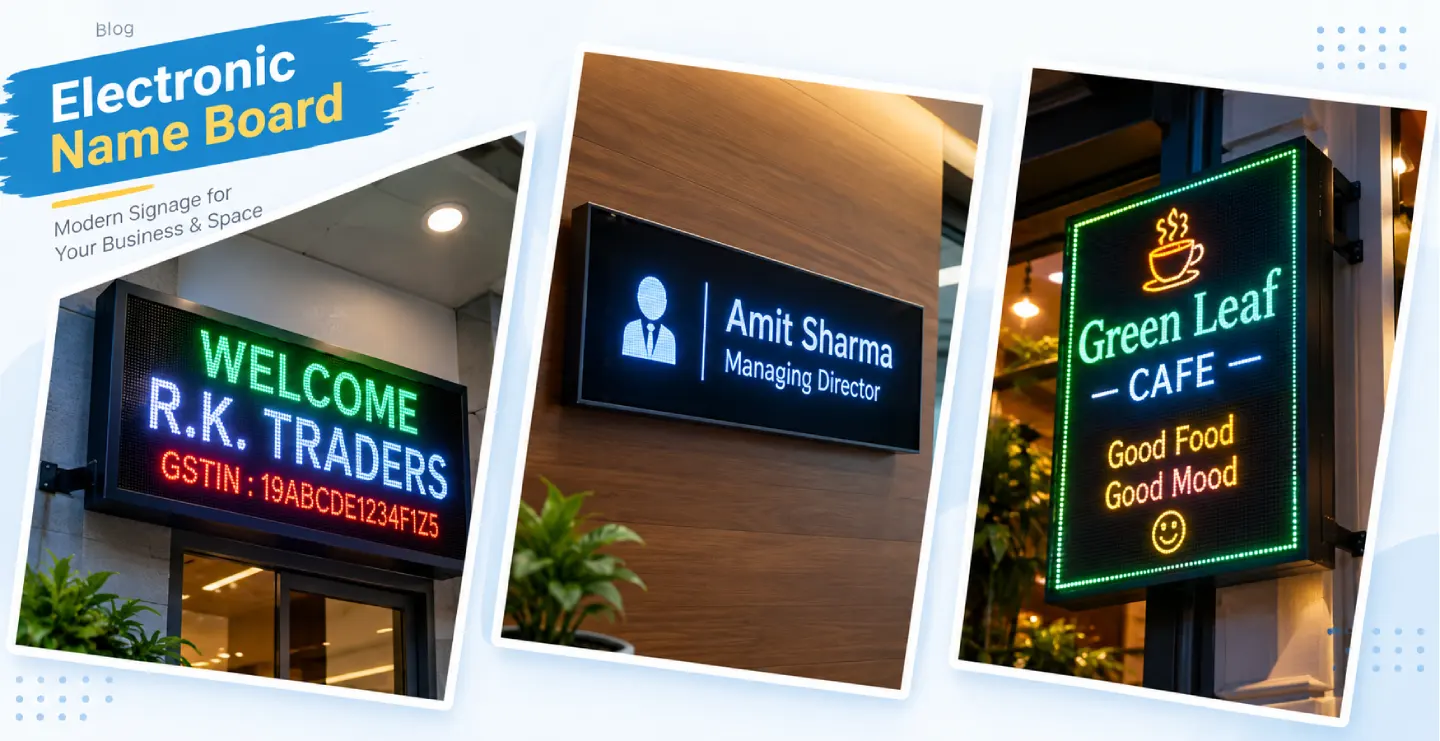
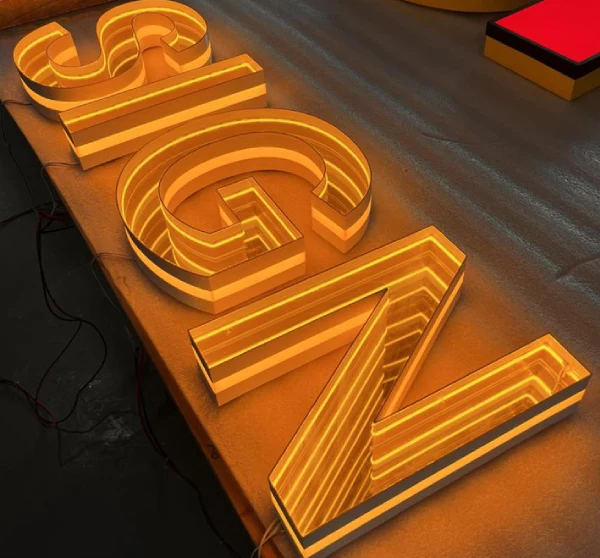
- Lighting – LED backlighting, edge-lighting, or illuminated lettering
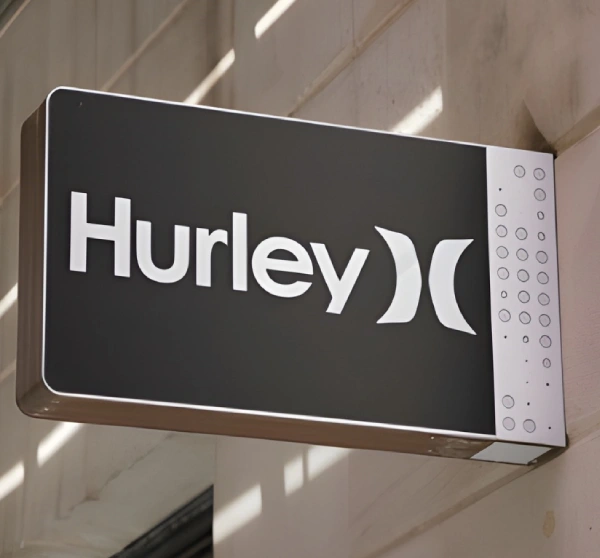
- Add-ons – Logos, motifs, QR codes, or small decorative icons alongside the main text
Popular Customisation Trends


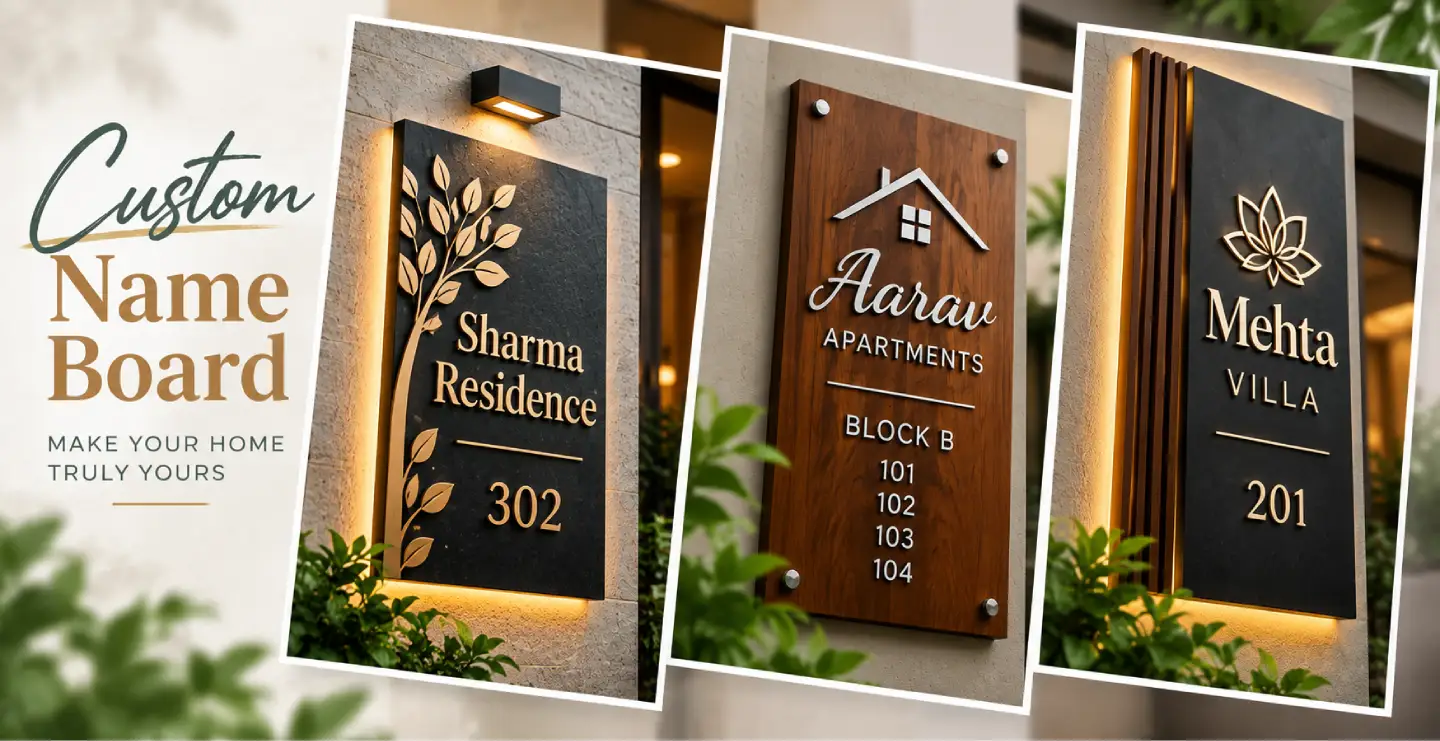
A few trends show up repeatedly across custom orders today. Bilingual and trilingual boards, combining a regional language with English, are increasingly common for both homes and businesses. LED backlighting and edge-lit acrylic have moved from a premium extra to a fairly standard request for both shops and modern homes. Layered designs - where cut-out metal or acrylic lettering sits raised above a contrasting backing board - give a more three-dimensional, premium look than a flat printed sign. Minimalist, single-colour designs with clean typography remain popular for offices and contemporary homes, while more ornate, motif-heavy designs continue to be favoured for traditional houses and religious or cultural spaces.
How the Custom Ordering Process Typically Works
- Briefing – You share the text, preferred style, material, size constraints, and any reference images or logos.
- Design proof – The maker sends a digital mock-up showing the exact layout, font, and colours before anything is produced.
- Revisions – Most makers allow at least one or two rounds of changes to the proof before final approval.
- Production – Once approved, the board is cut, engraved, printed, or carved according to the final design.
- Delivery and installation – The finished board is shipped or delivered, with installation sometimes included for larger or wall-mounted pieces.
Custom vs Ready-Made: Cost and Time Trade-offs
Ready-made or template-based name plates are almost always cheaper and faster, since there's no design work involved and materials are often pre-cut to standard sizes. A fully custom board takes longer - typically one to three weeks depending on complexity - and usually costs more, both because of the design time involved and because non-standard sizes or shapes can mean more material wastage during production. For most people, a middle ground works well: a standard size and material with custom text, colour, and font, which keeps costs reasonable while still feeling personal.
Tips for a Smooth Custom Order
- Always insist on a digital proof before production begins, especially for any non-English script
- Provide exact measurements of the space where the board will be installed
- Share your logo or reference images in high resolution if they need to be reproduced
- Ask about the maker's revision policy so you know how many changes are included before extra charges apply
- Confirm the expected production and delivery timeline upfront, especially if you have a deadline like a housewarming or office opening
Common Mistakes to Avoid When Customising a Name Board
Skipping the design proof is the most common regret - approving a custom order based on a verbal description alone often leads to spacing, sizing, or spelling issues that only become obvious once the board is made. Choosing a font that looks good on screen but is hard to read from a distance is another frequent issue, particularly for outdoor or gate-mounted boards. It also helps to think ahead about maintenance: a highly detailed custom design in a delicate material may look stunning initially but require more upkeep than a simpler one in a durable material.
Frequently Asked Questions
How much more does a custom name board cost compared to a standard one?
This varies by complexity, but custom orders are typically somewhat more expensive than standard templates due to design time and, sometimes, non-standard sizing or material use.
How long does a custom name board usually take to make?
Most custom orders take one to three weeks from design approval to delivery, depending on the material and how intricate the design is.
Can I combine two languages on a custom name board?
Yes, bilingual and even trilingual layouts are one of the most common customisation requests and can usually be arranged in various layout styles.
What information should I provide when requesting a custom design?
Exact text, preferred material and colours, the space's measurements, and any logo or reference images you want reflected in the final design.
Is it possible to customise just the text on a standard template?
Yes, this is usually the fastest and most affordable form of customisation, since it keeps the base size and material standard while personalising only the wording and font.
How many design revisions are usually included?
This depends on the maker, but one to two rounds of revisions before final approval is fairly standard; it's worth confirming this upfront.
Can a custom name board include a logo or icon alongside the text?
Yes, most makers can incorporate a logo, motif, or small icon into the layout, either as a printed element or a separately mounted piece.
Conclusion
A custom name board is worth the small extra time and cost when it comes to getting a design that truly fits your space, language, and personal or brand identity. Insisting on a clear design proof, being specific about your requirements upfront, and choosing a material suited to where the board will live are the simplest ways to make sure the final result matches what you had in mind.