For most businesses, the name board out front is the single most-seen piece of marketing they own - visible to everyone who walks or drives past, whether or not they ever step inside. A well-designed business name board does more than state a name; it signals what kind of business it is, builds recognition over time, and can genuinely influence footfall. This guide covers the types of commercial signage available, materials, design principles, and a few practical points on permissions before you install one.
What is a Business Name Board?
A business name board, sometimes called a storefront sign or fascia signage, is the primary exterior signage identifying a commercial establishment - a shop, restaurant, clinic, salon, or office. It's distinct from interior signage like reception boards or cabin plates, since its main job is to be seen and recognised from outside, often from a distance or while people are moving past.
Types of Business Name Boards


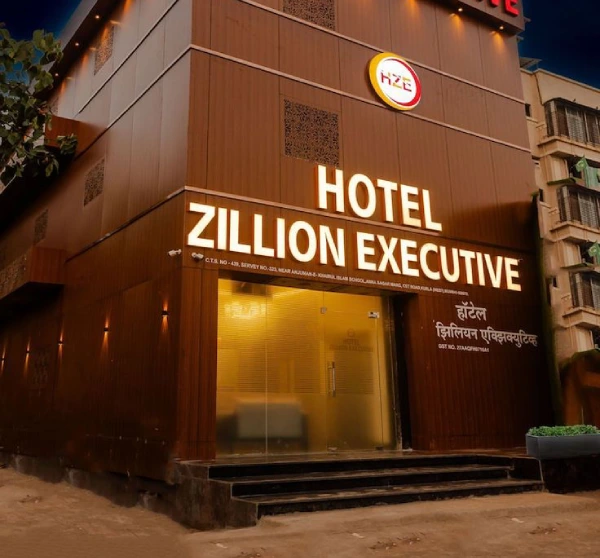
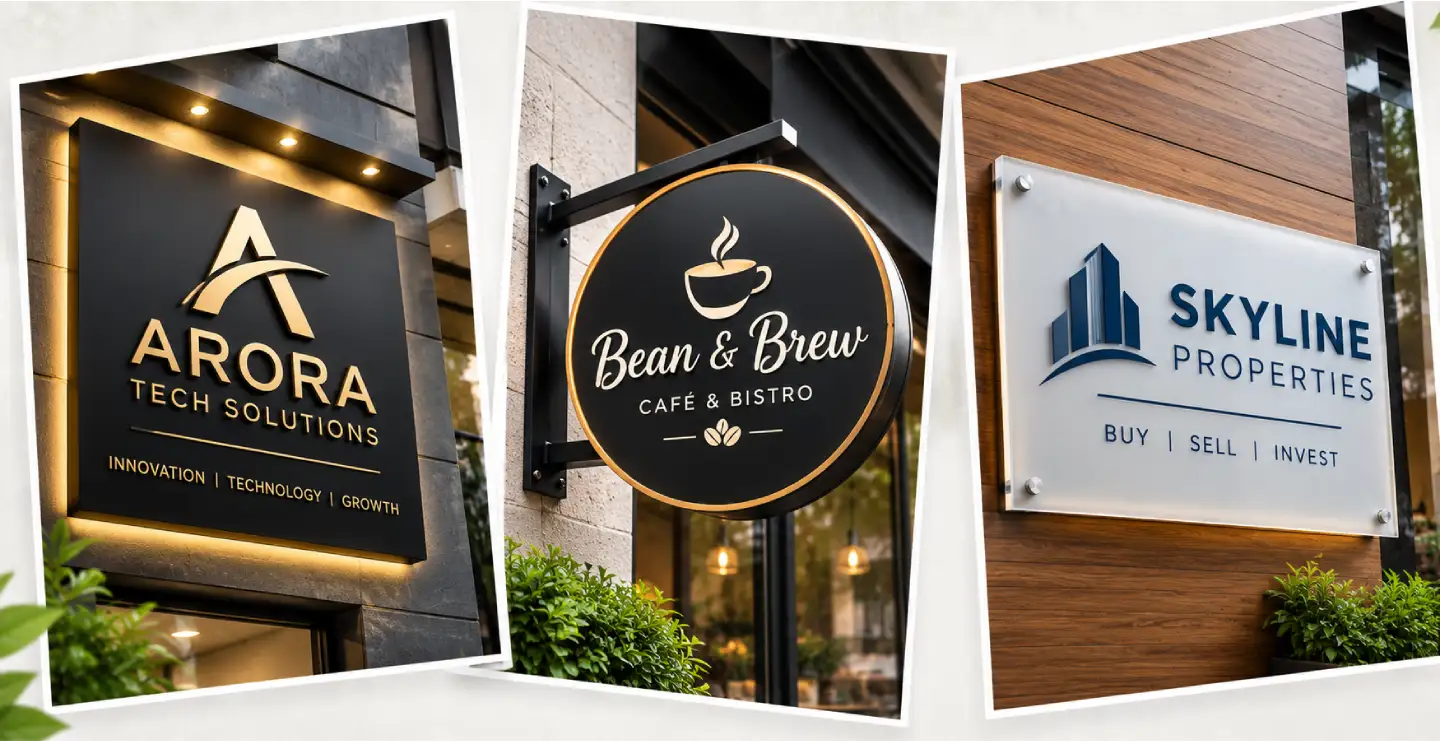
- Fascia or storefront signs – Mounted flat above or beside the entrance, the most common and highest-visibility format.
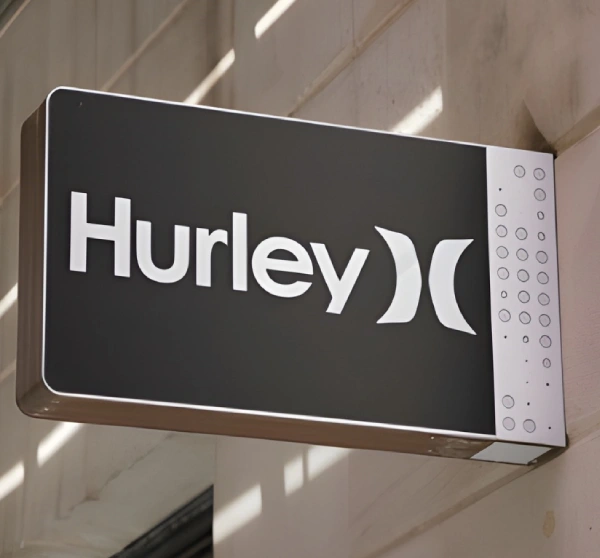
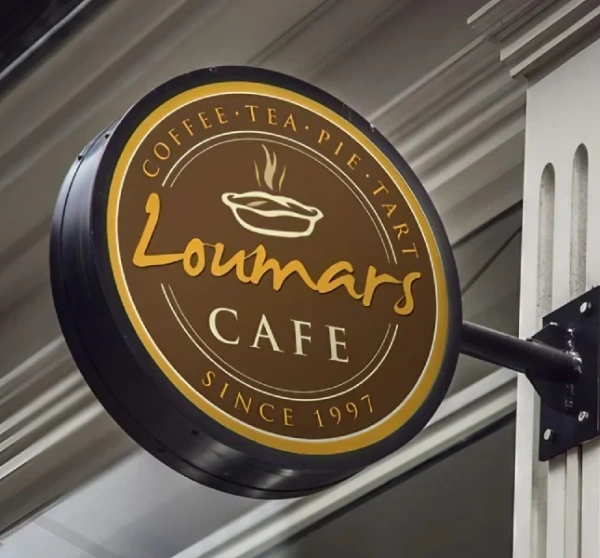
- Projecting or hanging signs – Mounted perpendicular to the building so they're visible to foot traffic approaching from either direction along the street.
- Window signage – Vinyl lettering or decals applied directly to glass storefronts.
- Standee or A-board signs – Freestanding signs placed on the pavement outside, often used for daily specials or additional visibility.
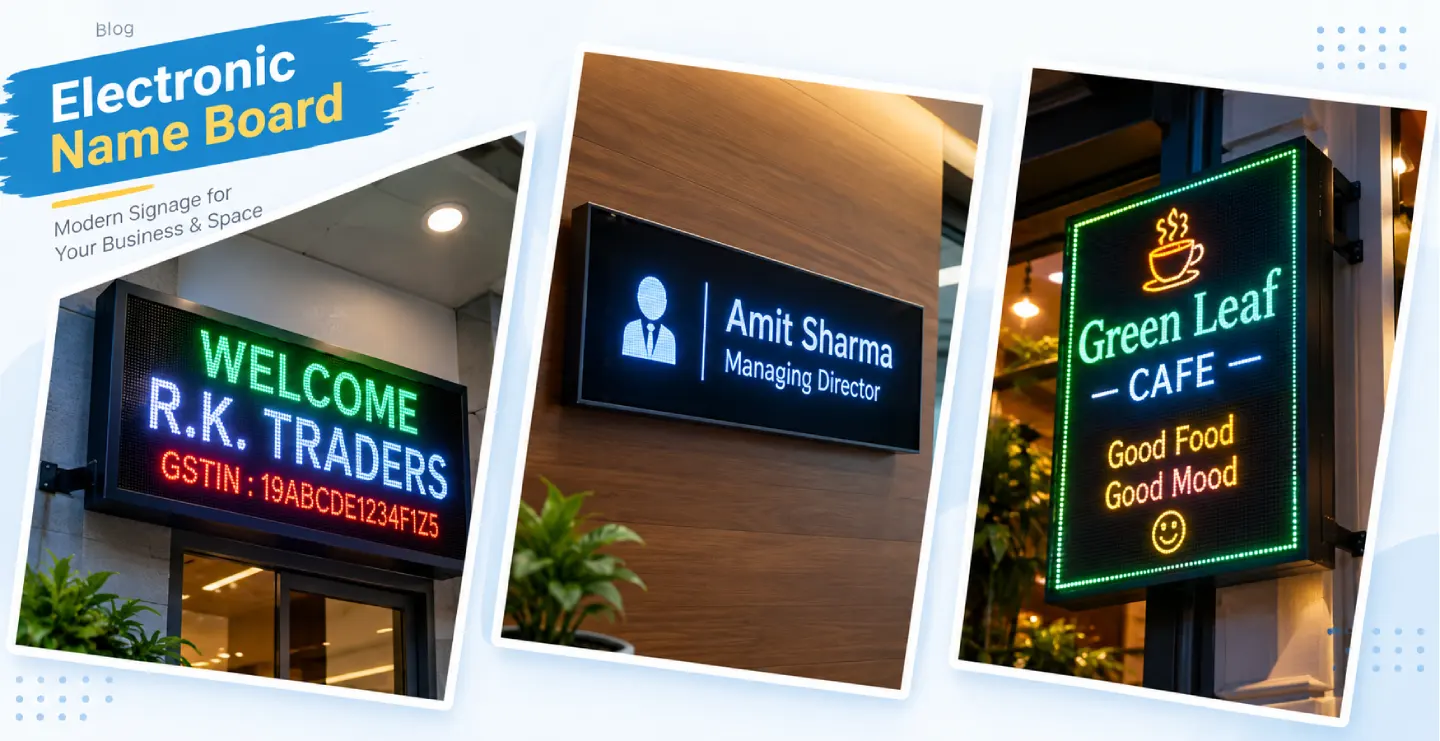
- Illuminated or LED signage – Backlit or front-lit boards that remain visible after dark, especially important for businesses open into the evening.
Why Business Signage Matters More Than It Seems
A name board is frequently a customer's very first impression of a business, formed in the few seconds it takes to walk or drive past. Clear, well-designed signage helps people locate the business quickly, especially first-time visitors relying on a map pin rather than familiarity with the area. Consistent signage across multiple locations also reinforces brand recognition, which matters increasingly as businesses expand beyond a single outlet.
Materials for Outdoor Business Signage
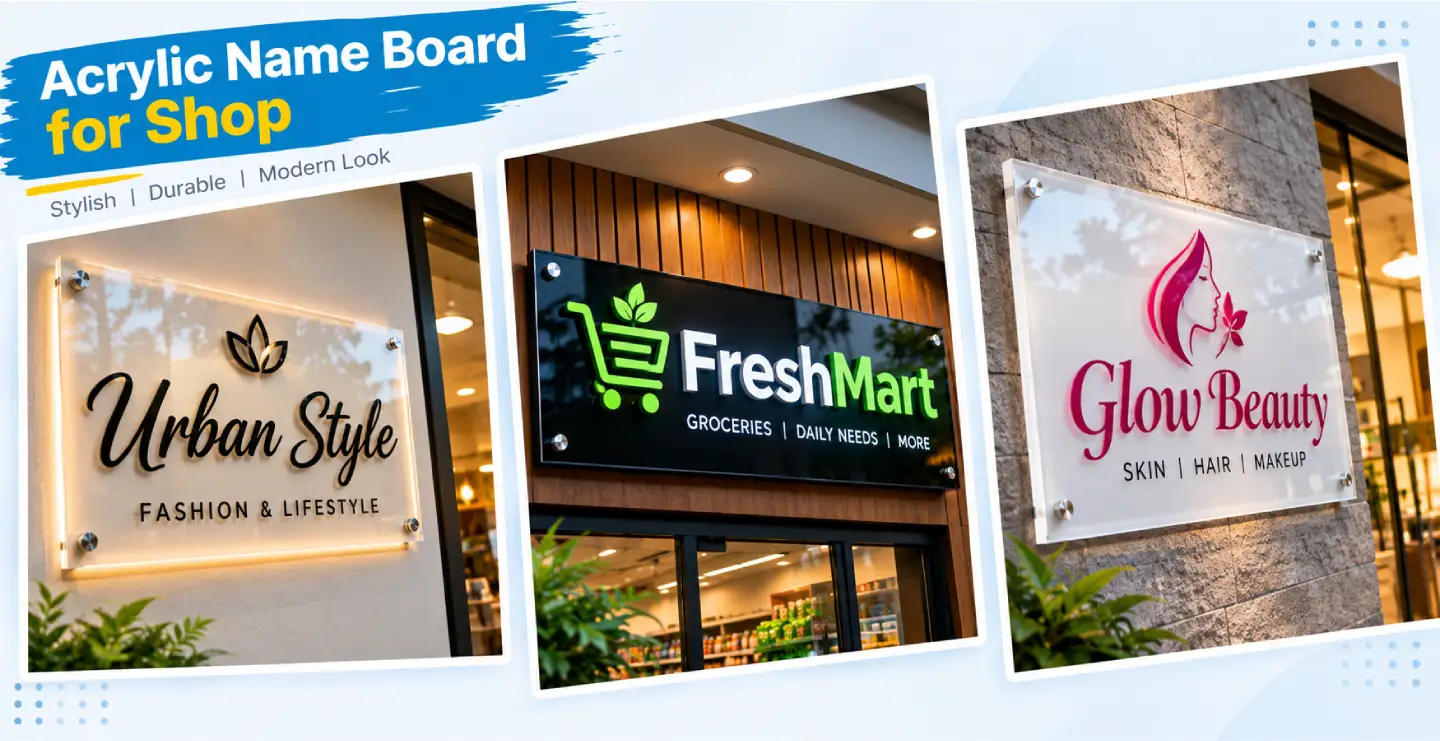
- Acrylic with LED backlighting – A popular modern choice that stays visible and eye-catching both day and night.
- Aluminium Composite Panel (ACP) – Lightweight, weather-resistant, and widely used for printed storefront boards.
- Vinyl-printed flex or PVC – The most budget-friendly option, common for smaller shops and temporary signage.
- 3D metal or acrylic letters – Individually mounted letters that create a raised, premium look, often paired with spotlighting.
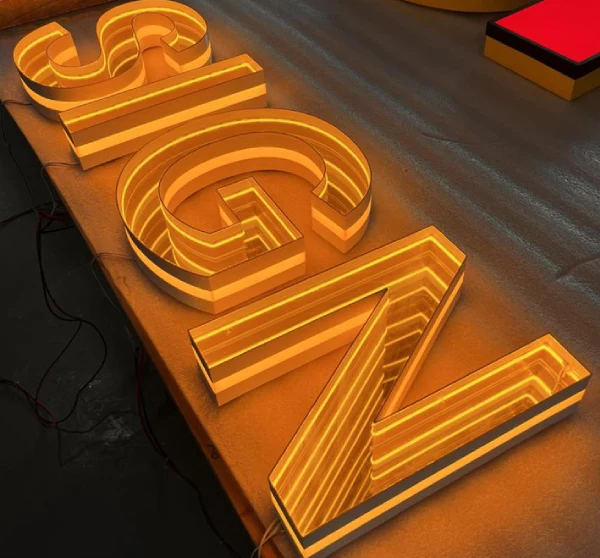
- Neon or LED channel letters – Especially popular for restaurants, cafes, and businesses wanting a distinctive night-time presence.
Design Principles for Effective Business Signage
Legibility from a distance matters more than decorative detail - a name that can't be read from across the street or from a moving vehicle isn't doing its job, regardless of how attractive it looks up close. Contrast between the text and background colour is one of the biggest factors in how far away a sign remains readable. Keeping the design consistent with your logo, brand colours, and any signage at other branches builds recognition over time, while cramming in too much information - taglines, phone numbers, and service lists all at once - usually makes the core name harder to spot rather than more informative.
Permissions and Local Regulations
Most Indian cities require some form of permission or licence from the municipal corporation for outdoor commercial signage, particularly larger boards, projecting signs, or anything extending over public pavement space. Requirements and fee structures vary by city and even by ward, and some states additionally require specific language display rules for shop signage, such as Karnataka's Kannada signage requirement or Tamil Nadu's Tamil-first rule for commercial boards. Because these rules differ by location and are updated from time to time, it's worth checking directly with your local municipal or corporation office before finalising size and placement, rather than assuming a design that worked in one city will automatically comply elsewhere.
Choosing the Right Size for Your Storefront
Signage size should be proportionate to both the width of the shopfront and the distance from which it will typically be viewed - a busy main road with fast-moving traffic needs larger, bolder lettering than a quiet pedestrian lane. As a general guide, fascia signs are often sized to cover a significant portion of the available frontage width without overwhelming the entrance, while projecting signs are usually more compact since they're read from a much closer distance.
Maintaining Business Signage Over Time
Outdoor signage takes a steady beating from sun, rain, and pollution, so periodic cleaning noticeably extends how good it looks and how long colours stay vivid. LED and illuminated signage should be checked periodically for burnt-out sections or flickering, which look unprofessional if left unaddressed. If a business rebrands or changes its name, updating signage promptly matters more than it might seem, since outdated signage can create confusion about whether the business is still operating.
Frequently Asked Questions
Do I need permission to install a business name board?
In most Indian cities, yes - municipal corporations typically require a licence or permission for outdoor commercial signage, especially larger or projecting boards, so it's worth checking local requirements before installation.
What's the most cost-effective material for a shop sign?
Vinyl-printed flex or PVC boards are generally the most budget-friendly option while still giving a clean, professional appearance.
Is illuminated signage worth the extra cost?
If your business operates into the evening or is located somewhere with limited street lighting, illuminated signage makes a real difference to visibility and can be worth the investment.
How often should business signage be cleaned or maintained?
A general clean every few months keeps most signage looking fresh, though businesses in dusty or high-pollution areas may need more frequent attention.
Can a business name board be updated if we rebrand?
Yes, though the ease depends on the format - individually mounted 3D letters are generally easier to update than a single printed panel.
Do state language rules apply to business signage?
Some states have specific requirements, such as Karnataka's Kannada signage rule or Tamil Nadu's Tamil-first display order, so it's worth checking your state's current rules before finalising a design.
What size should my storefront sign be?
It should be proportionate to your shopfront width and viewing distance - busier, faster-moving streets generally need larger, bolder signage than quiet pedestrian areas.
Conclusion
A business name board is one of the highest-impact, lowest-effort marketing investments a business can make, working around the clock without any ongoing cost beyond occasional maintenance. Getting the material, size, and legibility right - and checking local permission requirements before installation - ensures your signage does its job well for years rather than needing an early replacement.