In the fast-paced environment of healthcare, time and clarity are crucial. Hospital sign boards are more than just pieces of information they are essential tools that guide patients, visitors, and healthcare professionals through complex medical facilities. Beyond functionality, hospital signage also enhances safety, communicates essential protocols, and even strengthens the hospital's brand identity.
The evolution of hospital sign boards reflects the changing demands of modern healthcare: from simple directional signs to sophisticated LED and digital signage systems that offer interactivity, real-time updates, and sustainable solutions. In this article, we explore the different types of hospital signs, their significance, best design practices, and emerging trends shaping the future of hospital wayfinding.
Why Hospital Sign Boards Are Crucial
Hospitals are often intimidating environments, especially for first-time visitors or patients under stress. Clear, intuitive, and well-placed signage reduces anxiety, ensures safety, and improves operational efficiency. The importance of hospital signage can be summarized in four key areas:
- Wayfinding: Hospital sign boards help patients, visitors, and staff navigate the facility with ease. From finding consultation rooms to locating elevators or parking areas, proper wayfinding reduces confusion and ensures people reach their destinations promptly.
- Communication: Signage communicates critical information, including emergency exits, safety protocols, restricted areas, and hygiene reminders. It ensures that everyone, regardless of their familiarity with the hospital, receives the correct information in real time.
- Patient Experience: Thoughtfully designed signage can reduce stress and create a sense of reassurance. Visitors are more confident when they can easily navigate the hospital, contributing to a better overall patient experience.
- Branding and Professionalism: Sign boards contribute to the hospital’s image. High-quality, aesthetically pleasing signs convey professionalism and trust, reinforcing the hospital's reputation for excellence in care.
Types of Hospital Sign Boards
Modern hospitals require a diverse range of sign boards to meet different needs. These can broadly be classified into indoor, outdoor, illuminated, and specialized signage.
1. Indoor Sign Boards
Indoor sign boards ensure smooth navigation and communication within hospital premises. They are designed to guide, inform, and enhance the overall environment.


Key indoor signage types include:
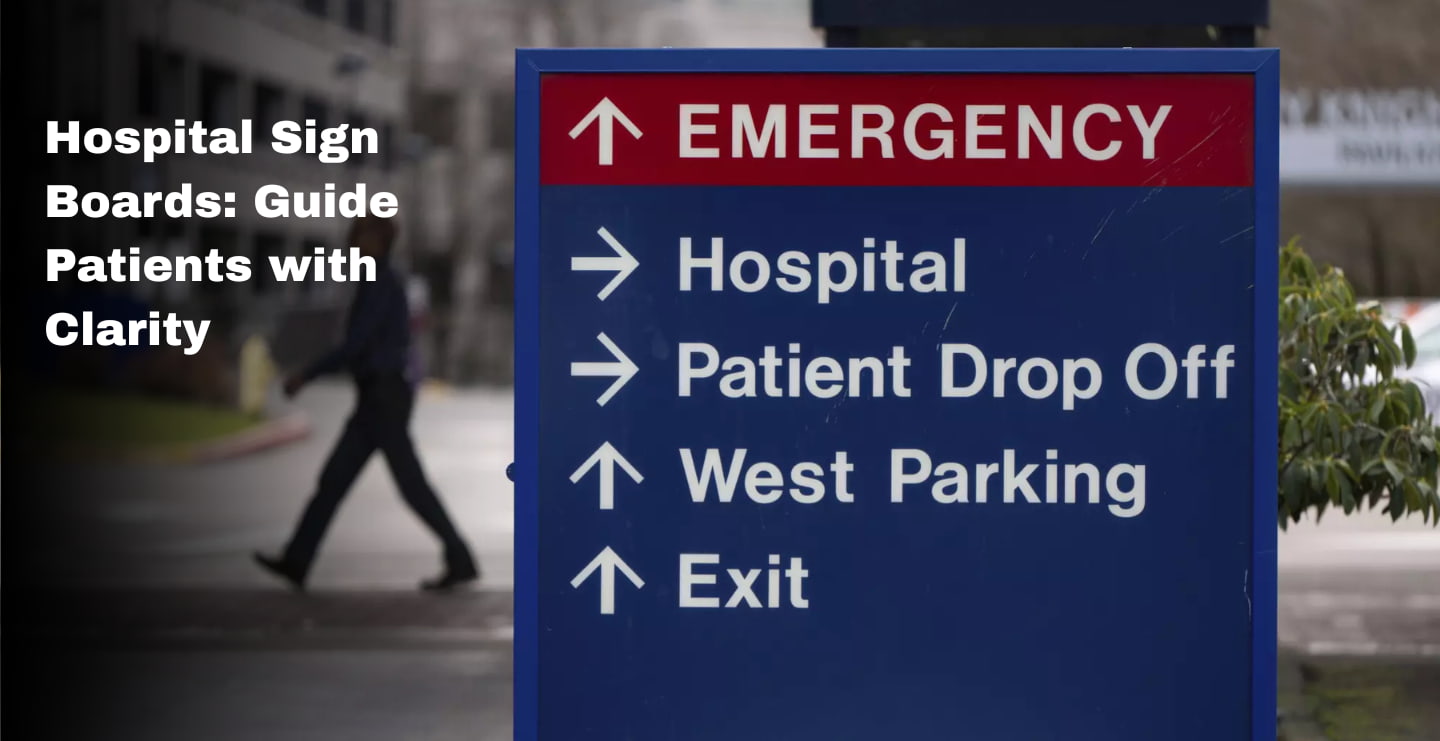
- Directional Signs: Guide patients and visitors to key locations such as reception, consultation rooms, elevators, restrooms, and diagnostic centers.
- Departmental Signs: Clear signs for wards like Radiology, Pediatrics, ICU, or Maternity help patients locate services without confusion.
- Safety and Informational Signs: Signs for emergency exits, hand sanitization, restricted areas, and fire safety provide crucial guidance and ensure compliance with health regulations.
- Room Labels and Identification Boards: Identifying consultation rooms, private wards, or operation theaters with precise and aesthetically appealing boards improves organization and reduces errors.
2. Outdoor Sign Boards
Outdoor signage board plays a pivotal role in hospital identity, first impressions, and traffic management.

Common outdoor hospital signage includes:
- Main Identification Boards: Displaying the hospital name and logo prominently helps patients recognize the facility from a distance.
- Directional Signage: Large campuses benefit from signs that guide visitors to different buildings, entrances, and parking areas.
- Parking Signage: Clear parking boards reduce congestion, improve traffic flow, and enhance visitor convenience.
3. Illuminated Sign Boards
Illuminated signage is essential for visibility during low-light conditions or night-time emergencies.
Popular types include:
- Neon Sign Boards: Bright and eye-catching, neon signs are ideal for emergency departments, pharmacies, and critical points in the hospital.
- Glow Sign Boards: Reflective or internally lit boards are effective in emergency zones and large outdoor complexes, ensuring visibility under any lighting conditions.
- LED Sign Boards: LED signs are energy-efficient, durable, and highly visible. They can display real-time information such as queuing numbers, appointment notifications, and emergency alerts.
4. Acrylic Sign Boards
Acrylic sign boards combine elegance, durability, and versatility. They are widely used for both indoor and outdoor applications:
- Reception and Lobby Signs: Acrylic boards can be custom engraved with the hospital logo and design elements for a polished look.
- Room Labels: Lightweight and customizable, acrylic boards enhance aesthetics while maintaining clarity.
- Branding Signage: Illuminated acrylic signs create a premium feel and strengthen hospital identity.

Characteristics of Effective Hospital Signage
Not all hospital sign boards are created equal. Effective signage must meet several key criteria:
- Legibility: Large, readable fonts with minimal stylization ensure that information is easy to read from a distance.
- Universal Symbols: Icons and pictograms improve accessibility, especially for illiterate visitors or those unfamiliar with the local language.
- Durability: Signage materials must withstand daily wear and tear. Outdoor signs should resist weathering, UV exposure, and physical impacts.
- Visibility: Reflective materials, illumination, and contrast improve visibility in all lighting conditions, including emergencies.
- Accessibility: Sign boards should accommodate individuals with disabilities, including tactile or braille features where necessary.
- Safety Compliance: Hospital signs often fall under health and safety regulations. Fire-resistant materials, clear evacuation markers, and hazard warnings are essential.
Designing Hospital Sign Boards: Best Practices
Creating effective hospital signage board requires a balance of aesthetics, functionality, and technology. Key design principles include:
- Consistent Visual Language: Use uniform colors, fonts, and iconography across all signage to create a cohesive visual system.
- Hierarchy of Information: Prioritize essential information first, such as directions or emergency exits, followed by supplementary details.
- Minimalist Design: Avoid clutter; focus on clear, concise messages to reduce cognitive load for visitors.
- Strategic Placement: Signs should be located at decision pointsintersections, entrances, lobbies, and elevators for maximum effectiveness.
- Integration with Digital Systems: Consider combining traditional signage with digital displays for dynamic updates, real-time notifications, and interactive wayfinding.

Technological Innovations in Hospital Signage
The future of hospital sign boards lies in the integration of technology to improve usability, sustainability, and hygiene:
- Digital Wayfinding Systems: Interactive kiosks and mobile-enabled navigation provide personalized directions and real-time updates to patients.
- Touch-Free and Motion-Activated Signs: Reduce physical contact, improving hygiene in sensitive areas. Voice-controlled displays can also guide visitors efficiently.
- Eco-Friendly Materials and Solar-Powered Signs: Hospitals can adopt green signage solutions, reducing energy consumption while maintaining visibility and durability.
- Augmented Reality (AR) Navigation: AR-enabled apps allow visitors to see virtual directions overlaid on the hospital environment through their smartphones. This innovation simplifies navigation in complex facilities.
- Real-Time Emergency Updates: LED and digital signage can instantly display emergency alerts, queue management, or vaccination information, ensuring timely communication.
Future Trends in Hospital Signage
Hospital signage is evolving rapidly, with trends reflecting the growing importance of patient experience, technology, and sustainability:
- Smart Hospitals: Signage integrated with hospital management systems can display patient-specific directions and alerts.
- Personalized Wayfinding: Mobile apps paired with indoor positioning can guide patients directly to their destination with turn-by-turn directions.
- Sustainability and Energy Efficiency: LED and solar-powered signs reduce energy consumption and align with environmentally responsible practices.
- Interactive Experiences: Touchless kiosks, AR navigation, and digital information boards enhance engagement and accessibility for all visitors.
- Multi-Lingual Signage: Catering to diverse populations, hospitals are increasingly adopting multilingual boards to improve clarity for international patients.
Conclusion
Hospital sign boards are far more than simple markers they are vital tools that combine functionality, safety, design, and branding. From guiding patients efficiently to creating a professional and trustworthy image, effective signage impacts every aspect of a hospital's operations.
By embracing modern materials like acrylic and LED, incorporating interactive digital systems, and focusing on accessibility, hospitals can improve the patient journey, reduce anxiety, and enhance their reputation.
In a healthcare environment where every second matters, the right sign board ensures the right direction at the right time.
A well-designed hospital signage system is a reflection of the hospital’s commitment to care, professionalism, and innovation. For hospitals aiming to improve patient experience and operational efficiency, investing in quality signage is not optional- it’s essential.