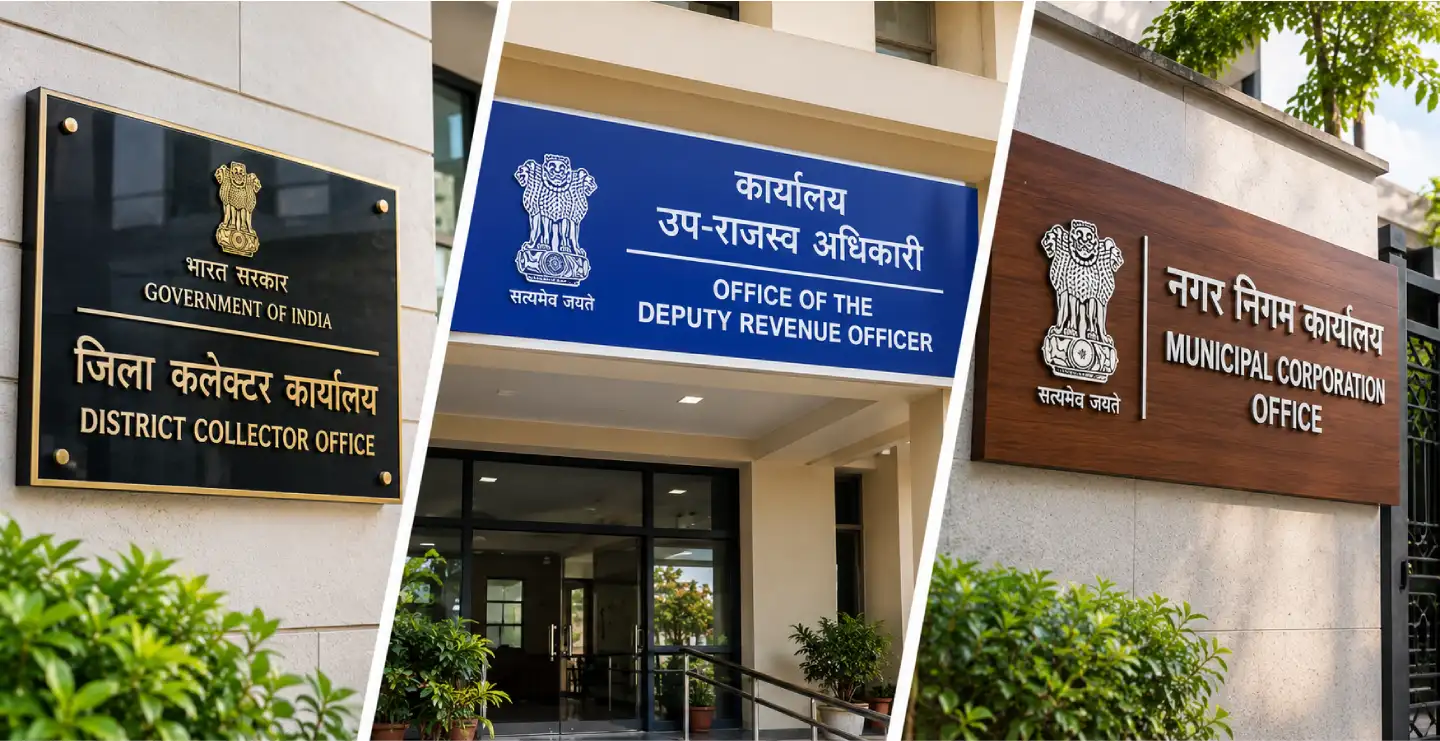
A government office name board is very different from a house or shop name plate - it usually needs to follow specific language rules, use durable institutional materials, and sometimes go through formal government procurement rather than a simple retail order. Whether you are a department in Karnataka looking to get a compliant board made, or a supplier trying to understand what a government client will expect, this guide explains what typically goes on a government office name board, which language rules apply, and how such boards are usually sourced.
What is a Government Office Name Board?
A government office name board identifies a department, office, or institution for the public and for visitors, and is usually mounted at the entrance, gate, or building facade. Unlike a home name plate, its main job is functional and informational rather than decorative - helping citizens, staff, and visitors quickly identify the correct office, wing, or officer.
Types of Government Office Name Boards


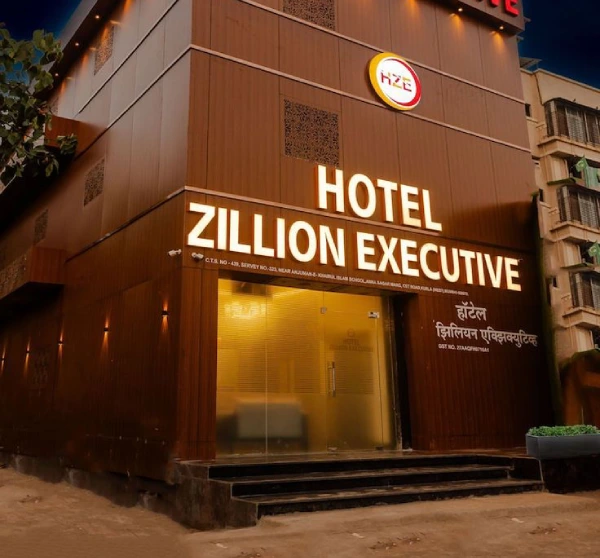
- Main entrance or building boards – Identify the department or office as a whole, usually the largest board on the premises.
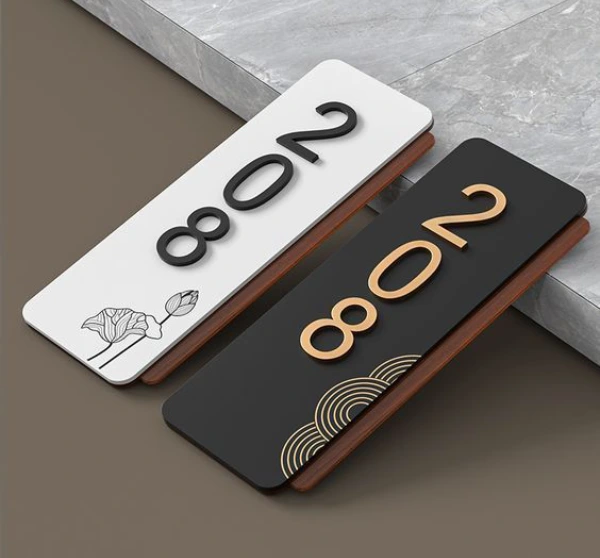
- Officer and cabin designation boards – Show a post or designation, such as Tahsildar or Assistant Commissioner, often without a personal name so the board does not need replacing after every transfer.
- Wing or section boards – Direct visitors to specific departments or counters within a larger complex.
- PSU and bank branch boards – Used by public sector banks, insurance companies, and undertakings at their branch offices.
Language Requirements: What the Rules Actually Say
This is where a government office name board differs most from a private or residential one, and the requirement depends on whether the office is a State or a Central government body.
State government offices – Since Kannada is the administrative language of Karnataka, name boards for state departments, corporations, and local bodies are generally in Kannada, commonly paired with English for wider readability.
Central government offices and PSUs – These follow the Official Languages Rules, 1976, framed under the Official Languages Act, 1963. Under Rule 11(3), name-plates and sign-boards used by Central Government offices are required to be prepared in Hindi and English. For boards meant for public information in a non-Hindi state like Karnataka, departmental instructions typically extend this further to include the regional language as well. In practice, this is why boards outside post offices, railway stations, and nationalised bank branches in Karnataka commonly carry three languages - Kannada, Hindi, and English.
Because exact requirements can vary between departments and are occasionally updated, it is worth confirming the current language policy with the specific office, its Hindi/Rajbhasha cell, or the relevant ministry before finalising a design.
What Information Usually Appears on the Board
- Name of the department, office, or institution
- Wing, section, or counter name, where relevant
- Designation of the officer in charge, often used instead of a personal name
- Office contact details or timings, for some public-facing boards
- The official emblem, only where the department is authorised to display it
A Note on the National and State Emblem
Many people assume any government-related board can carry the national emblem, but this is legally restricted. Under the State Emblem of India (Prohibition of Improper Use) Act, 2005, the emblem cannot be used by any person or organisation without prior permission from the Central or State Government, and even former government functionaries are not automatically entitled to use it. A responsible name board maker should only reproduce the emblem using the exact artwork and specification supplied by the department itself, and should never add a national or state emblem to a board on their own initiative, especially for a private or commercial client.
Materials Commonly Used for Government Office Name Boards
- Stainless steel – Durable, low-maintenance, and widely used for entrance and designation boards.
- Aluminium Composite Panel (ACP) – A cost-effective, lightweight option popular for larger department boards.
- Powder-coated metal sheets – Weather-resistant and common for outdoor signage.
- Granite – Often used for older or heritage government buildings where a more permanent installation is preferred.
- Reflective or retro-reflective sheeting – Used where night-time visibility matters, such as roadside civic boards.
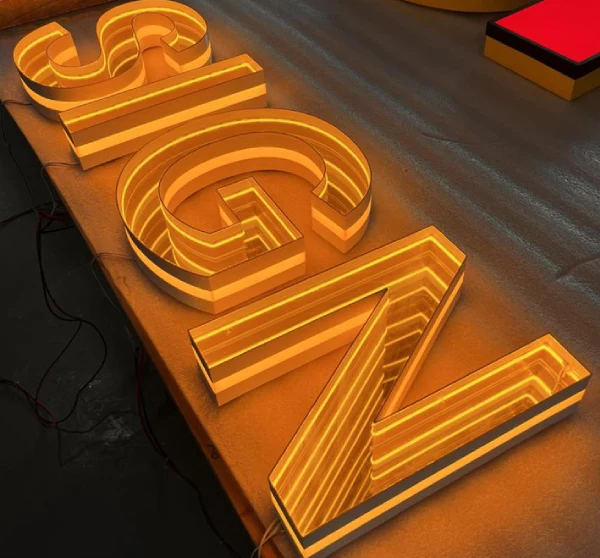
- Acrylic and LED – Increasingly used in modern government complexes, particularly for wayfinding and directory boards.
Standard Sizes and Design Specifications
Unlike home name plates, government boards rarely follow a single standard size - the specification is usually set by the department's own tender or design manual. Entrance and building-identification boards tend to be large, sometimes several feet wide, so they remain legible from a distance, while cabin and designation boards are compact, similar in scale to a professional office name plate. Some organisations, such as Indian Railways, maintain their own detailed signage manuals covering exact fonts, colours, and layouts that vendors are expected to follow precisely rather than propose their own design.
How Government Departments Procure Name Boards
Most government name board purchases today go through the Government e-Marketplace (GeM), which lists "Signage Board" as a specific product category and is used by Central and State departments, PSUs, autonomous bodies, local bodies, and even defence establishments for this kind of procurement. Larger or highly customised installations, such as those tied to a building's construction or renovation, may instead be handled through a formal tender floated by the department or its Public Works Department (PWD). Vendors looking to supply government offices generally need to register as a seller on GeM or the relevant procurement portal and quote strictly against the department's stated specification rather than a generic catalogue design.
Frequently Asked Questions
Does a government office name board in Karnataka have to be in Kannada?
State government offices generally display their name boards in Kannada, often alongside English, since Kannada is the state's administrative language. Central government offices follow a separate set of language rules, described above.
Why do some central government boards show three languages?
Central Government offices must display name-plates in Hindi and English under the Official Languages Rules, 1976, and public-facing boards in non-Hindi states like Karnataka commonly add the regional language as well, resulting in trilingual signage.
Can a private signage company add the national emblem to a board?
Only with proper authorisation from the department. The State Emblem of India (Prohibition of Improper Use) Act, 2005 restricts use of the emblem, so vendors should only reproduce it using artwork explicitly supplied by the government client.
Why do many designation boards show a post rather than a person's name?
Officers are frequently transferred between postings, so showing the designation (such as "Tahsildar" or "Executive Engineer") instead of a personal name means the board does not need to be replaced every time staff change.
What is the most durable material for an outdoor government board?
Stainless steel, powder-coated metal, and granite are among the most durable and low-maintenance choices for boards exposed to sun and rain over many years.
How do vendors usually sell name boards to government departments?
Most current purchases happen through the Government e-Marketplace (GeM) under its Signage Board category, while larger custom installations may go through a departmental or PWD tender.
Do government name boards follow a fixed size?
Not universally - size and design are usually set by the individual department's own specification or tender document, which vendors are expected to follow closely.
Conclusion
A government office name board is as much about following the correct language rules, specifications, and procurement process as it is about material and design. Getting the Kannada, Hindi, and English requirements right, respecting emblem-use restrictions, and sourcing through the correct government channel - typically GeM - are just as important as choosing a durable, professional-looking material.